Reflections on the Primary Three-Way Conferences
Albert Einstein once remarked that “Education is what remains after one has forgotten what one has learned in school.” In a world shaped by rapid innovation, evolving career pathways, and expanding possibilities, his words today feel more relevant than ever. What endures are not the details of individual lessons, but the capacity to think clearly, communicate purposefully, and reflect with intention.
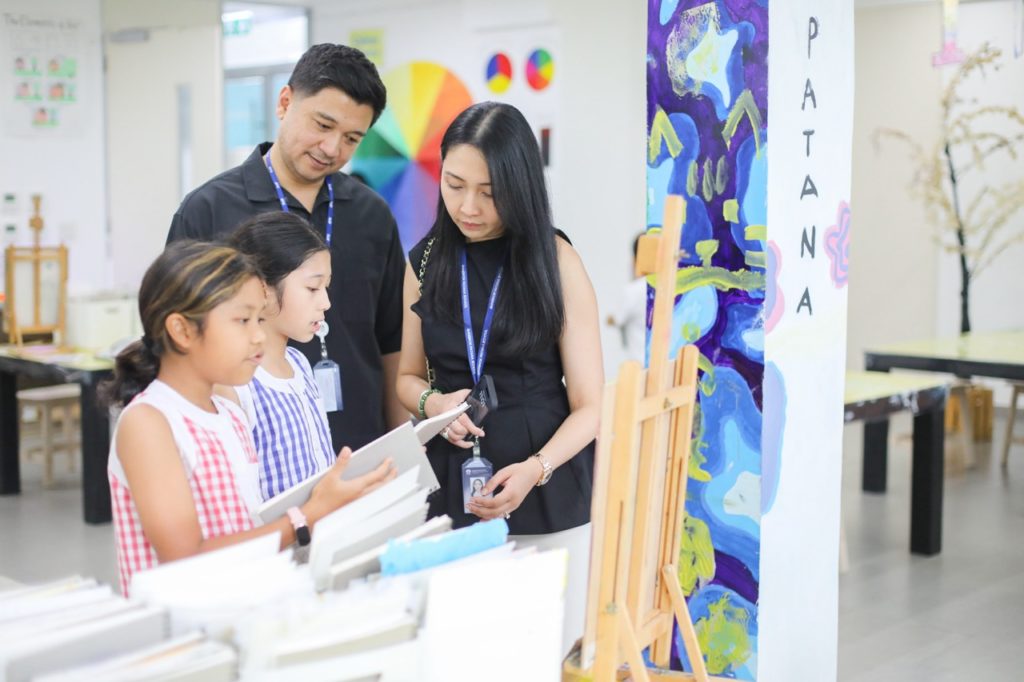
Last Friday, our Primary Three-Way Conferences were a powerful reminder of Einstein’s words. Students invited their families to share their learning journeys, demonstrate the transferability of their skills, and showcase their growing confidence in communication. Across classrooms, shared spaces, specialist areas, and even a pop-up art gallery, Patana students showed that reflection, expression, and adaptability are not only integral to how they learn today, but fundamental to how they will thrive in the future.
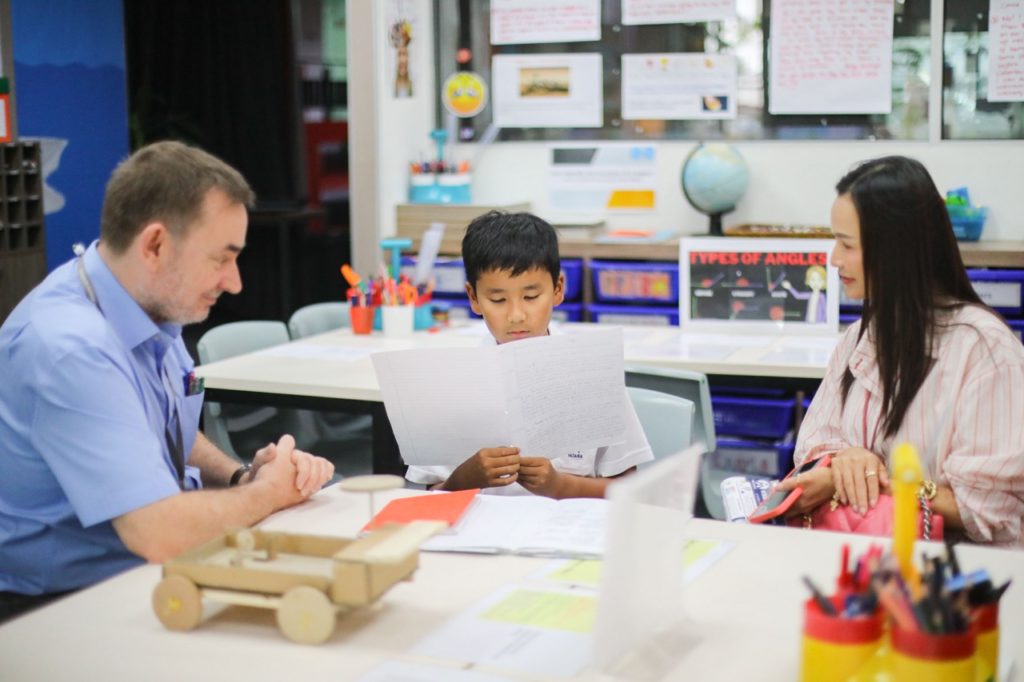
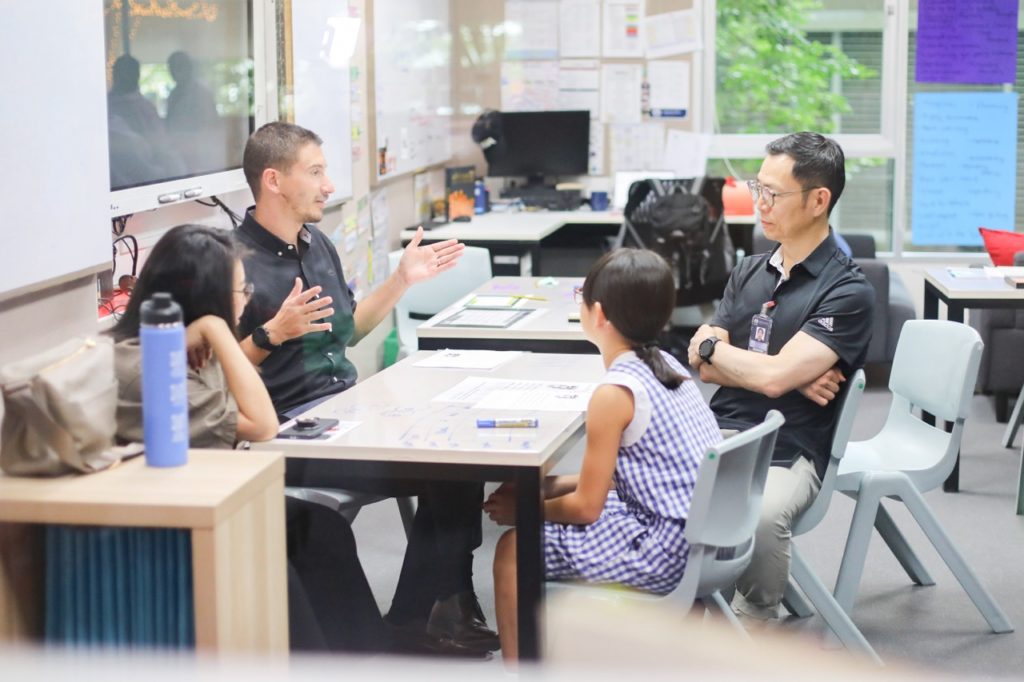
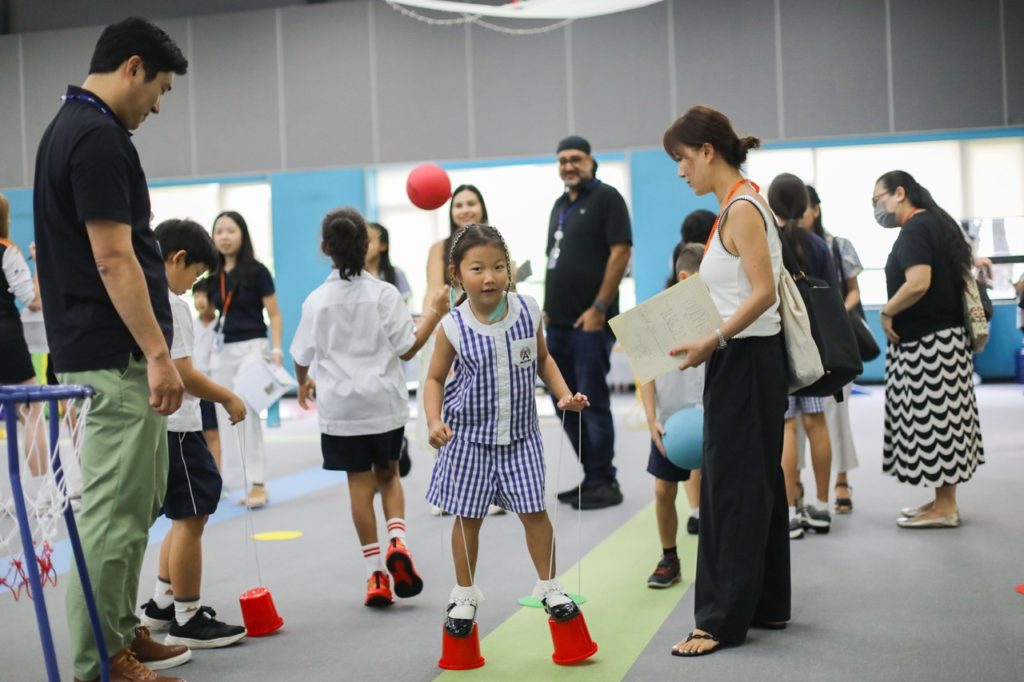
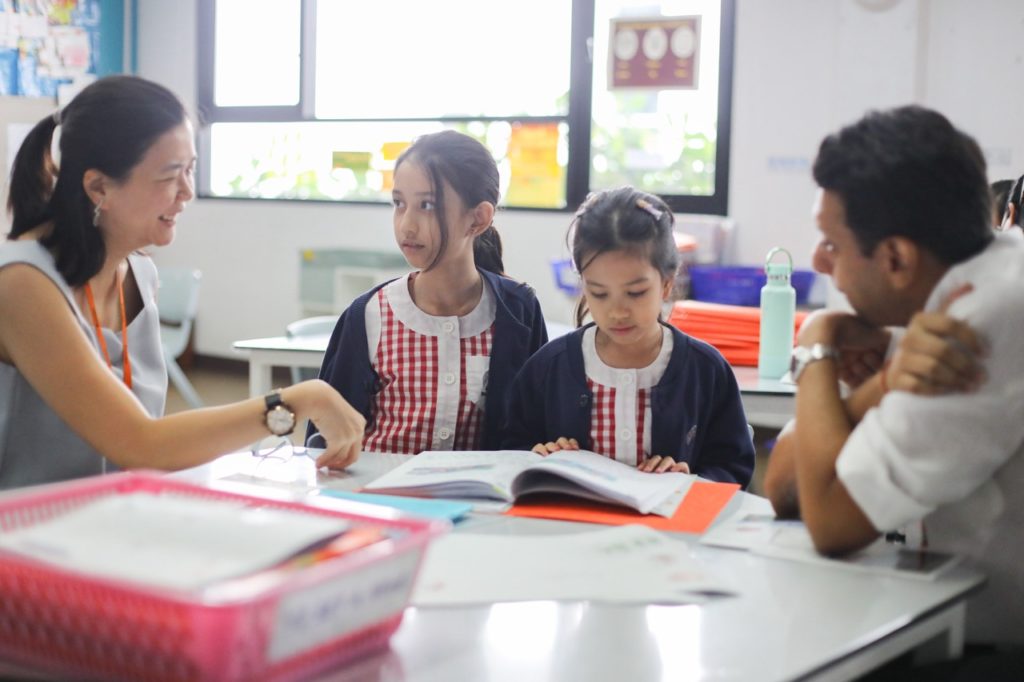
Each family experienced the day differently, depending on the child’s age. For our youngest learners, it meant traditional parent-teacher meetings focused on celebrating developmental milestones and looking to the year ahead. In Years 1 to 3, groups of families rotated through carefully designed classroom stations that highlighted the curriculum’s breadth. In Years 4 to 6, students led their own conferences, presenting to parents and their teacher on their progress, and articulating how they learn best.
Metacognition (the ability to think about one’s own thinking) is a cornerstone of modern education. When children reflect on how they learn, not just what they’ve done, they build confidence, adaptability, and independence. As Nokes and Dole (2004) explain, “When students are metacognitive, they understand themselves as learners, a given task, a variety of strategies, and how to use them in a variety of situations.” As in Einstein’s timeless words, these are not simply academic competencies; they are life tools, essential to navigating a world where adaptability, not rote knowledge, defines success. This emphasis on metacognitive learning was made visible not just in upper primary, but also in the classroom design of even our youngest conferences, where children explained both their learning and how they had arrived there. It was a day filled with pride, abundant in student agency, and rooted in metacognitive reflections. Marina (3D) wrote in her passport reflection, “I felt proud of my learning because I didn’t give up, and I did it independently”.
In Year 3, families explored the Marvellous Metals topic, where links between English, Science, DT, and Maths were made visible. Students tested chemical reactivity of different metals in a science investigation, challenged their families with decision-making mathematical games, and shared their completed ‘iron creatures’: multi-part sculptures with magnetic features, inspired by The Iron Man by Ted Hughes. Students didn’t just present their finished products, however, but rather engaged in a step-by-step skills demonstration in a live resistant materials workshop. Parents were wowed by their children’s precision and accuracy in selecting and using the appropriate tools at the woodwork bench. Students also demonstrated their grammar knowledge in describing the Iron Man’s features, showing how learning explicit grammatical terminology can facilitate creativity.
Oracy was a focus throughout the school. In Year 1, a parent remarked, “I just didn’t realise my child was such an animated storyteller,” after watching them retell a story using puppets and a map. Similarly, children shared their library learning through a recorded Reader’s Theatre performance, linking reading fluency and expression to rehearsal and performance.
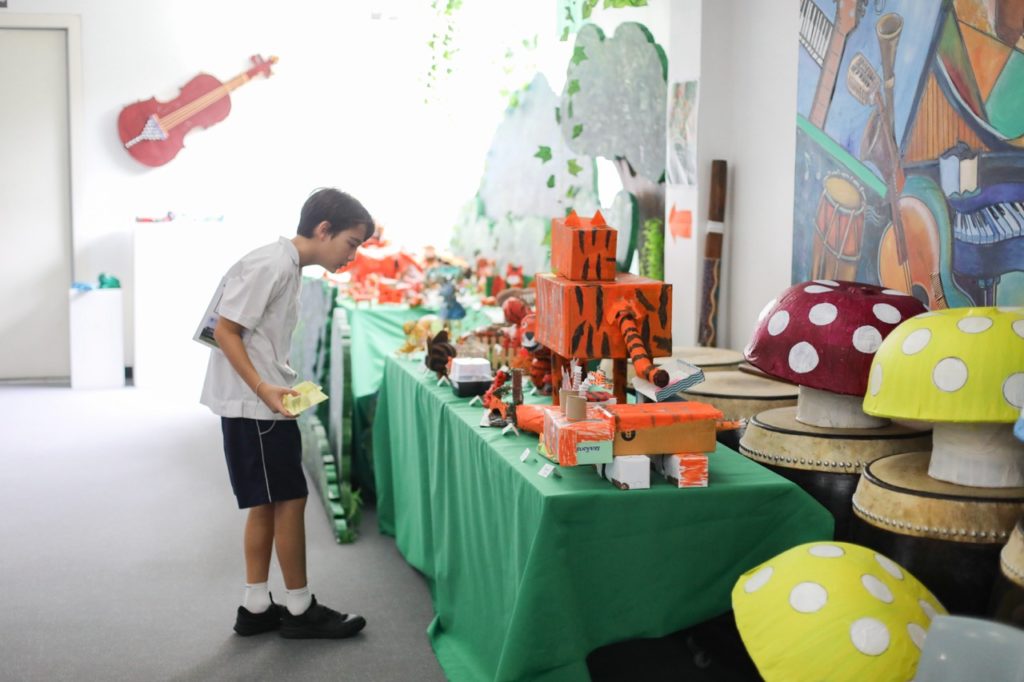
Students also used conference passports to visit their specialist teachers. This sticker-filled element encouraged families to explore learning across the school. In Music, students demonstrated progress on a range of instruments. In Drama, some parents bravely joined their children in trying physical expression through masked mime. In Art, families visited the “3D Tiger Competition” exhibition and discussed observation and ceramics techniques. In Computing, Year 6 students shared recent movie-making work. Each space reflected both skill development and creative perseverance.
Outside the Foundation Stage, families visited a pop-up art exhibition curated by a guest artist. Timed with World Ocean’s Day, the exhibit encouraged interaction and reflection on sustainability. From detailed marine drawings to bold, mixed-media pieces, the display was expressive and thought-provoking, and for many families provided a moment of calm and reflection between sticker collecting.
Students in the Enrichment Cluster shared learning from projects that develop critical thinking, collaboration, communication, and creativity. The conference gave them a valuable chance to practise presentation skills. Deepening Focus students also showcased highlights from the year. As Mr Max noted, “it was a moment for students to take ownership and demonstrate their learning process.” Ellina in 6F reflected similarly when sharing her Mandarin learning, “I felt proud because I’m kind of struggling, but I tried my hardest, and I got there. My parents lived in China, and they were so proud to see me speaking in Mandarin.”
Parents were able to see not just what their children had learned, but how our teaching equips students to think deeply, collaborate effectively, and reflect with purpose. As a parent myself, I know how often the question “What did you learn today?” is met with a shrug. These conferences bring learning to life and help families understand the purpose behind the school’s teaching methods and approaches.
This conference reminded me that the end of the school year is not just a time for measuring attainment, but is more importantly a time for recognising achievement in all its forms and for encouraging children to articulate and recognise this themselves. Moments of pride that are found in the completion of a story after multiple drafts, or the resilience to adapt a plan, may be harder to measure, but they are no less meaningful. Events like the Three-Way Conference prompt us to notice these moments of growth and celebrate the holistic development of our students as learners.
Einstein may have been right: what lasts is not the content we memorise, but the habits of thinking we cultivate. As our students move forward, it is these habits – curiosity, adaptability, and resilience – that will serve them best.