

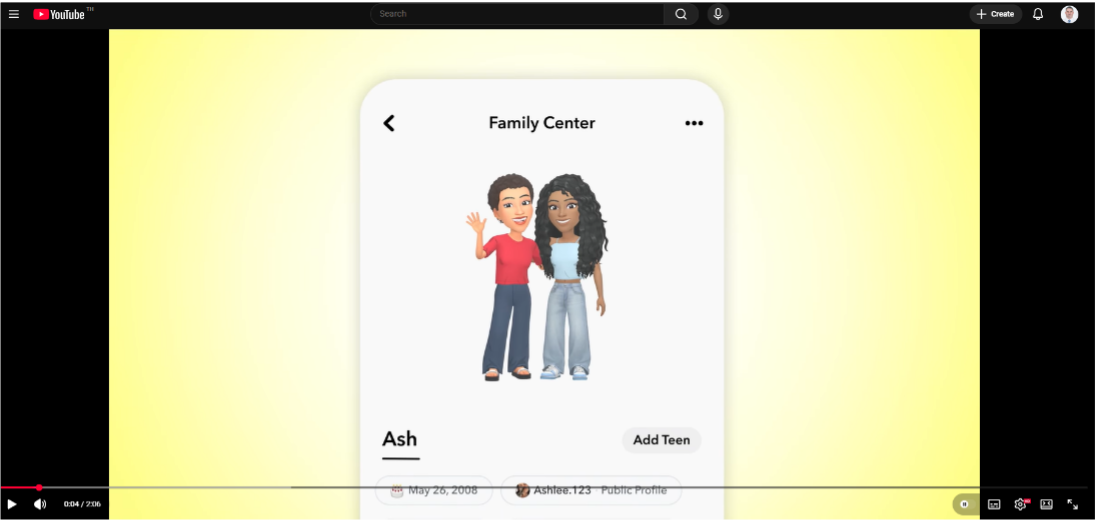
Image courtesy of New Family Center Features: Helping Parents Understand Better Their Teen’s Snapchat Experience – YouTube
Snapchat has introduced updates to its Family Centre, giving parents greater visibility into how their children use the app while still protecting young people’s privacy. These changes are designed to support healthy digital habits and strengthen conversations at home about online safety.
What’s New?
Families can now access a clearer breakdown of a child’s daily screen time on Snapchat over the past week. Rather than showing just total minutes, the Family Centre separates activity into key areas such as messaging friends, creating or sending Snaps, exploring Snap Map, or watching Spotlight and Stories. This helps parents understand not only how much time is spent on the platform, but what that time involves.
Snapchat has also added “trust signals” to help parents understand who their child is connecting with. When a young person adds a new friend, parents can see whether that contact appears in their phone, whether they share mutual friends, or whether they belong to the same school or community. These cues offer reassurance without revealing private messages.
Importantly, parents still cannot read their child’s Snaps or chats. Snapchat’s approach is to support safety and awareness rather than surveillance. This aligns with best practice in digital wellbeing, helping young people maintain autonomy while ensuring adults stay informed.
Tools to Support Families
Snapchat has added guidance resources, including a walkthrough video and a digital safety guide called The Keys. These can help parents and children learn together how to use the Family Centre effectively.
Why It Matters
For families, these tools work best when used to start open conversations. Asking curious, non‑judgemental questions about screen time, new contacts, and online experiences helps young people feel supported rather than monitored. Technology can provide insight, but ongoing dialogue builds trust, confidence, and safer online habits.
Have a great weekend.