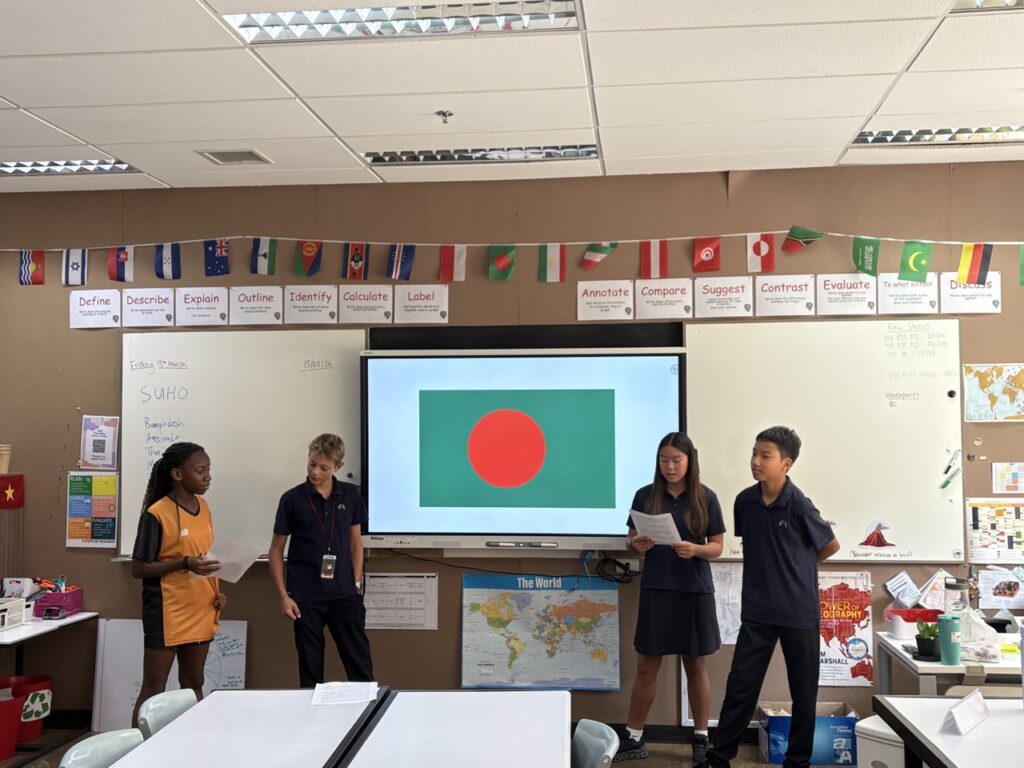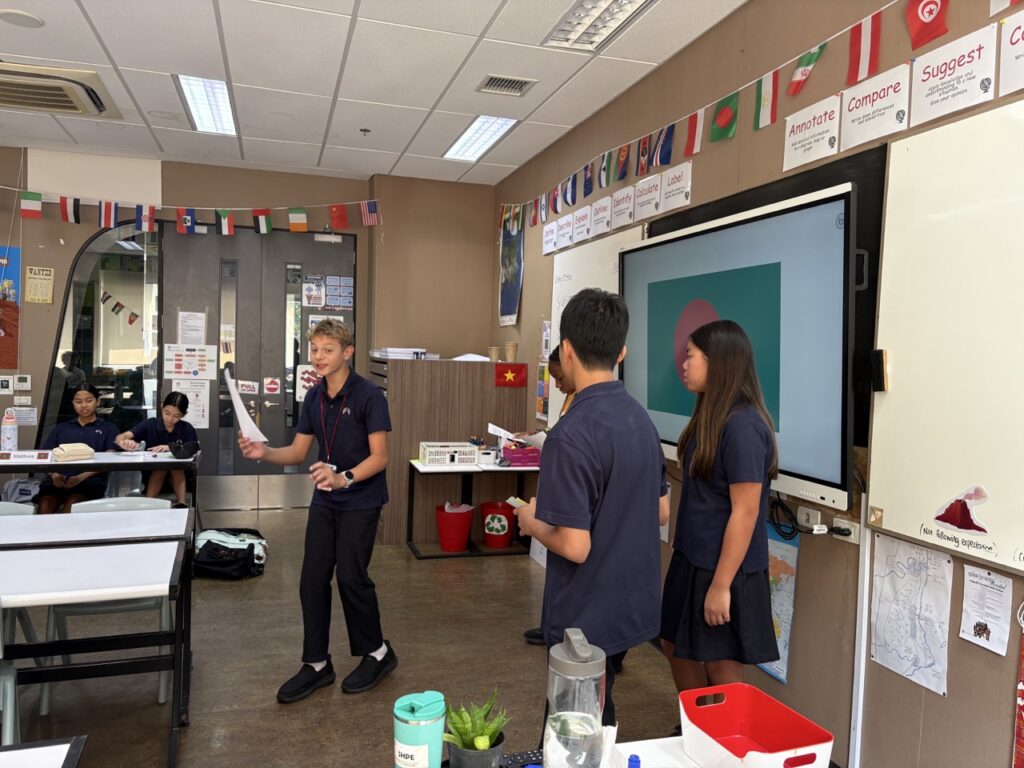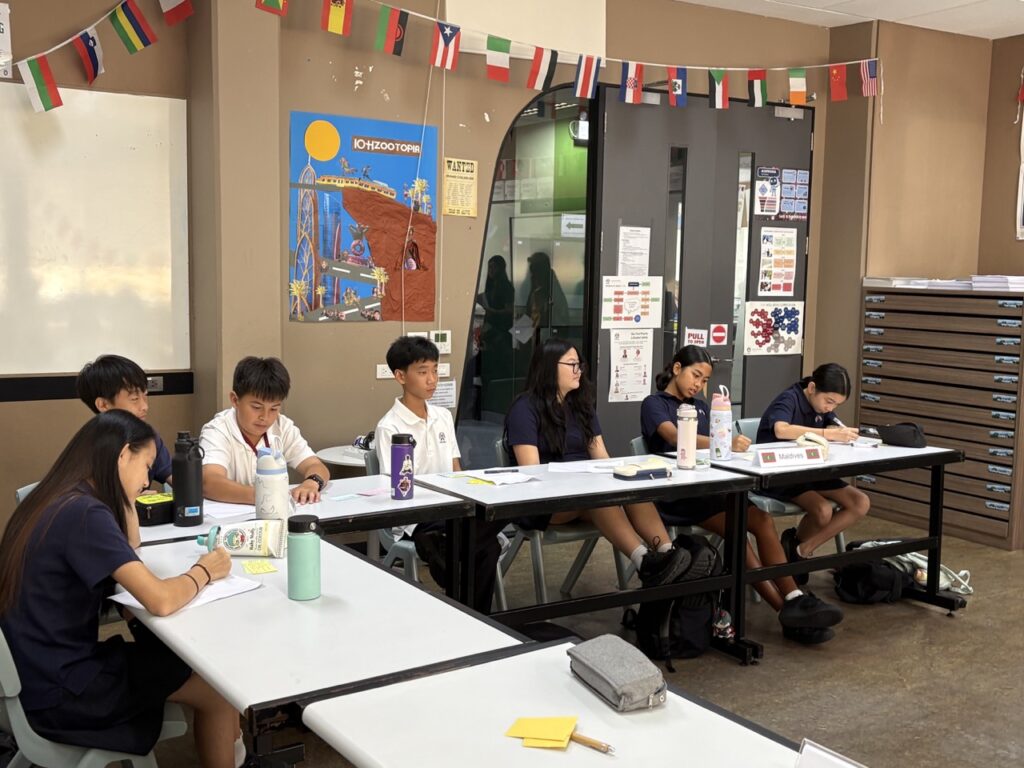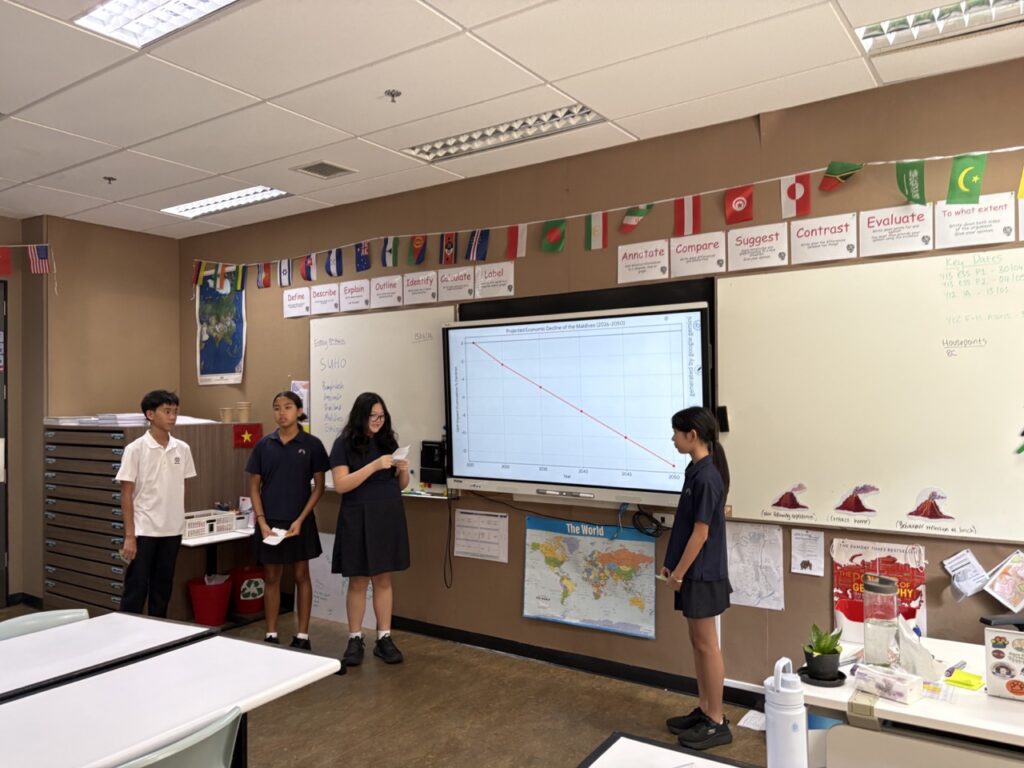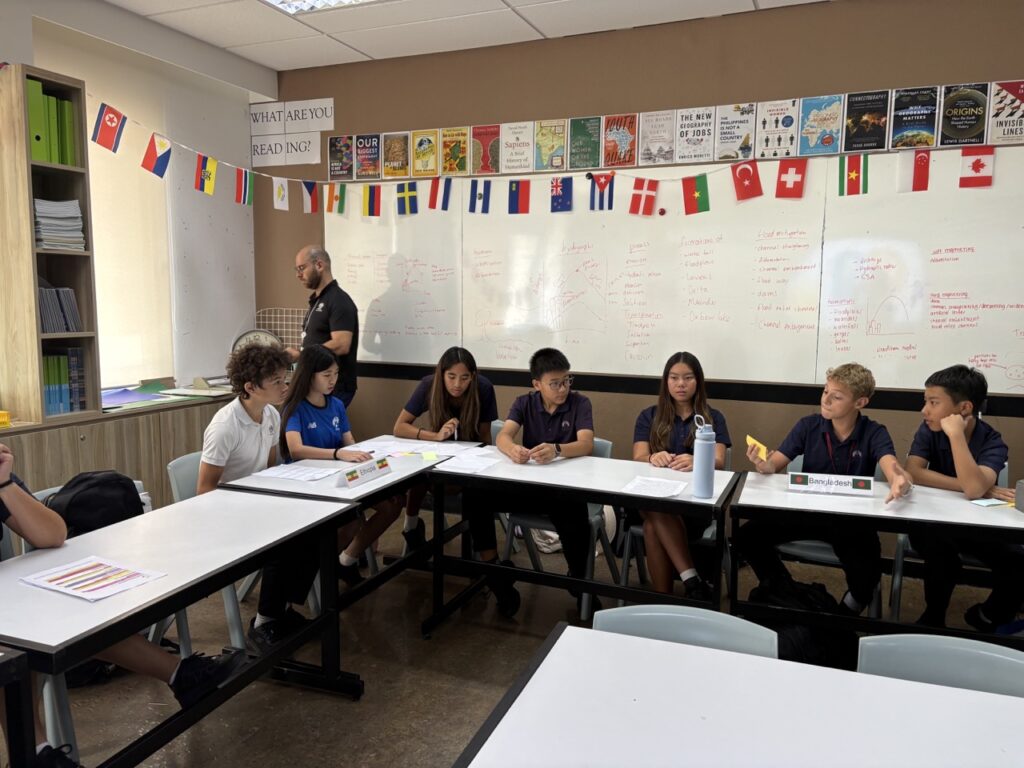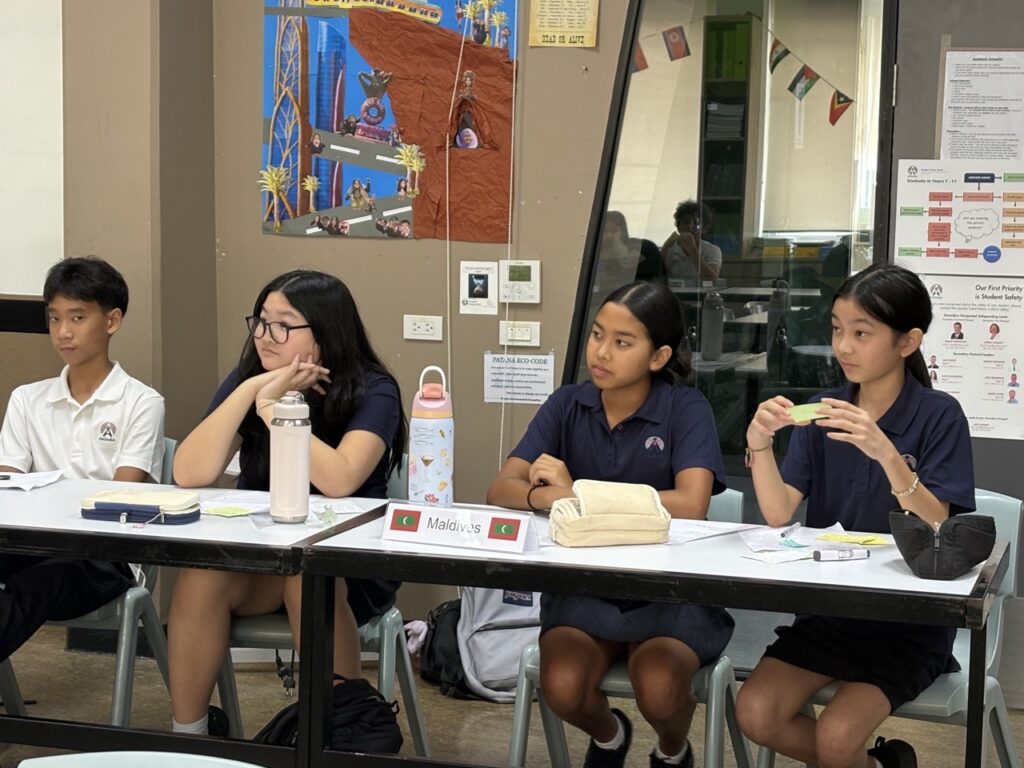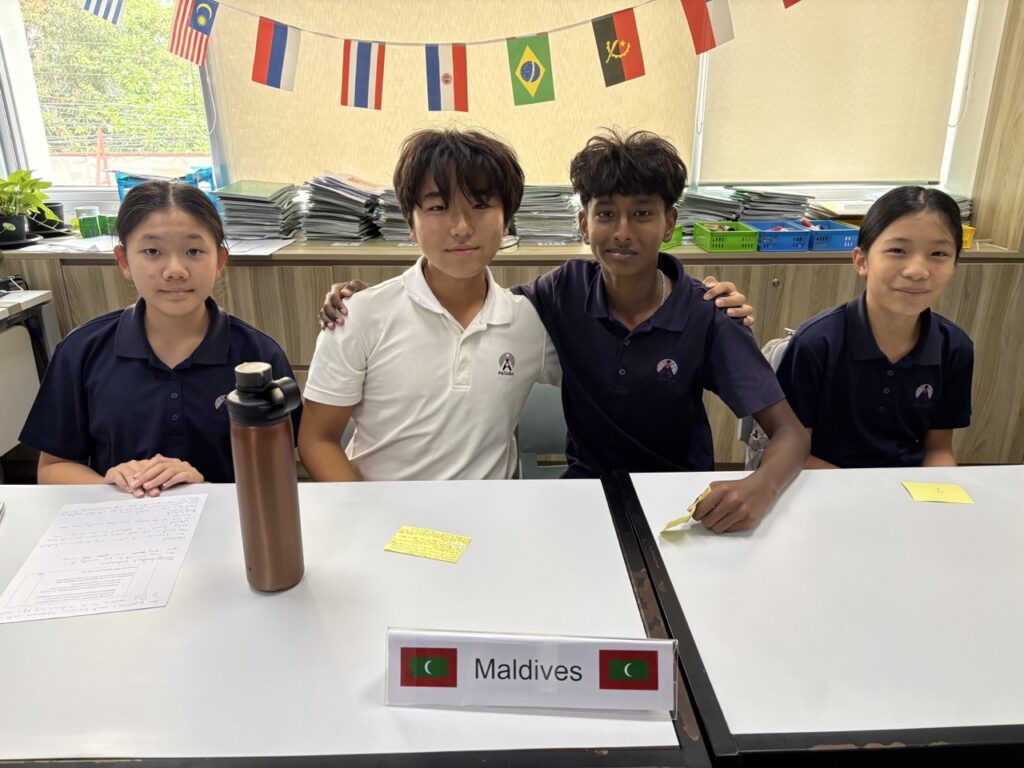
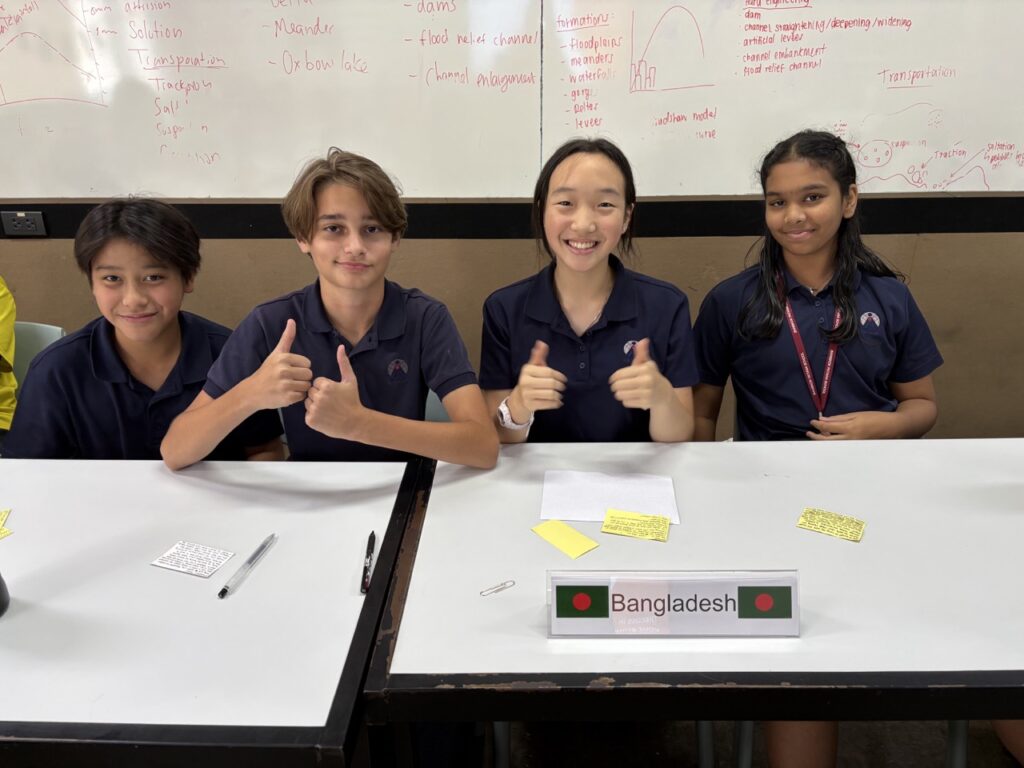
Year 8 students in Geography have been studying the causes and impacts of anthropogenic climate change, with a focus on key concepts such as climate vulnerability and climate justice. They applied this understanding through a country-based inquiry, analysing how and why different nations are affected, and evaluating their level of responsibility for emissions. This culminated in a Model United Nations-style debate, where students represented countries and presented evidence-based arguments for why their nation should receive UN climate funding. This process has developed students’ skills in analysis, evaluation and collaborative discussion, while encouraging them to consider issues of global equity and sustainability.
Kedar Krishnan, 8M:
The UN is an international organisation focused on preventing worldwide conflicts. However, in the modern age there are multiple problems that need to be addressed by the UN. One of those topics is climate change. In Geography, Year 8 experienced an MUN style conference where five countries, Australia, Bangladesh, Ethiopia, Maldives and Thailand, had a debate on who needed aid to tackle this problem. One thing I learned was the meaning of climate justice. Climate justice is the idea that climate change is a political/social issue and not just an environmental one.
My country, Bangladesh, posed the idea that even low to middle-income countries could be at equal risk as low income countries. Bangladesh is a highly populated low lying country. Our main competitor, Ethiopia is a dry landlocked low-income country that suffers from droughts and extremely low levels of rainfall. Even though Ethiopia had less money and funding, Bangladesh was equally at risk because of its population density. Instead of everyone being spread across the country, people lived mostly next to the sea and river.
The main challenges were being organised while saying our speeches, switching slides and communicating with our teammates at the same time. Preparing for our presentation was equally as difficult. Researching our own country while researching other countries to argue against them was quite hard to manage. This activity helped develop many essential skills that are extremely important in our learning environment.
Lily Roff, 8M:
In Geography we combined MUN, English and Geography skills to construct a debate on how the UN should give out limited funding, and which country deserves money the most. The options were Thailand, Ethiopia, Maldives, Bangladesh and Australia. This is important because of climate justice. We researched different countries and problems they face with climate change, such as flooding, droughts and extreme heatwaves. One challenge I faced was thinking quickly and responding to my classmates’ questions while keeping my point. This really improved my ability to speak better in public places and in front of the class.
Omar Ansari, 8M:
In our Year 8 Geography lessons we had a debate about climate change and how money should be shared between countries it matters because not every country is affected the same. For the debate we researched our country, Thailand and looked at problems like flooding and rising sea levels. We worked as a team to find information and plan what we were going to say. Teamwork helped me a lot because we could share ideas help each other and feel more confident speaking in front of others. We tried to convince the UN by using facts and persuasive language and also speaking clearly like we learned in English and MUN. One challenge was that other countries also had really strong arguments so it was hard to stand out. This activity helped us build skills like research, public speaking, listening and critical thinking. This also showed how important teamwork is when working together. Overall I learned that climate change is a complicated problem and it needs cooperation fairness and good communication to try and solve it.