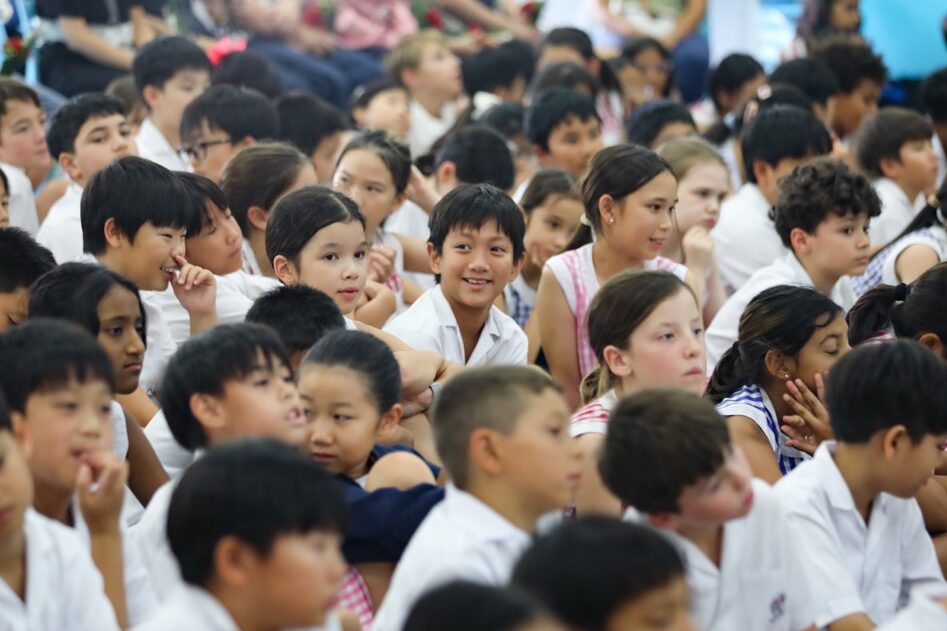
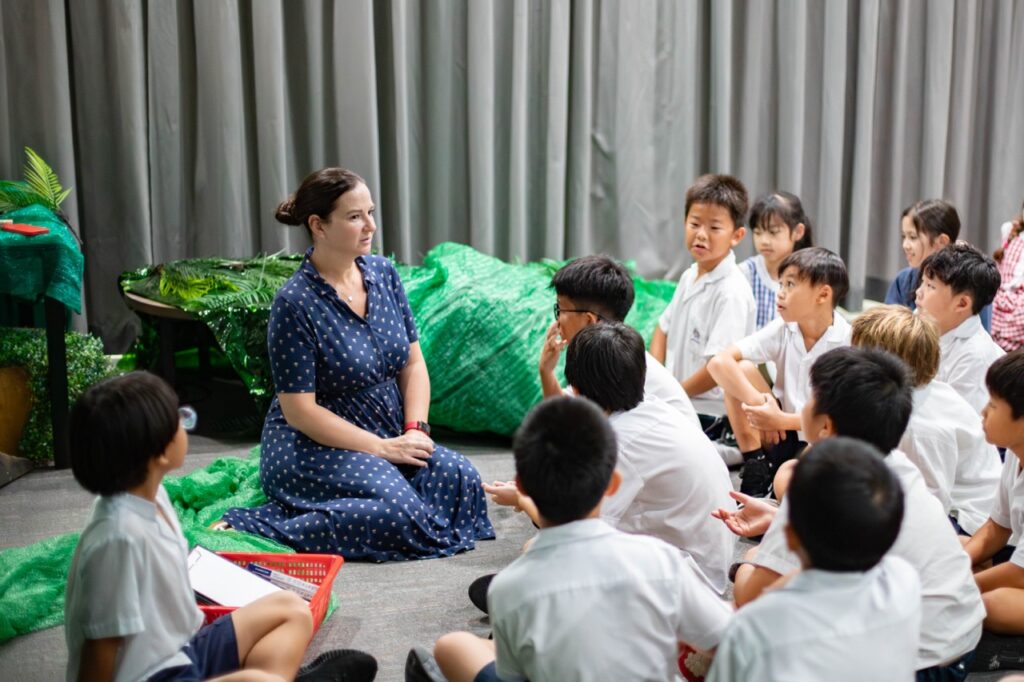
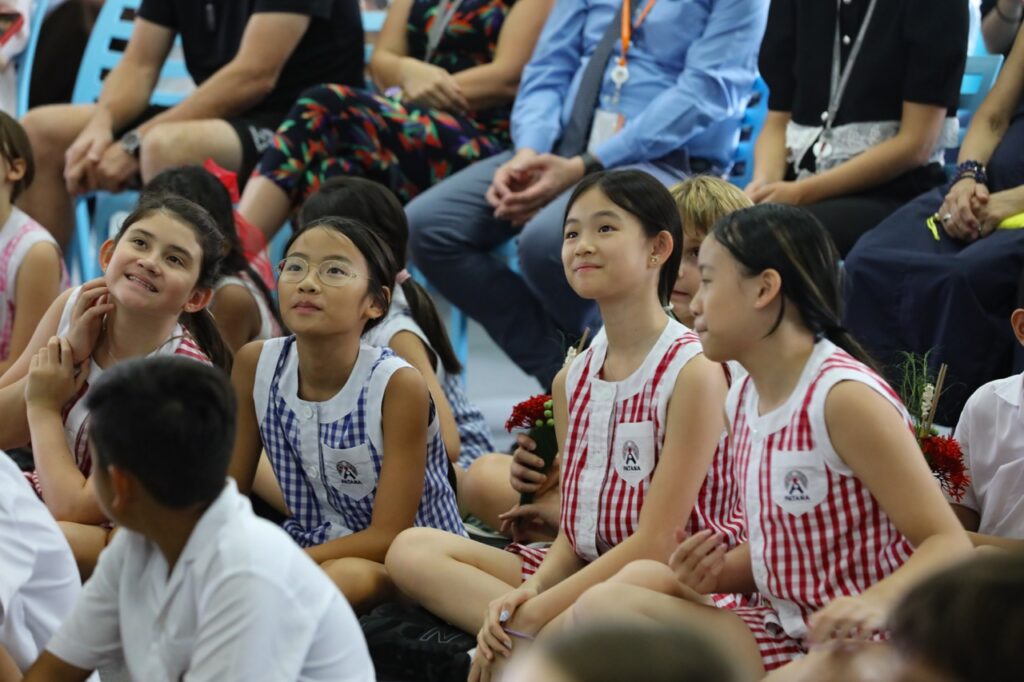
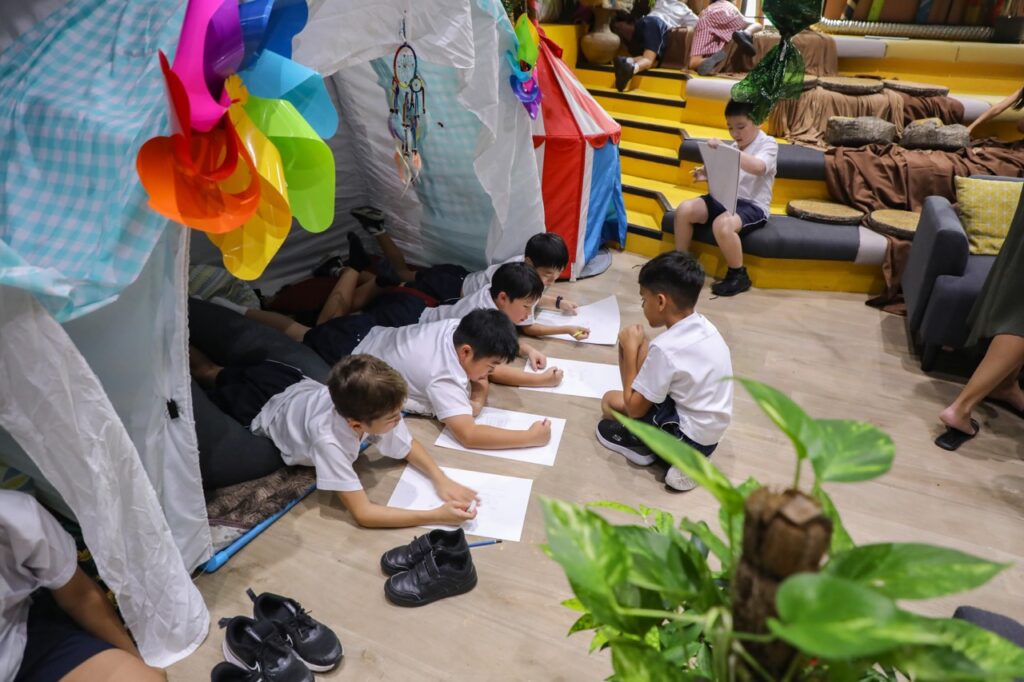
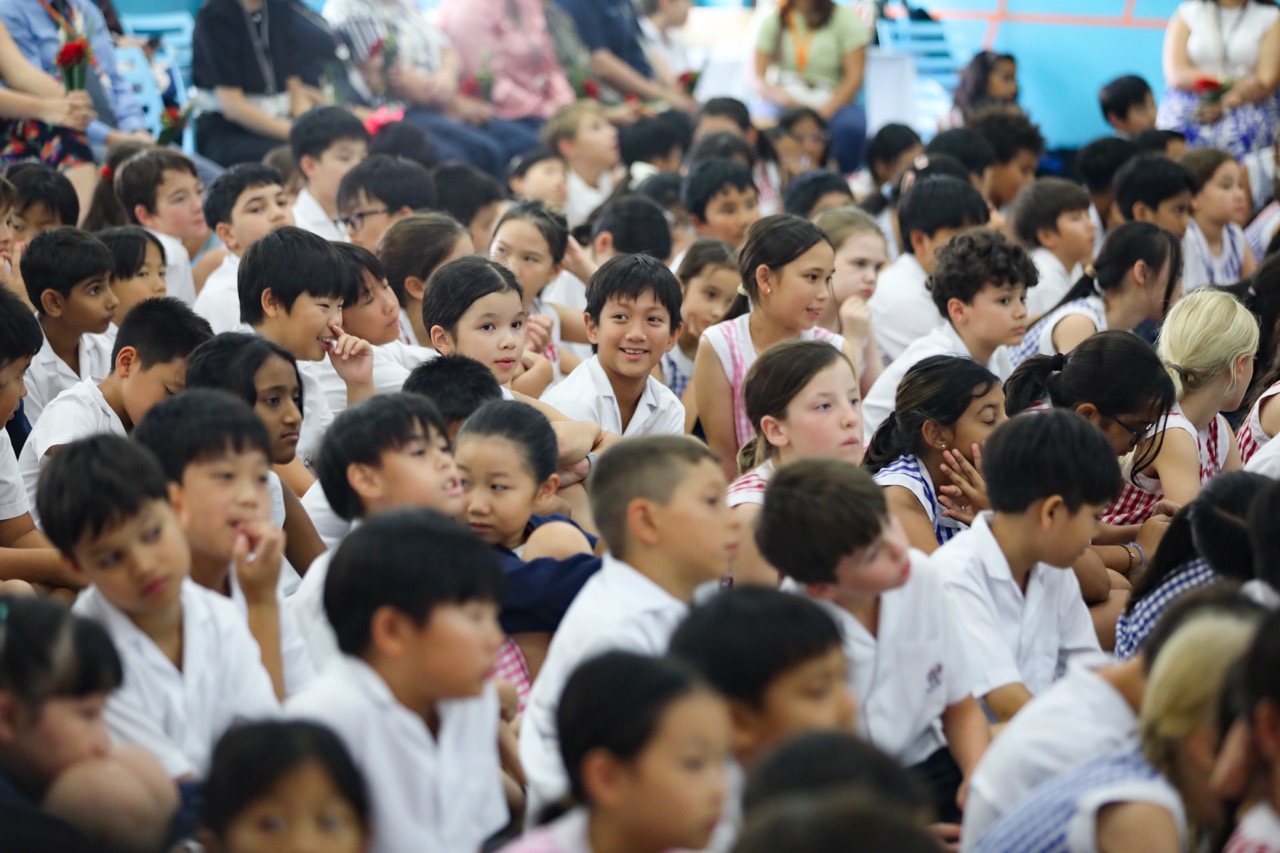
When global conflict unfolds, it is natural to ask “what is my part in all of this?”. As parents and educators who belong to an international community we know the world is more complex than we can explain and yet we need to educate young people growing within it.
As a school community of more than 68 nationalities, world events do not stay “out there”. They touch family, friends, nationality or faith directly; they arrive unfiltered through social media, gaming platforms, headlines and conversations that are overwhelming or polarising. Children and young people absorb far more than we realise.
Our starting point at Bangkok Patana is always the same: well‑being, learning and global citizenship. In moments of uncertainty, a school’s first responsibility is not to explain or judge the world, but to hold it steady.
That is why predictability and routine are our first friend. Familiar lesson structures, clear expectations and trusted relationships give children something solid to stand on when the wider world feels unstable. School should feel like a harbour: a place where it is calm enough to think, to learn, and to be yourself.
This does not mean we should avoid difficult conversations when we are asked. Our second friend when we can’t explain fully what each perspective means is to use a pause. Listen before speaking, clarify what the meaning of the question is and, resist the urge to rush in with opinion or move past difficult feelings.
Sometimes, simply dwelling in confusion without trying to resolve it is a powerful tactic. Helping each other and our children name emotions without amplifying fear and reminding gently and consistently that safety is here in Thailand, at home and at school can be enough.
A question to return to is not what should children think about this or that?, instead, what do they need from us right now? Usually, the answer is found in reassurance and perspective.
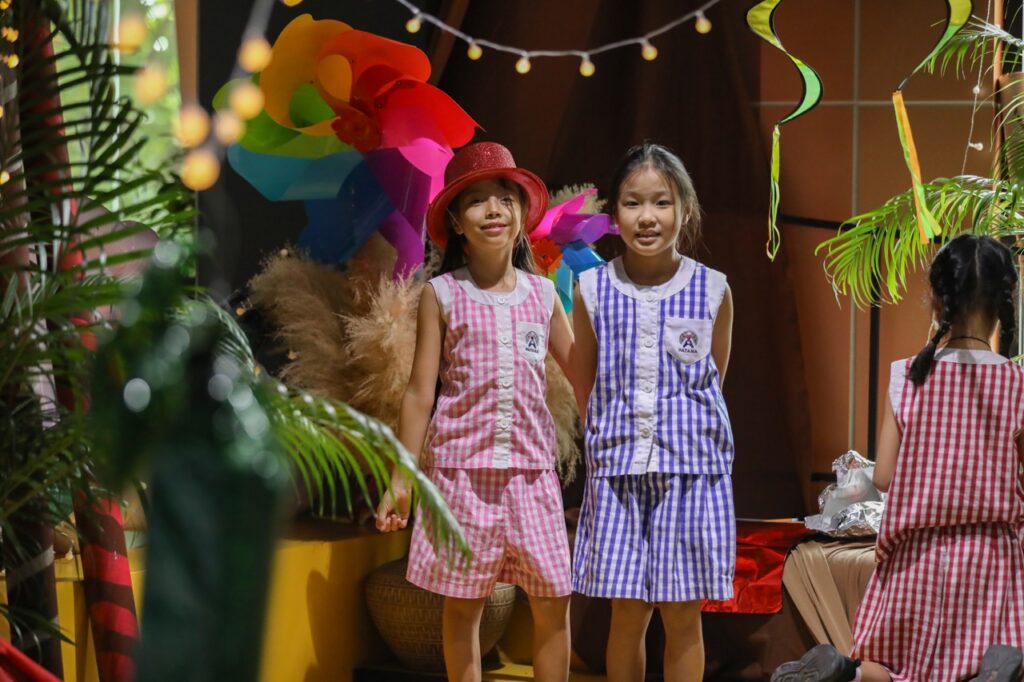
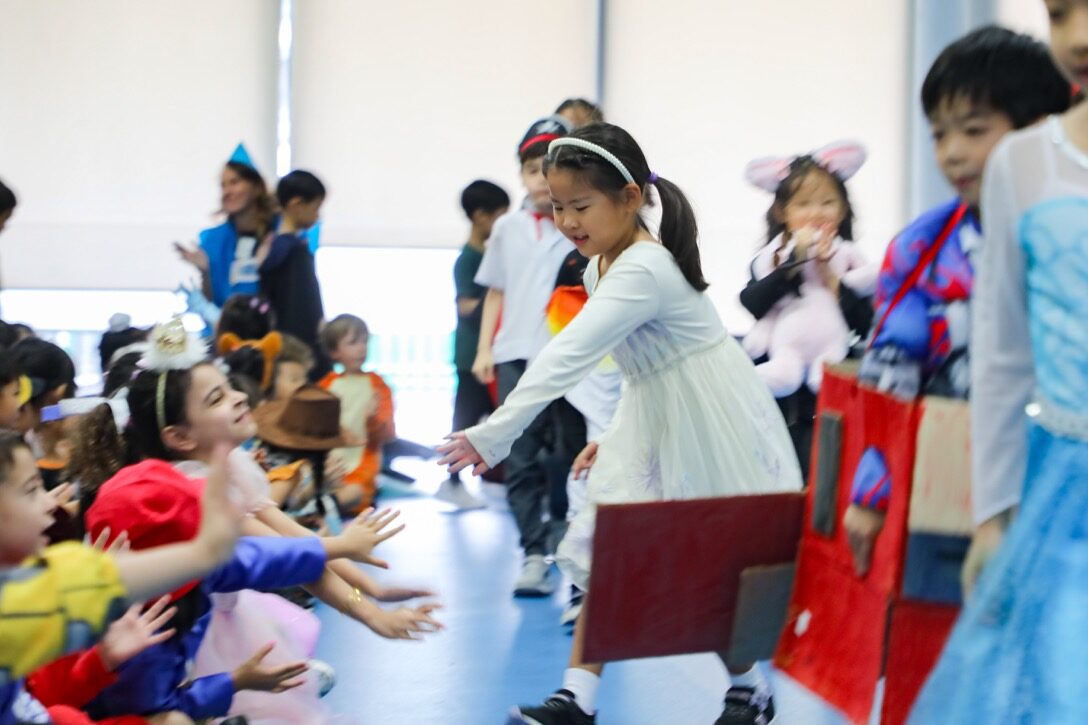
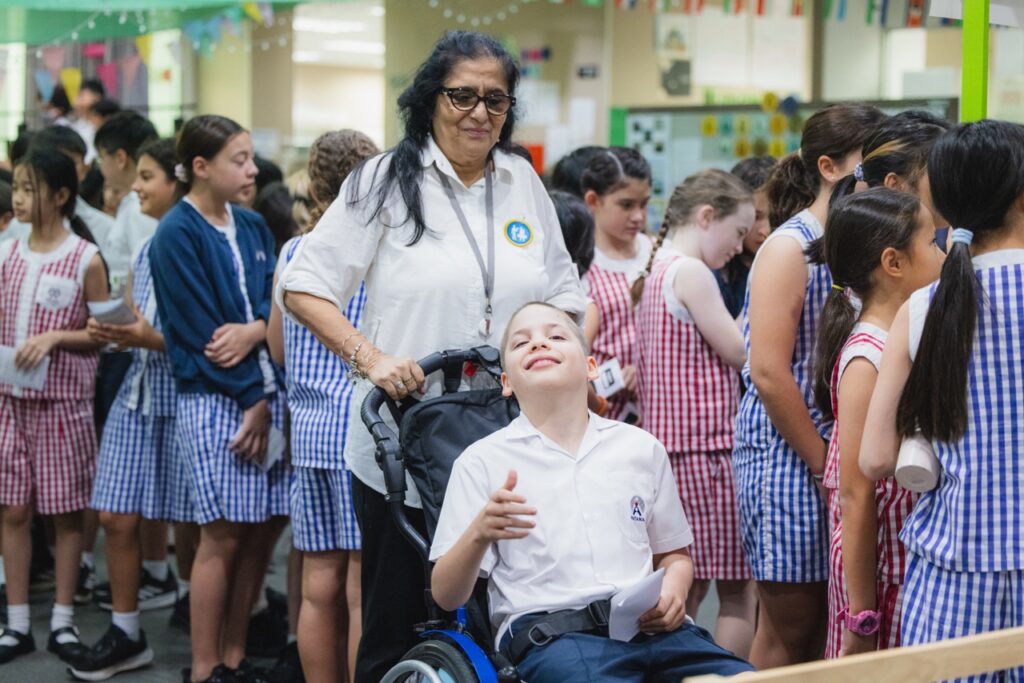
Throughout this term, alongside the events of the wider world, there have been many moments that quietly remind us who we are. Assemblies where effort and kindness were celebrated. Performances and learning moments that drew families together. Daily interactions where students showed care for one another in ways that will never make headlines, but matter deeply. These are not distractions from global reality — they are evidence of hope being practised locally, every day.
So what is our place in all of this?
Our place is not to carry the weight of the world, nor to shield children from it entirely. Our place is to model balance: to stay informed without being consumed; to care deeply without losing perspective; to act with humanity in the spaces we can influence.
As we move into Songkran, a festival rooted in renewal, reflection and the washing away of what no longer serves us, there is something powerful to hold onto. Water is both gentle and transformative. It reminds us that change does not always arrive through force — sometimes it comes through care, connection and fresh beginnings. Water can carve the hardest granite when it flows over time.
When we return after the break, the world will not be simpler, but we will return refreshed, grounded and ready to continue the quiet, vital work of helping young people grow with confidence, compassion and hope — exactly where they are.
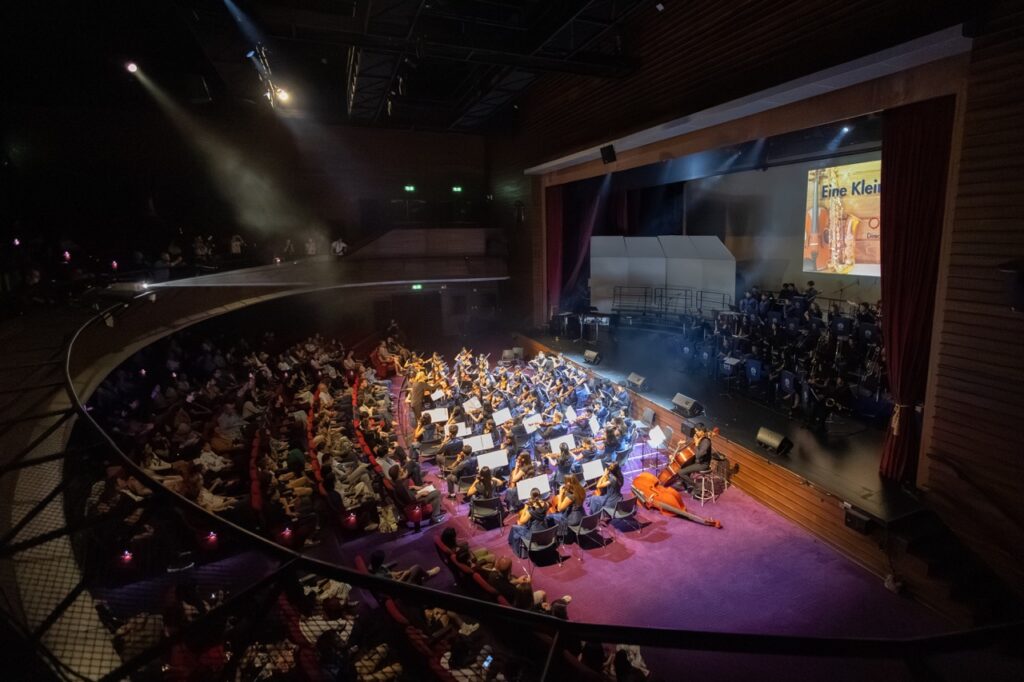
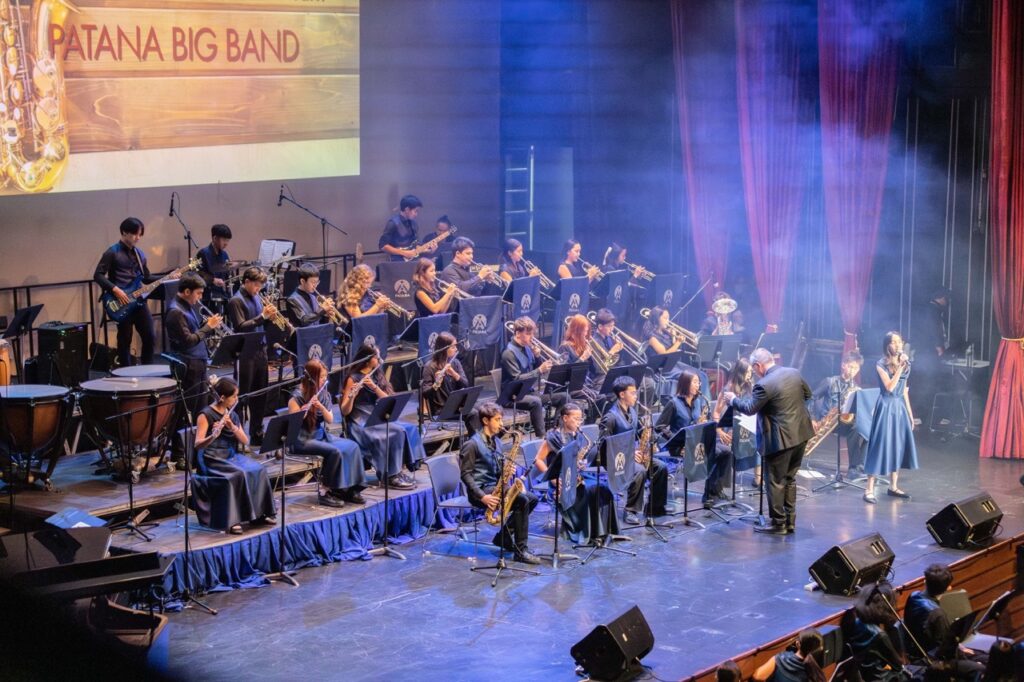
And, a personal note of thanks to staff and students for Patana Classics meets Jazz. The entire evening including the music, the ensemble, the lyrics and the quality of performances were about students working out their place in all of this. You inspired my thinking for this piece and created some incredible memories for us all. Wishing you well, Year 11 and 13, for your final preparation before examinations begin.
WhatsApp has announced a significant update that may be relevant for families with younger children. The app now offers Parent‑Managed […]
A Guide to More Sustainable Air Travel
By Varsha Dahiya, 11V and Lievi Menniken, 11K
Air travel connects us to the people and places we love. Whether it’s visiting family, exploring new cultures, or heading off on a long-awaited holiday, flying plays an important role in our global community. As a school with an international outlook, many of us travel regularly. The exciting news is that small, thoughtful choices can make a meaningful difference to how sustainable our journeys are.
While aviation contributes around 3% of global carbon emissions, it is also an area where individuals can take practical action. Every flight is an opportunity to travel more consciously and reduce our impact on the environment.
The Student Environmental Committee (SEC), have identified a number of simple and effective ways to make air travel more sustainable:
Travel smart to the airport Consider carpooling, using public transport, or sharing journeys with friends. Reducing single-car trips helps lower emissions before your journey even begins.
Choose direct flights where possible Take-offs and landings use the most fuel. Opting for non-stop flights can significantly reduce overall emissions.
Pack light The lighter the plane, the less fuel it burns. Being mindful of luggage weight is an easy way to reduce your travel footprint.
Fly economy when you can Economy seating allows more passengers per flight, making it more fuel-efficient per person.
Support Sustainable Aviation Fuel (SAF) SAF can reduce lifecycle emissions by up to 80%. While still developing, supporting airlines investing in this technology helps drive change.
Offset your carbon emissions Many airlines offer verified carbon offset programmes that support reforestation and renewable energy projects.
Reduce onboard waste Bring a reusable water bottle, refuse single-use plastics, and use digital boarding passes where possible.
Be aware of your overall holiday footprint Understanding your personal impact helps you make more informed choices, not just when flying, but throughout your holiday. Can you also weave in public transport, boats and trains or even more eco-conscious transportation like cycling or hiking?
The future of aviation is evolving, with exciting developments such as electric aircraft on the horizon. Until then, collective action matters. If each of us makes even a few small changes, the impact is significant.
So, as you begin booking your summer flights now, take a moment to consider how you can travel more sustainably. Small steps, made consistently, can help protect the world we love to explore.
Some of our Year 7 Students have been developing their Mathematical Communication skills to help them work towards the Performance […]
Celebrating the TA Leadership Pathway: Because Great Teaching Takes a Team
By Richard Kirtland, Primary Assistant Principal, Inclusion and Welfare and Sirintra Hanruck, Lead TA Practitioner
Walk into any Primary classroom at Bangkok Patana and you will see great teaching. Look a little closer and you will often see the person beside the child who is finding things hard, the one quietly reshaping a task so that a struggling student can access it, the one who has built the kind of trust with a young person that takes months of patience and care to earn. Many of our Teaching Assistants (TAs) have been doing this for years (some for decades) building a depth of knowledge about child development, learning difference and early education that is, frankly, extraordinary. The truth is, our TAs bring a level of expertise that deserves to be known, celebrated and nurtured.
This year, we wanted to make sure that kind of expertise is properly recognised. So, we’re delighted to introduce the TA Leadership Pathway – a new structure that gives our outstanding TAs the professional standing they’ve long deserved.
How it Works
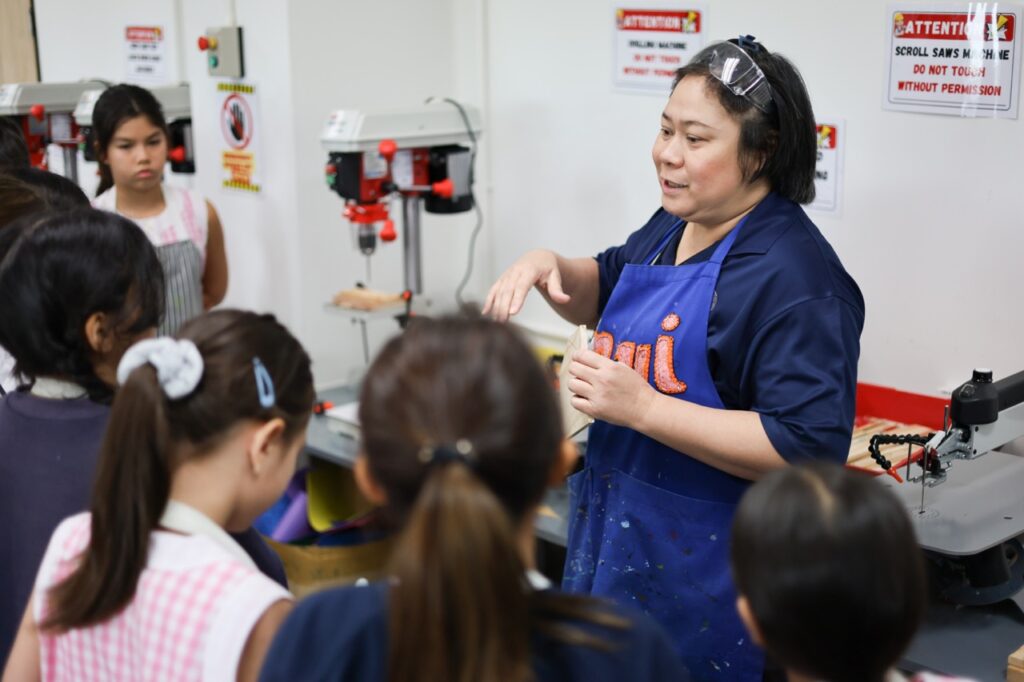
Miss Noi (Year 2) takes on the role of Lead TA Practitioner, providing leadership and direction for the TA team across the whole school. She is working closely with school leaders to make sure TA support is consistent, coherent, purposeful and genuinely responsive to the needs of our learners.
Alongside her, six Key Stage/Phase Lead TAs each take the reins within their own area of the school: Ms Emma (Nursery), Ms Lotus (FS1), Ms Pooka (FS2), Mr Beer (Year 1), Ms Gail (Year 2) and Ms Bo (Key Stage 2). From the earliest days in Nursery right through to the end of Key Stage 2, there will be a dedicated lead who knows that phase inside out: its rhythms, its particular challenges and what great TA practice looks like within it.
Why it Matters
A job title, on its own, means very little. What matters is what sits behind it: in this case, the acknowledgement that our TAs bring genuine expertise to their work and that expertise deserves room to grow and be celebrated. The TA Leadership Pathway gives our amazing TAs a meaningful structure for professional development; a space to deepen specialist knowledge, to mentor colleagues who are newer to the role, and to contribute to the bigger conversations happening across the school about how we best support every child.
That last part is perhaps the most significant shift. Our Lead TAs won’t just be implementing decisions made elsewhere; they’ll have a real voice in shaping them. They understand our learners in ways that are hard to replicate, and building that understanding into how the school thinks and plans can only be a good thing.
Supported staff support children better. Everything else follows from that.
We’d love for the whole Bangkok Patana community to join us in congratulating Miss Noi and our new Key Stage/Phase Leads on their roles. They, and all the other TAs in our Primary School, give so much to this school every single day and we thank them deeply for it.
We’re excited to see what this next chapter brings.
For the Blind is a student-led Community Engagement team that works with the Bangkok School for the Blind, which provides […]
Patana Page-Turners
This month’s theme: Renewal
As Songkran approaches, Thailand’s season of water and renewal invites us to pause, reflect, and begin again. What better companion than a good book? This selection explores stories of transformation, resilience, and fresh starts. It reminds us that, like the new year itself, every page turned offers the possibility of change ahead. You will notice that the majority of our contributors this month are Year 11 and Year 13 students, in recognition of their development towards formal exams and graduation, and their transformation into post-16 students and young people heading to university, or the world of work.
Interview with Anisa (Panna) Ngamtrakulpanit, 13S
What is one of your fondest or most favourite reading memories?
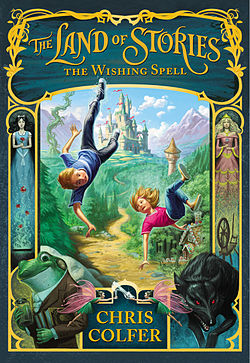
My favourite reading memory was from reading the Land of Stories by Chris Colfer, as it immerses the reader into a different world where the characters travel through storybooks and learn more about themselves. This is a highlight for me as it demonstrates the idea of adapting our personality to different situations. Reading this book made me feel that the characters are a reflection of who I am, which was a real hook that drew me into reading the whole series.
Which fictional character would most like/least like to meet in real life and why?
A fictional character that I would love to meet in real life is Froggy, as he is the representation of renewal. To me, he represents a character forced into hiding and separated from others through his curse, but at heart, he represents someone who is kind and truly understands change and adaptation. I would, therefore, love to meet him in person, to not only further understand his character but to learn and adapt his mindset into my own life.
What does renewal mean to you? Do you have any book suggestions for this theme?
To me, the theme of renewal can be interpreted as a fresh start to something and the opportunity to really learn and develop themselves as a person. I feel that there are many books that fit this theme, like Parachutes by Kelly Yang, which explores a more realistic theme of renewal.
Foundation Stage and Key Stage 1 Recommendations
Martha Fricsay-Myers, 11V
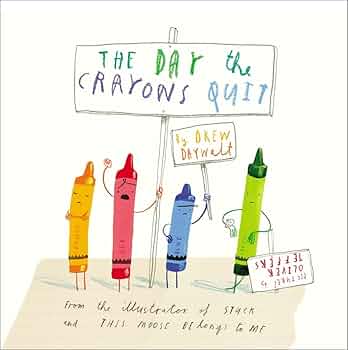
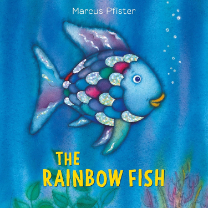
The Day The Crayons Quit by Drew Daywalt A lovely tale about a boy, Duncan, who desperately wants his beloved crayons to be happy, but he’s not sure how to go about this. All of them have different issues: Some are too short and tired out from overuse, some are ‘boring’ shades and never get touched, some are chewed and tattered, the list goes on… Each page contains a personal letter from the individual crayons, as they explain to their owner what changes need to be made to make them feel valued and worthy again. Inspired, and somewhat humbled, Duncan seeks to adapt and transform his crayoning habits, resulting in a beautiful ending, in which every crayon is loved and cherished, just for being them. Khudeja Irfan, 11T The Rainbow Fish by Marcus Pfister
This is a heartwarming story about a fish with iridescent scales, who shimmers more brightly than any other fish in the ocean. Despite his beauty, the titular rainbow fish is vain, arrogant and conceited, and he looks down on others. I like this story as it has to do with a change of personality; the fish becomes lonely and sad, so learns to be more generous. This is a great lesson for young children as they negotiate relationships and friendships, and it is beautifully illustrated.
Key Stage 2 Recommendations:
Jitkaew (Plearn) Charoenpiwatpong, 13K
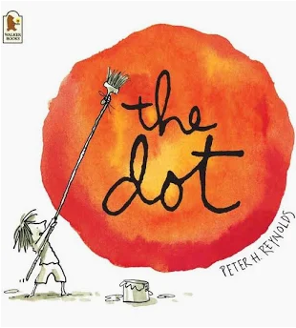
The Dot by Peter H. Reynolds
Until a single dot makes all the difference, Vashti thinks she is incapable of drawing. She learns that small actions can result in significant changes, and that mistakes can become beginnings, through support and a willingness to try again. The Dot represents the theme of renewal by demonstrating to young readers that every new endeavour is an opportunity to start over, and that growth frequently begins with a single step. It subtly fosters courage, inventiveness and the guts to see possibilities where doubt once existed.
Norie Tohi, 13S
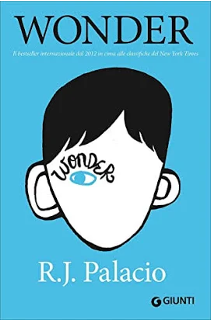
Wonder by RJ Palacio A boy with facial differences starts school, desperate to be treated ‘normally’ and accepted. Auggie is smart, funny and kind, and he is thrown into a world in which he has to navigate bullying, prejudice and intolerance. However, he is also able, for the first time, to explore his own identity and develop friendships built on kindness and compassion. Throughout the course of the story, many characters are renewed; they grow, they develop, and they ultimately change their perspectives on how we choose to treat those around us.
Key Stage 3 Recommendations:
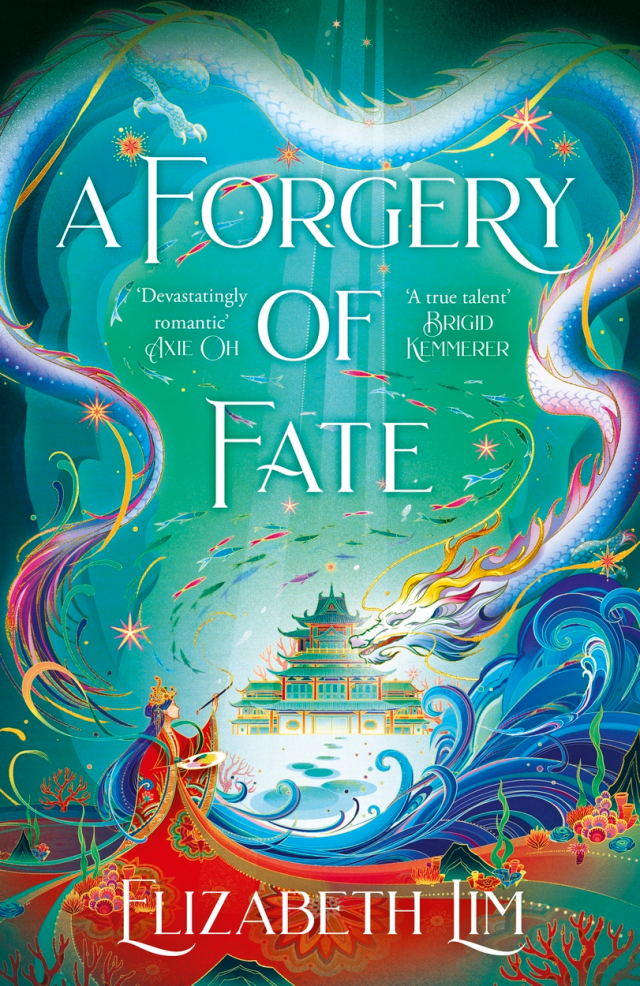
Poonyanuch (Amy) Soontharinka, 8J A Forgery of Fate by Elizabeth Lim
The main character of this book, Tru, can paint the future, which symbolises the potential for change and transformation. Truyan Saigas takes the burden of taking care of her mother and two younger sisters, after her father gets lost at sea. She has to find money to pay for her mother’s gambling debts, but one day she meets Lord Elang (a dragon) who says that he will help her family, but only as long as she agrees to go to the underwater realm with him. In their adventure, they find that many things in the realm are not quite right, and that it might give answers to the case of Tru’s missing father. I loved this book, because the adventure combined with the fantasy was top notch and it was amazing because the tension the author used to build it was really good. It is well suited for people who wish to find books that encourage people to not give up, even in the midst of desperation, and this story truly inspired me because it was so imaginative.
Ting Yu Claudia Tan, 7B The Inheritance Gamesby Jennifer Lynn Barnes
The main character in this book, named Avery Kylie Grambs, (which spells out a very risky gamble) was chosen to inherit from a billionaire. In this story, Avery randomly receives the fortune from Tobias Hawthrone – a billionaire who she never met, or knew of, at the time. But, in order for her to claim Tobias’ fortune, she has to move into the puzzling world of the Hawthornes. At the house, there are tons of undiscovered secrets, puzzles, riddles and secret passages. Avery has to solve each of them to fully understand the ‘game’, but she doesn’t solve it all alone. She teams up with three Hawthorne brothers- each with different and unique agendas. I enjoyed reading the series very much, as it involves lots of riddles which make sense in the end. The book contains a mix of mystery, romance, suspense and family drama. It’s a good book to read as, it helped develop my use of vocabulary and the style of writing is truly inspiring. The series is technically a trilogy, but if you want to read even more, there are extra books to fulfil your understanding of the story. I feel like the moral here is ‘perseverance’, as well as ‘renewal’, since despite everything, she never gave up in the game.
Key stage 4 and Senior Studies Recommendations:
Evie-Grace Meadows, 11N
The Girl On the Train by Paula Hawkins
The Girl on the Train by Paula Hawkins is a psychological thriller that follows Rachel, a troubled woman who spends her daily train journeys watching a seemingly perfect couple from afar. When the woman, Megan, she observes suddenly goes missing, Rachel involves herself and becomes entangled in the investigation due to her beliefs on how Megan disappeared. This investigation, in turn, forces her to confront her own unreliable memories, past mistakes, and destructive habits. At its heart, the novel explores renewal through Rachel’s journey of self-confrontation and change. The story suggests that renewal isn’t instant or easy; it requires facing uncomfortable truths and taking responsibility for past actions. Through this, the book shows that even deeply broken situations can lead to growth, making it an engrossing but ultimately thought-provoking read.
Emily van Ek, 11S Cat’s Eye by Margaret Atwood This book tells the protagonist’s story from childhood to adulthood and all the difficulties in navigating it. It shows the impact of childhood bullying and the long-term effects of it, and the duplicitous, unclear line between friends and enemies, as well as the main character’s struggle to understand what is happening to her. Eventually, when she grows up, she is left with mixed feelings about her childhood and is portrayed as quite bitter or uncaring. She often sees glimpses of her childhood bully, or thinks about her in everyday situations, showing how much she was really affected by the torment. In the end, she begins to accept and leave what happened behind, allowing her to move on from the feelings of resentment that remained, allowing her to become a newer person. This story shows the struggle of accepting difficult or traumatic life events but shows that overcoming them is ultimately necessary in order to change for the better, and that a fresh start is possible.
International Mother Language Day, celebrated every year on the 21st of February, is a global event established by UNESCO in […]
The Guitar Gathering
By Wanpiya Kittikunsiri, Piano Teacher
Where learning meets listening, and music becomes a shared experience.
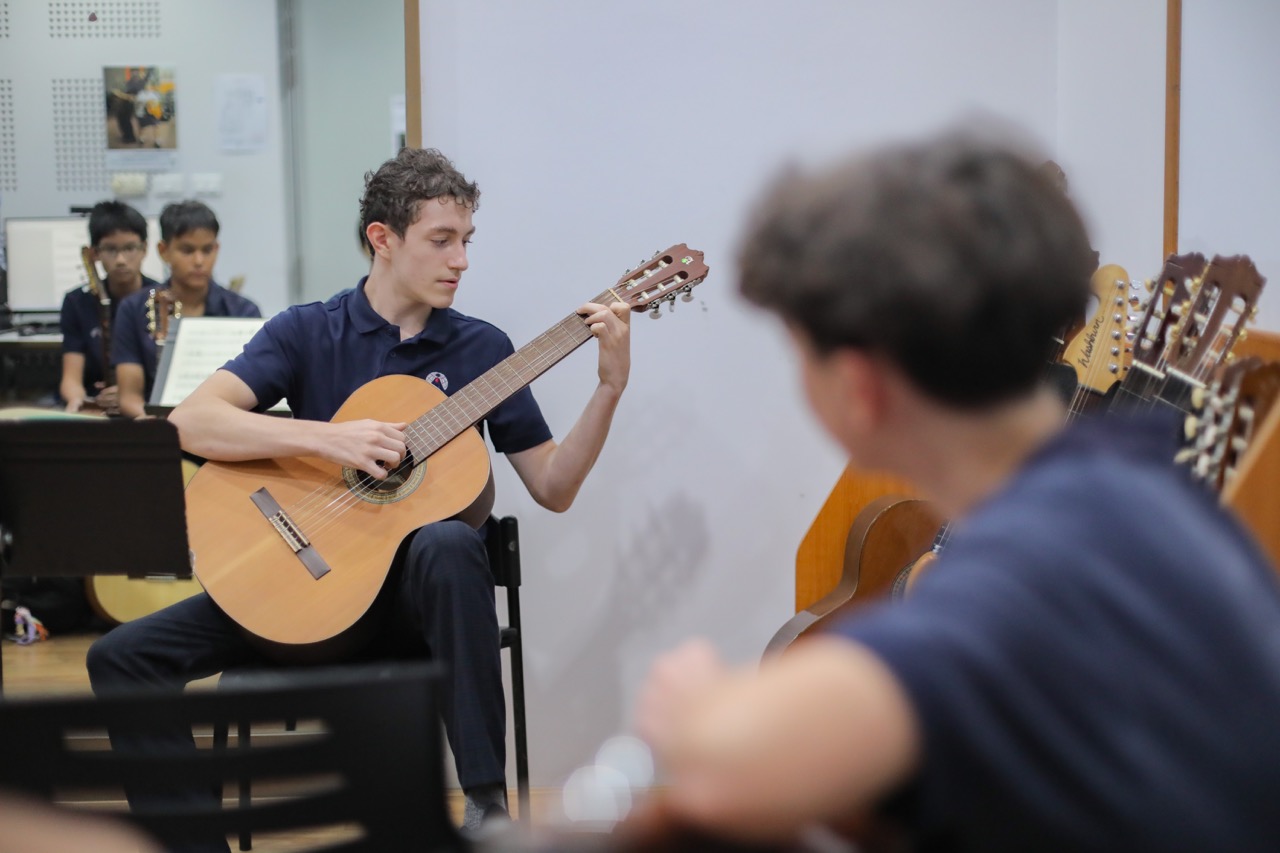
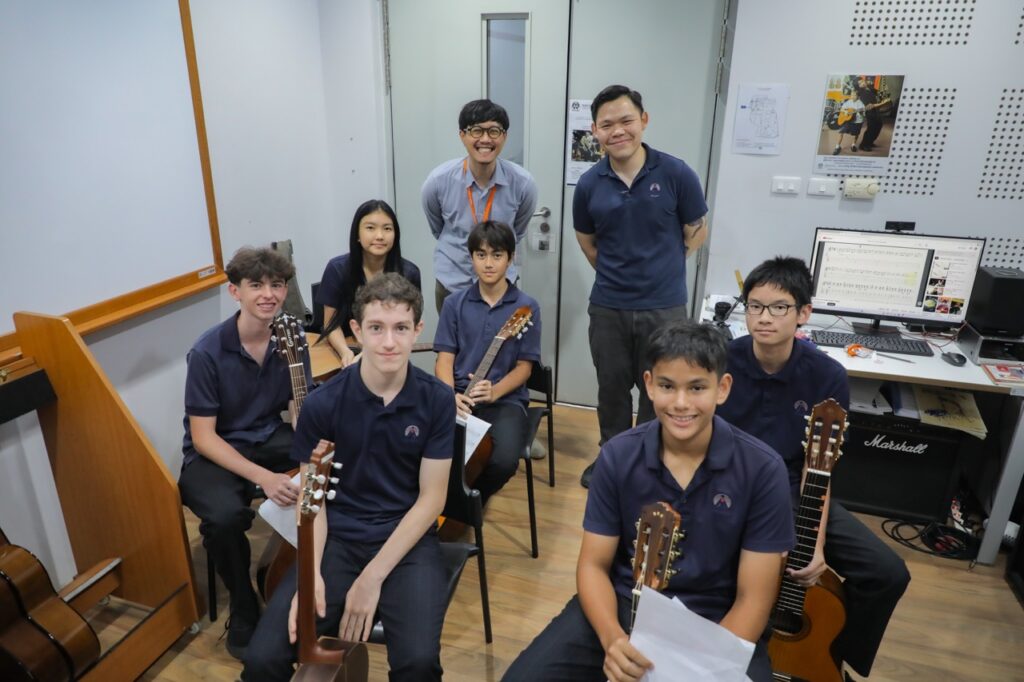
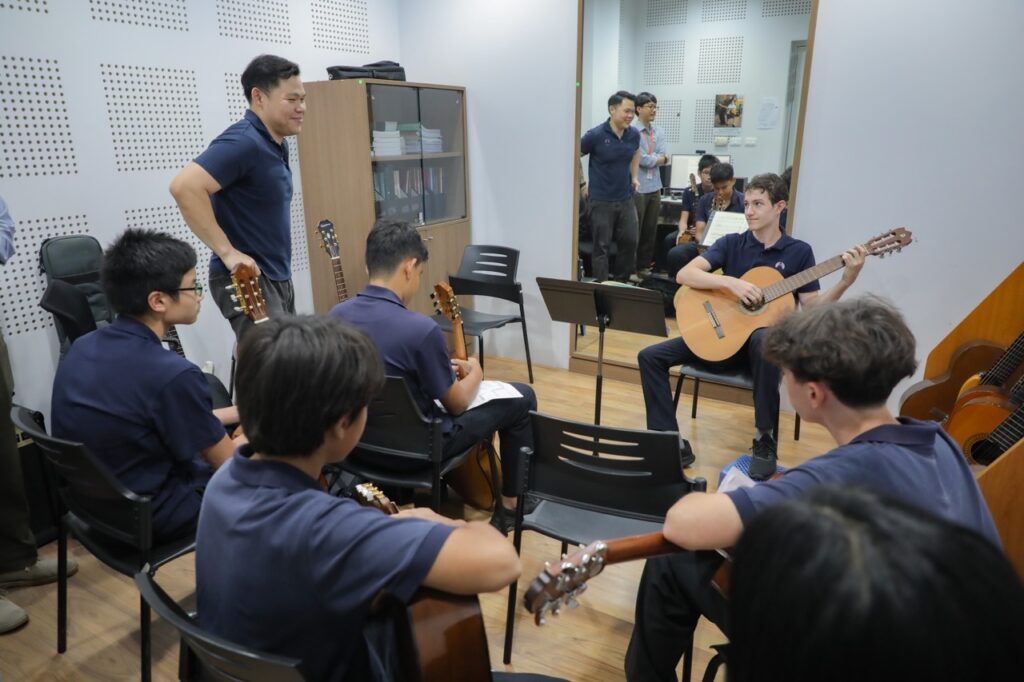
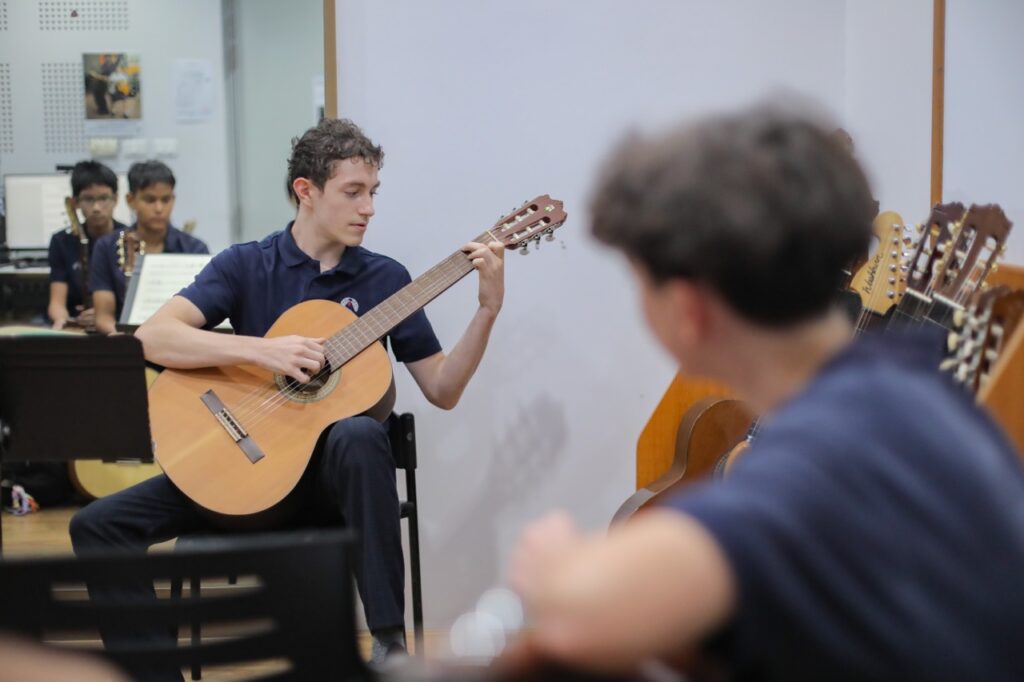
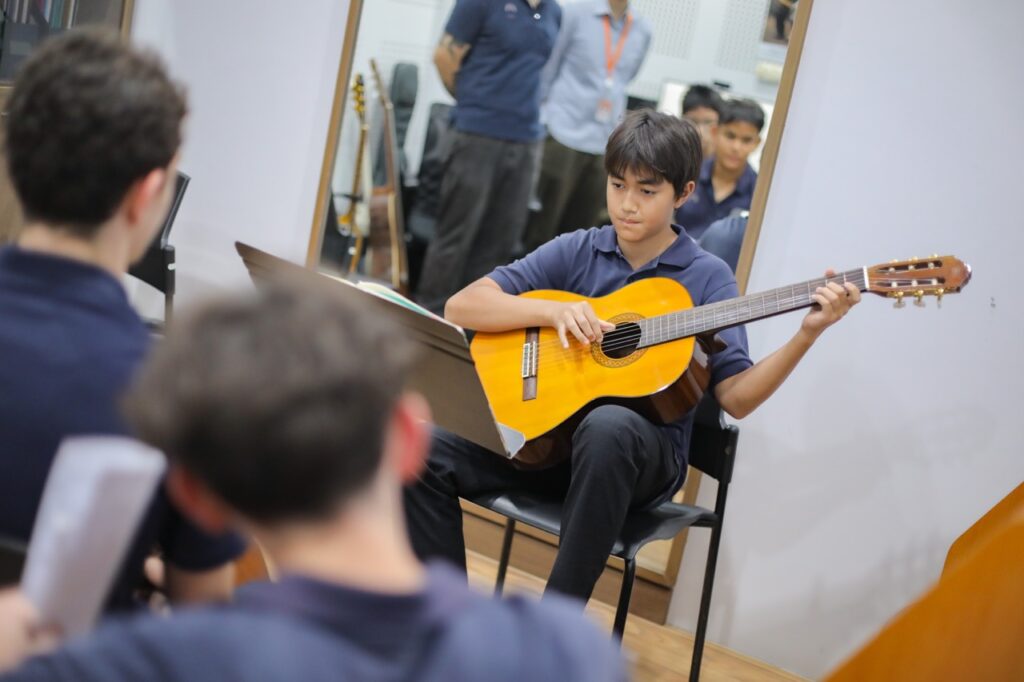
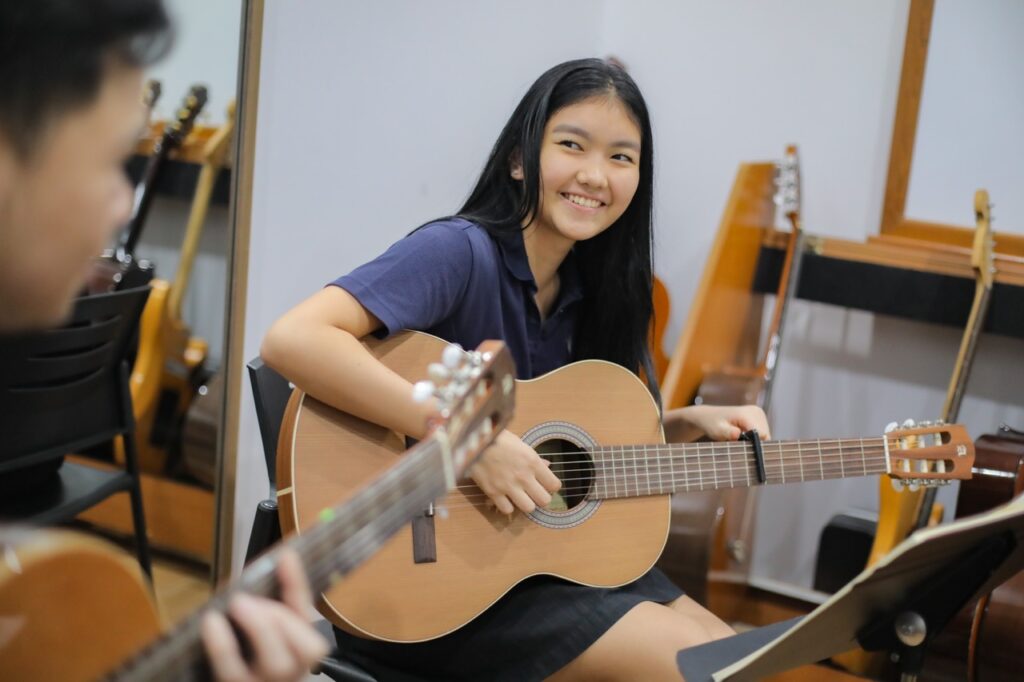
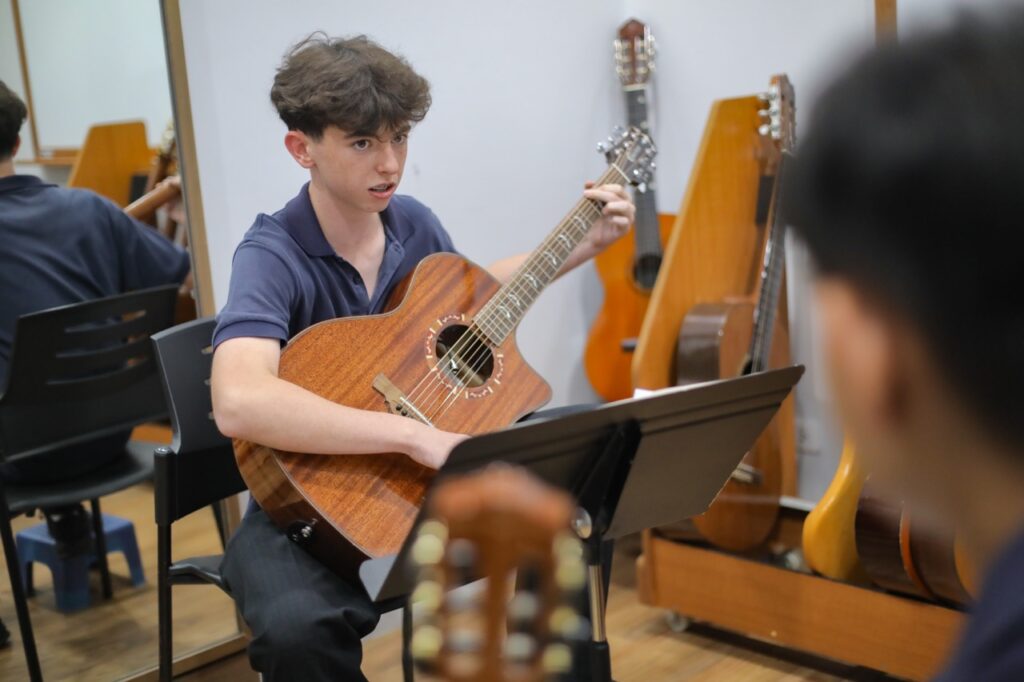
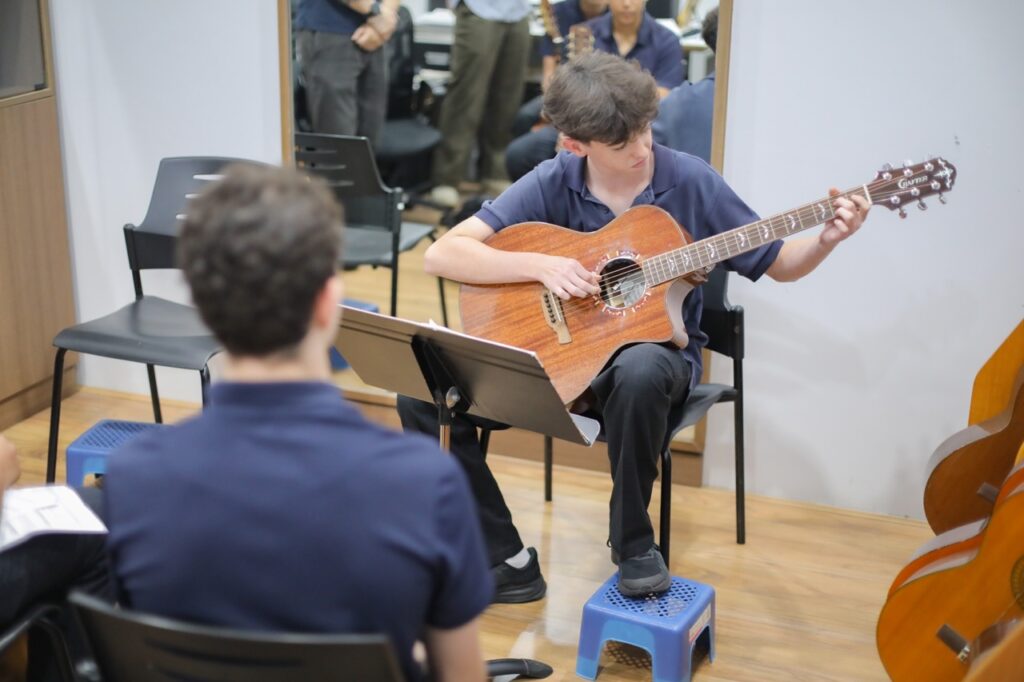
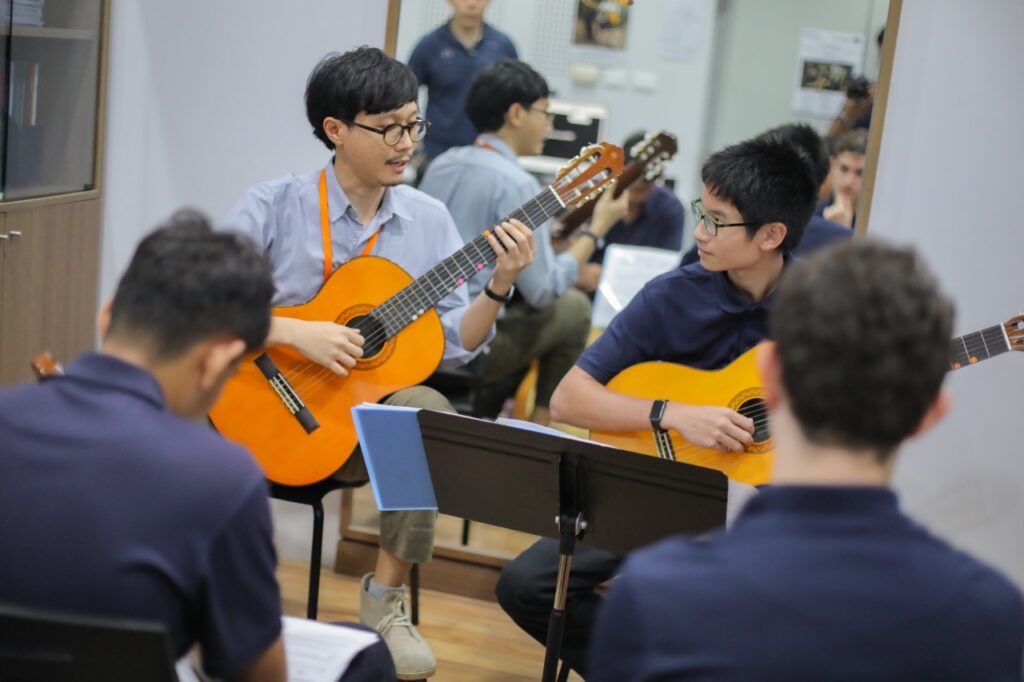
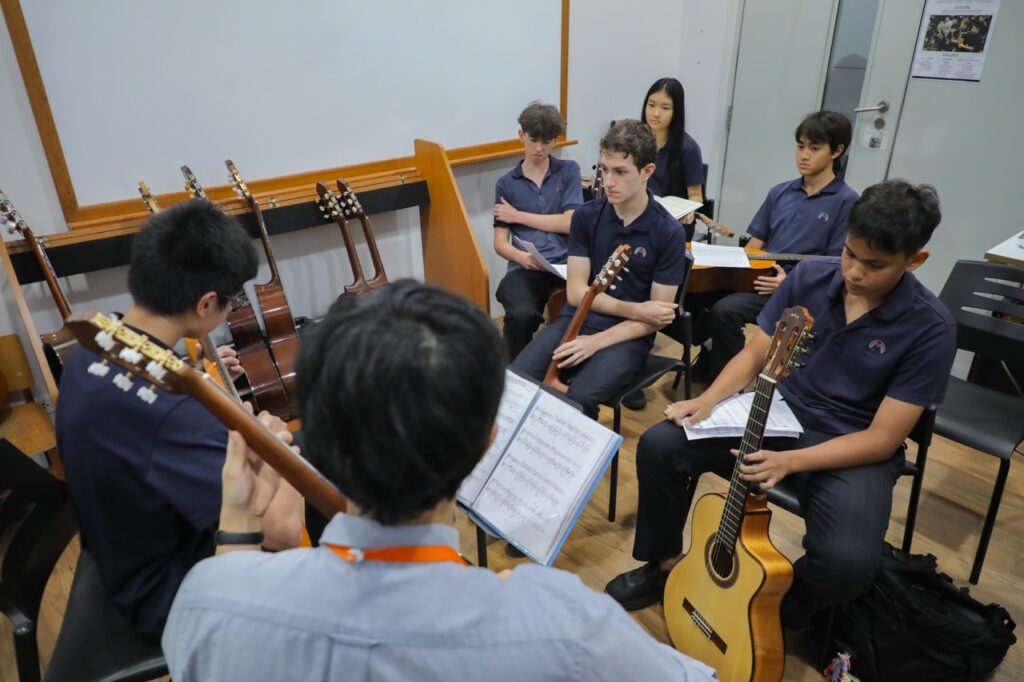
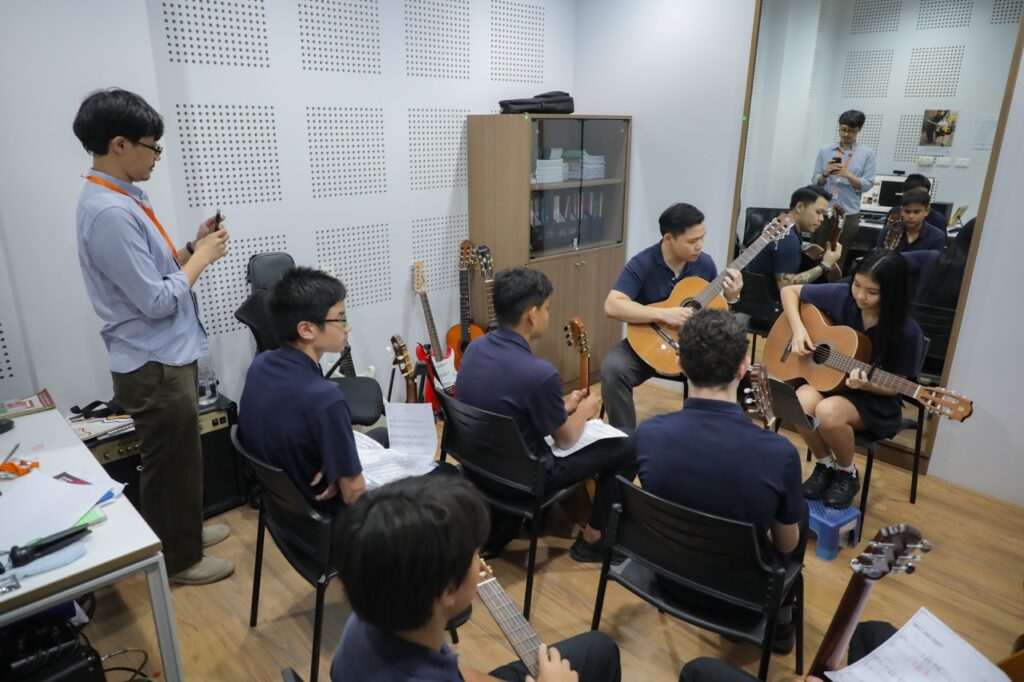
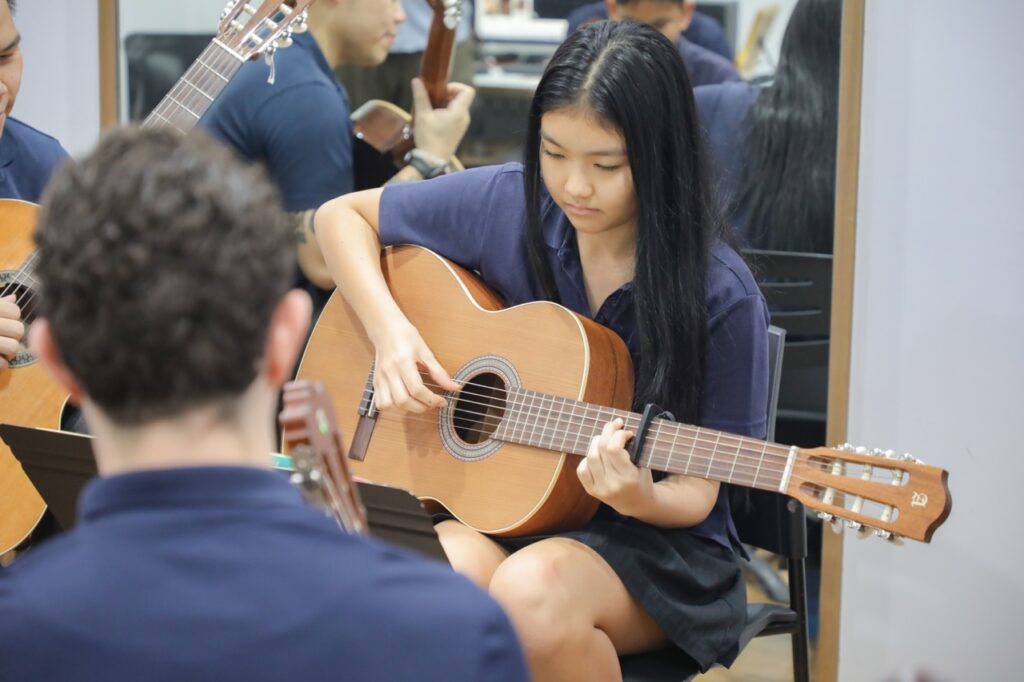
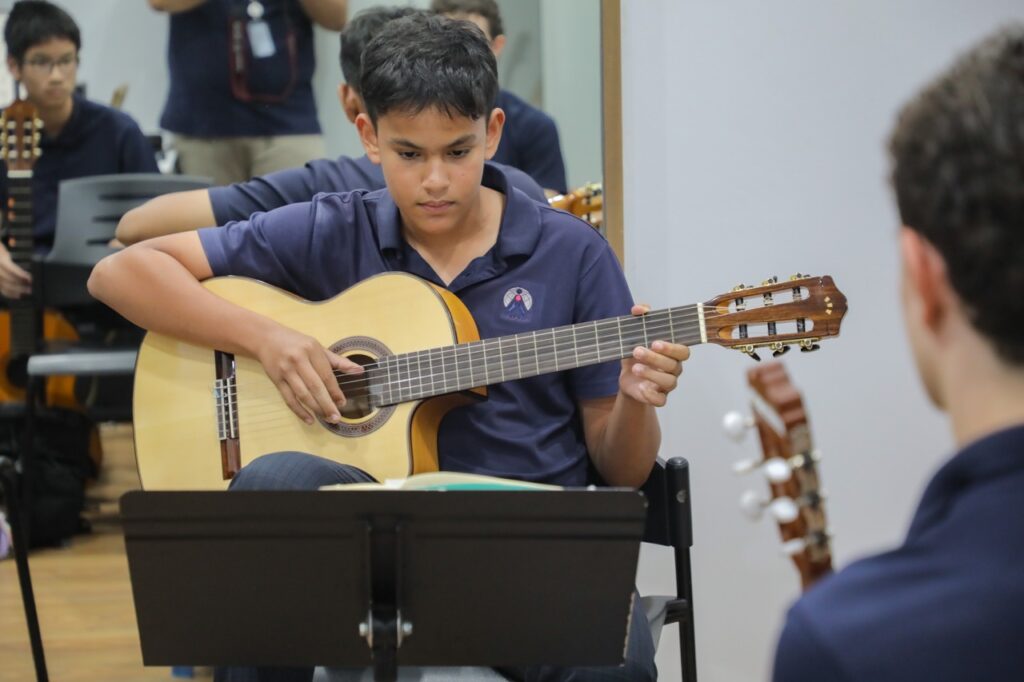
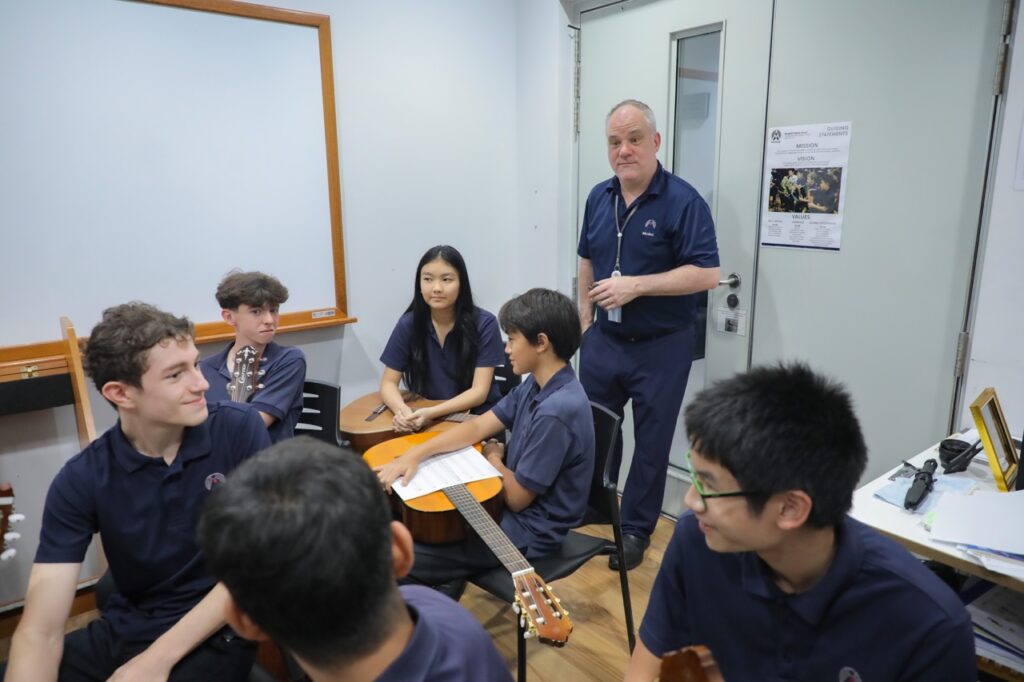
On 10th March, the Guitar Gathering at the Arts Centre (Room Arts 116) created a small, welcoming space for students to perform, share and listen together. In this relaxed setting, students had the opportunity to step on stage, present their work and learn from one another.
Organised by the Instrumental Music Programme, events like this play an important role in musical development; offering students regular opportunities to share their progress and build confidence through real performance experiences.
From this experience, we invited both teachers and students to share their perspectives from the stage.
Q: What are the main challenges guitar students face in performance?
KhruTanid: Many students tend to focus only on their own sound, often overlooking the backing track and overall rhythm. This can affect the balance of their performance.
I encourage them to develop deeper listening skills, learning to hear multiple elements at once before gradually playing together with the music. With limited practice time, we focus on efficiency by breaking pieces into smaller sections, repeating them and building accuracy step by step.
Ultimately, music is not just about playing the right notes, but about communication and connection.
Q: What about confidence on stage?
Khru Jutichoke: Confidence is a common challenge. Many students feel hesitant to perform, worrying about mistakes or how they may be perceived. However, once they are on stage, the relaxed and supportive atmosphere helps them open up and play more freely.
The Guitar Gathering is not about perfection, but about learning. We emphasise structured practice and encourage a mindset of continuing, even after mistakes. Even a small stage can have a meaningful impact on a student’s growth and confidence.
Q: What did students gain from this experience?
Garam Lee, 10H: It was a simple but meaningful experience. Sharing music with others felt refreshing and encouraging. Even though I made some mistakes, I learned the importance of continuing to play. Overall, it was an enjoyable and valuable experience that motivated me to keep improving.
More than a performance, this is a space for growth, confidence, and connection through music.
The event was led by our Guitar teachers, Jutichoke Assarasakorn and Tanid Sintaratana.
If your son or daughter is interested in music lessons at Bangkok Patana, please contact Khun Sak at Pech@patana.ac.th for more information.
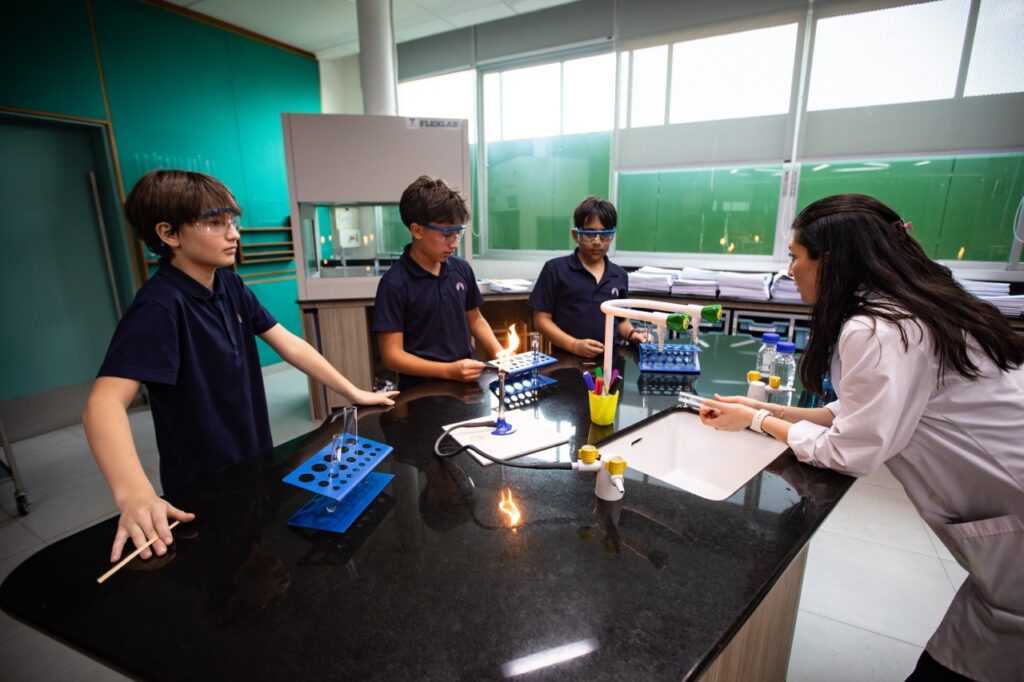
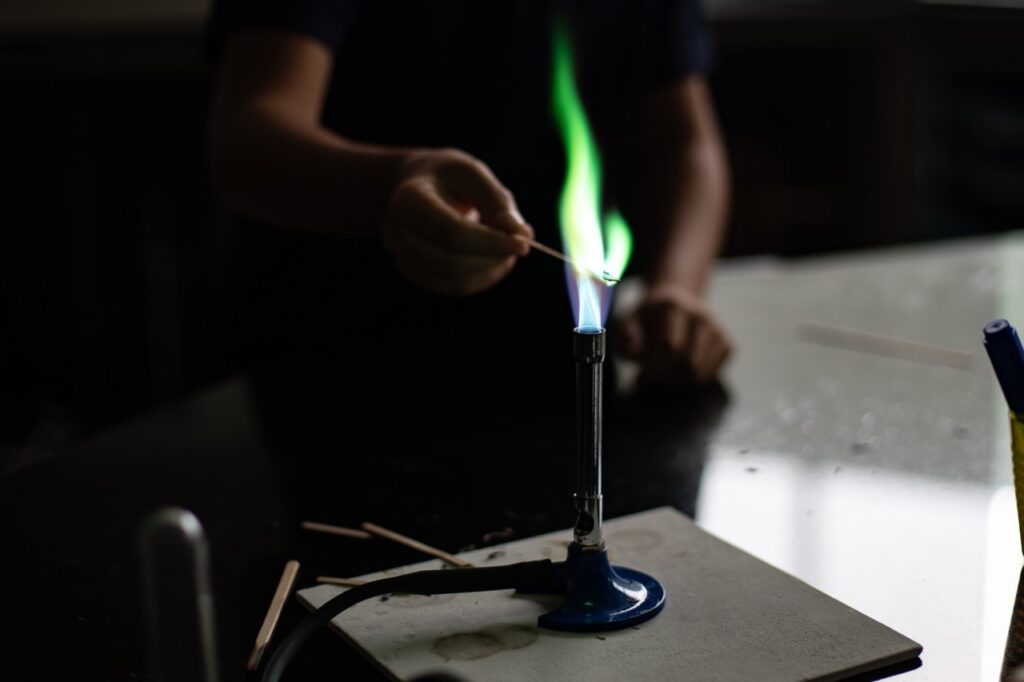
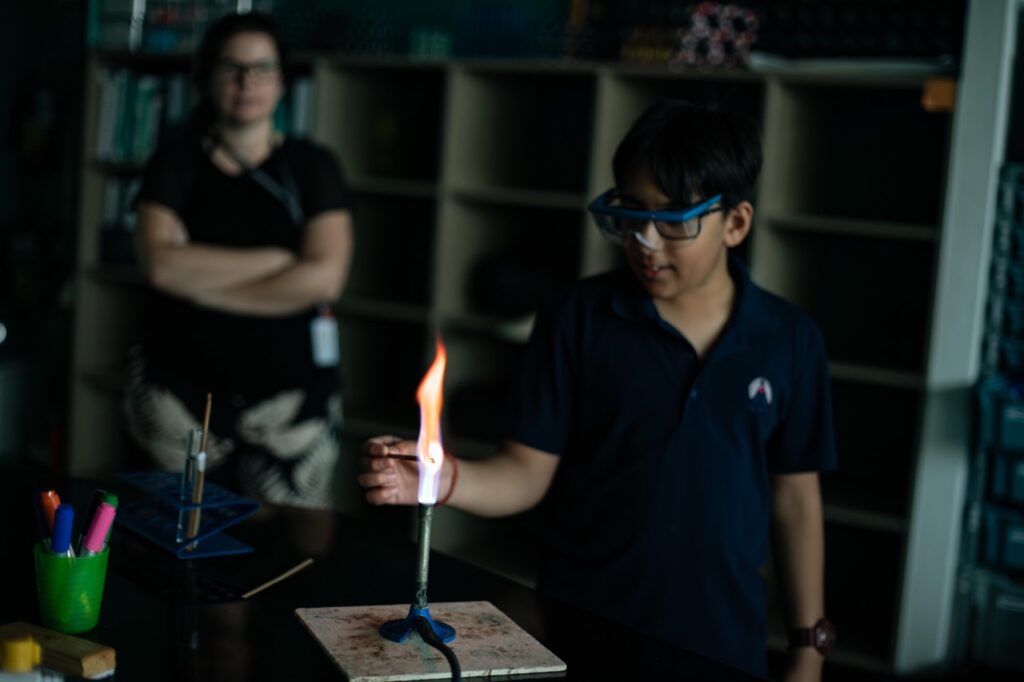
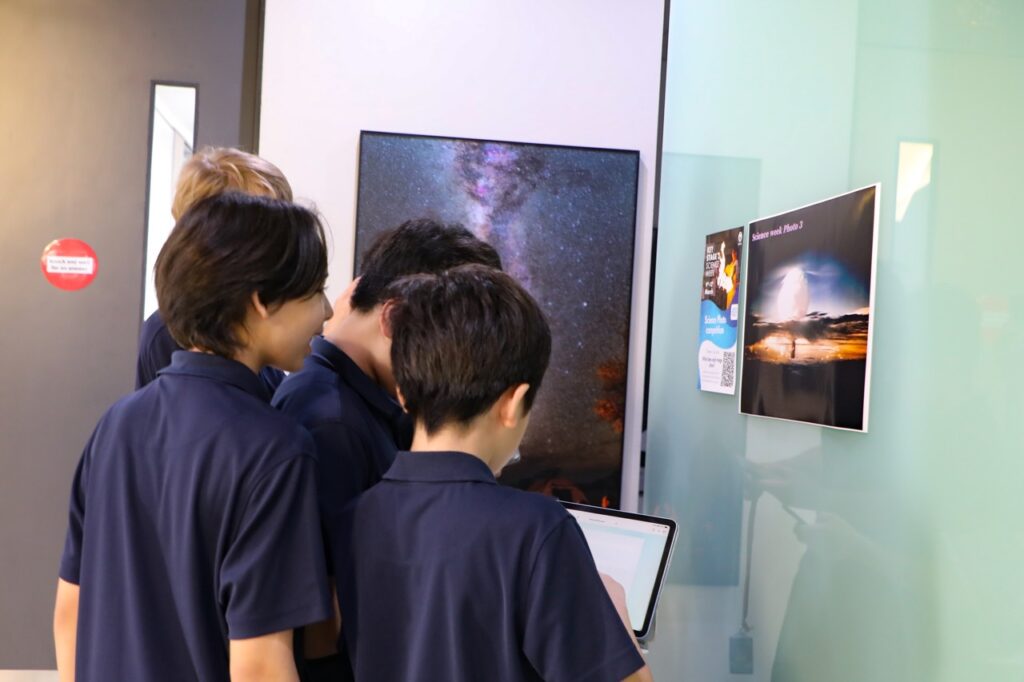
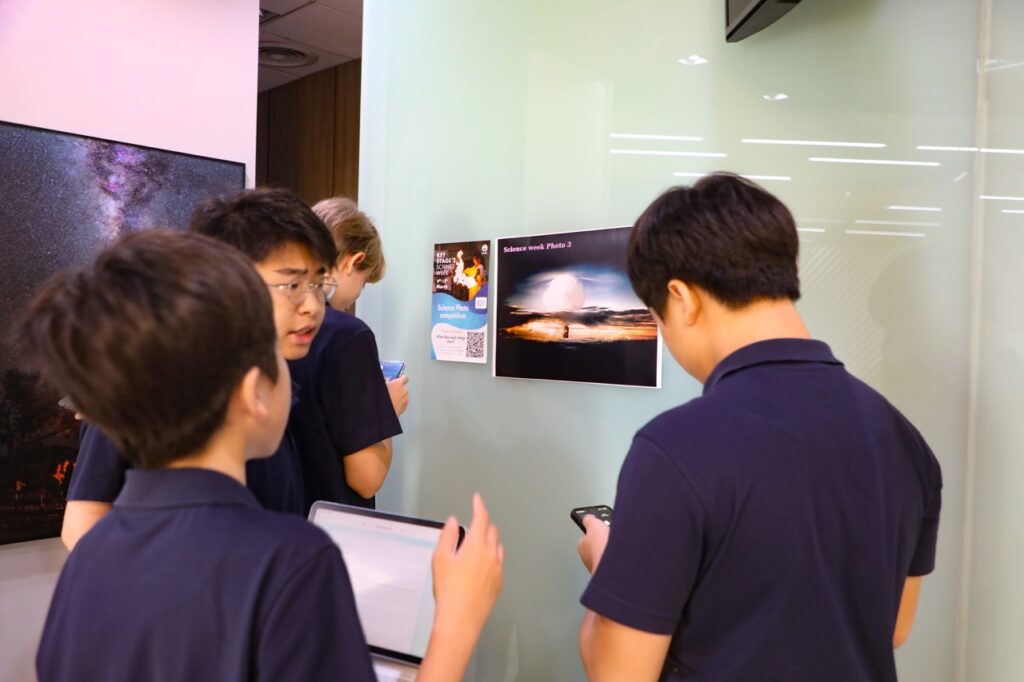
From 9th-13th March, Bangkok Patana celebrated British Science Week 2026 with interactive competitions, extra-special practical sessions, informative Careers talks and a Library exhibition encouraging students to read books related to STEM (Science, Technology, Engineering and Maths).
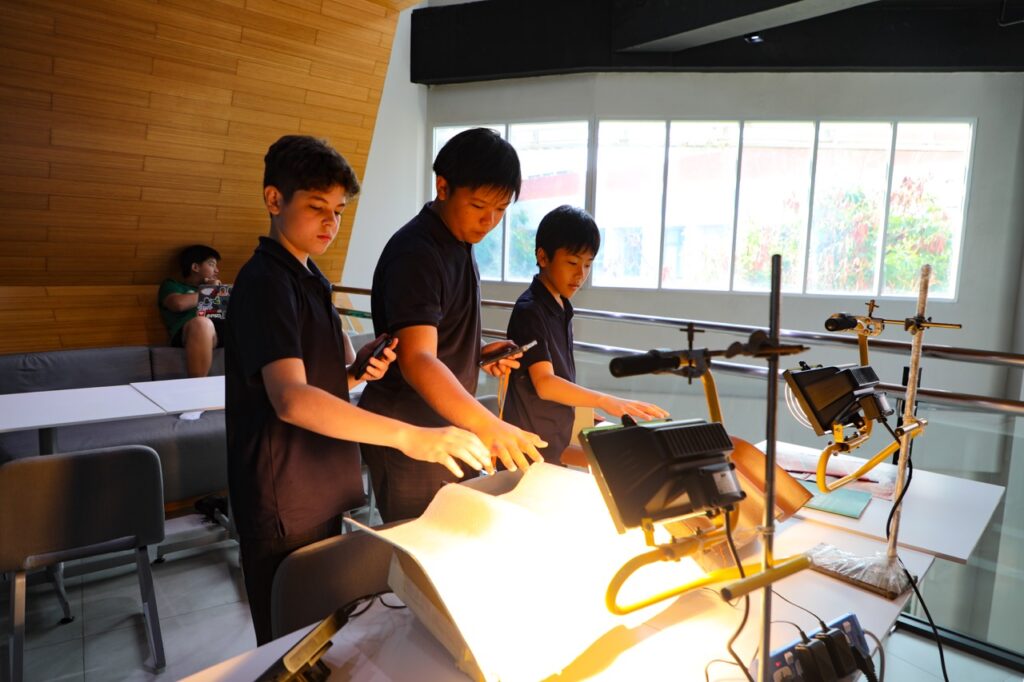
This year, the theme was “Curiosity: What’s your Question?” and around the Secondary School there were a series of activities designed to foster a sense of curiosity in our Key Stage 3 learners. The Library proved a very popular spot at break and lunchtime with demonstrations of Newton’s Cradle and steady hand Surgeon Skills, whilst also showcasing all the fantastic books we have in the Secondary Library, which is surely the best way to pique curiosity in our students’ young minds! The Careers Department kindly invited University of British Columbia to talk to students about careers and showcase why a degree in STEM is a fantastic choice.
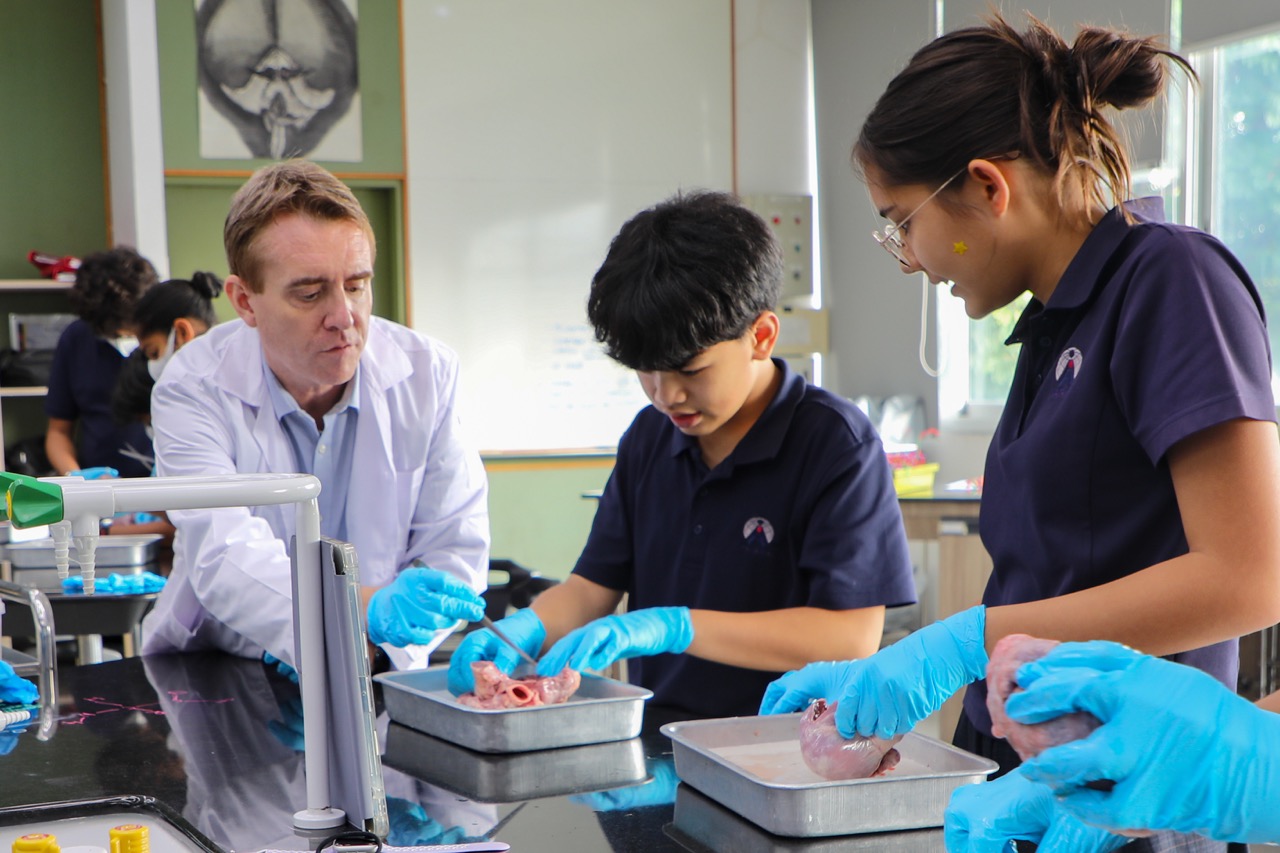
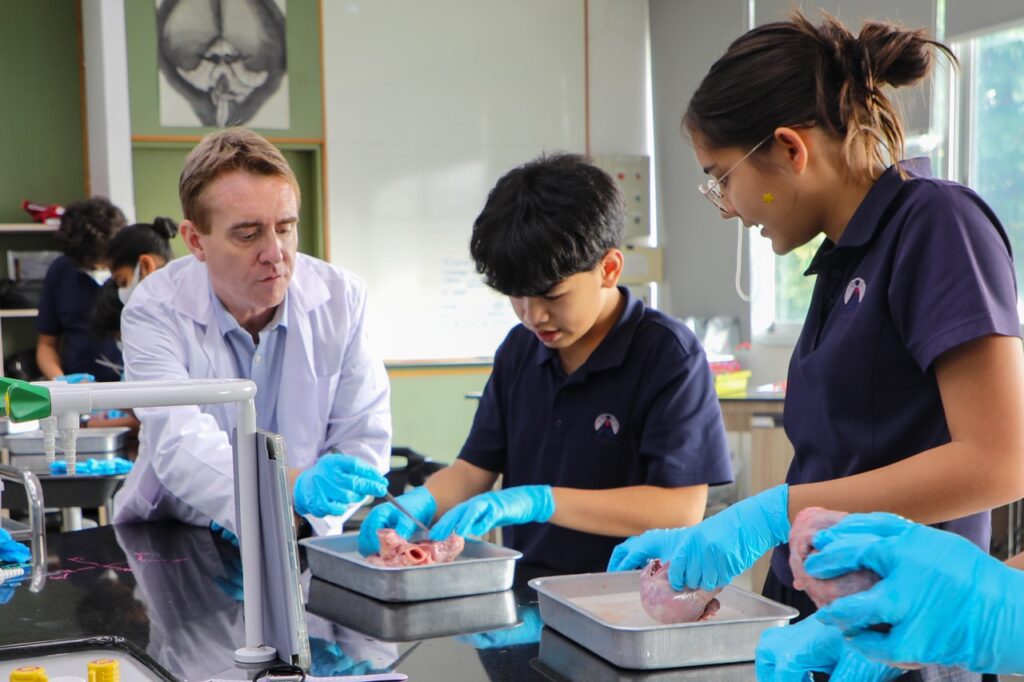
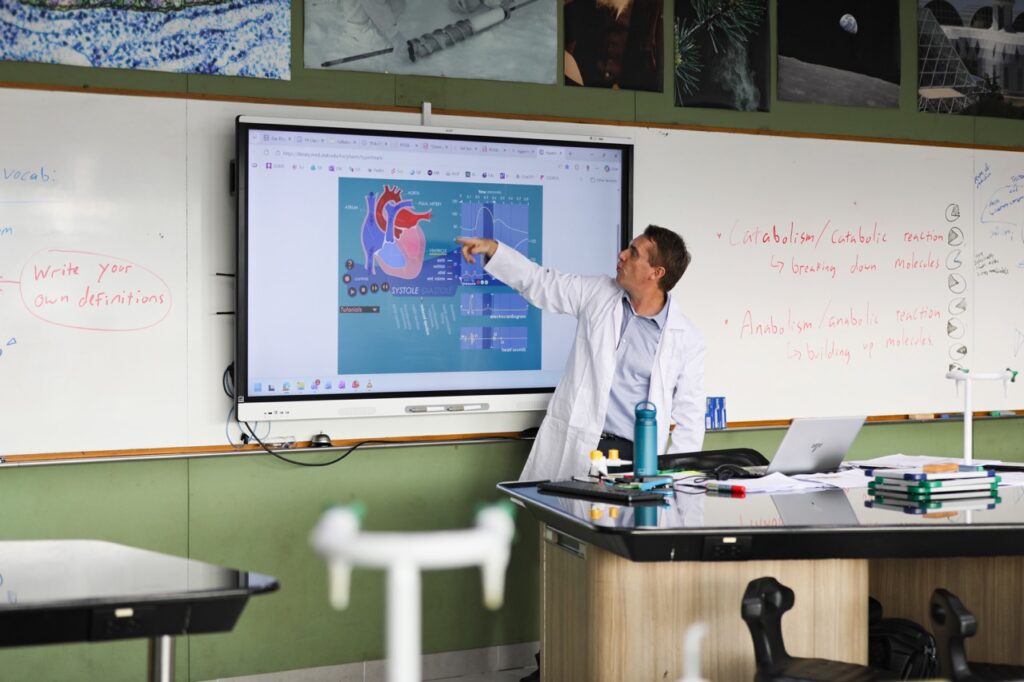
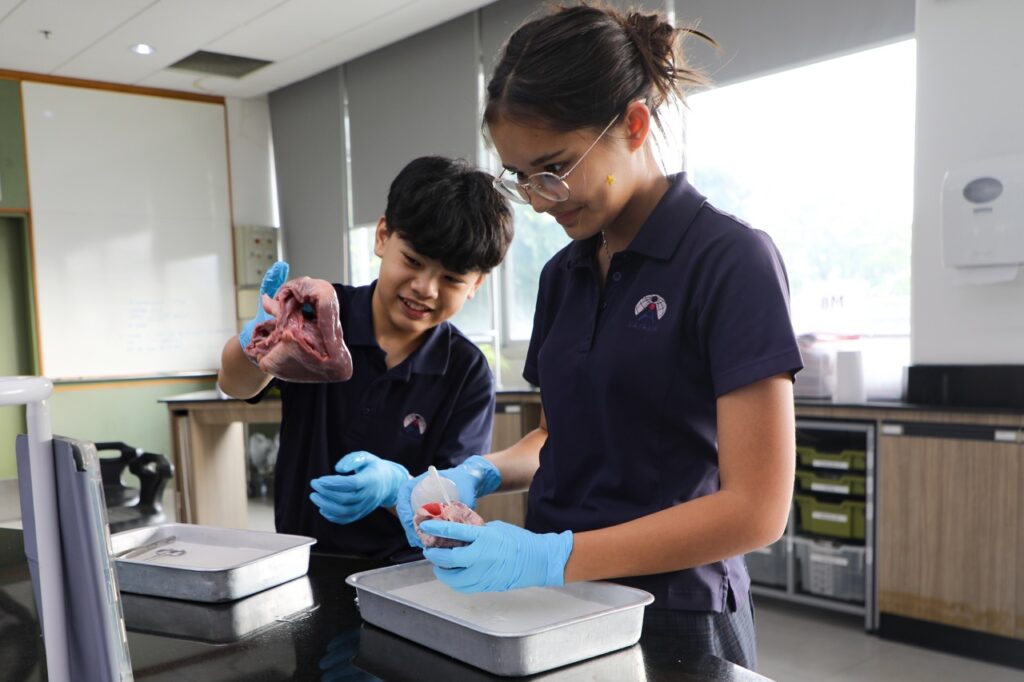
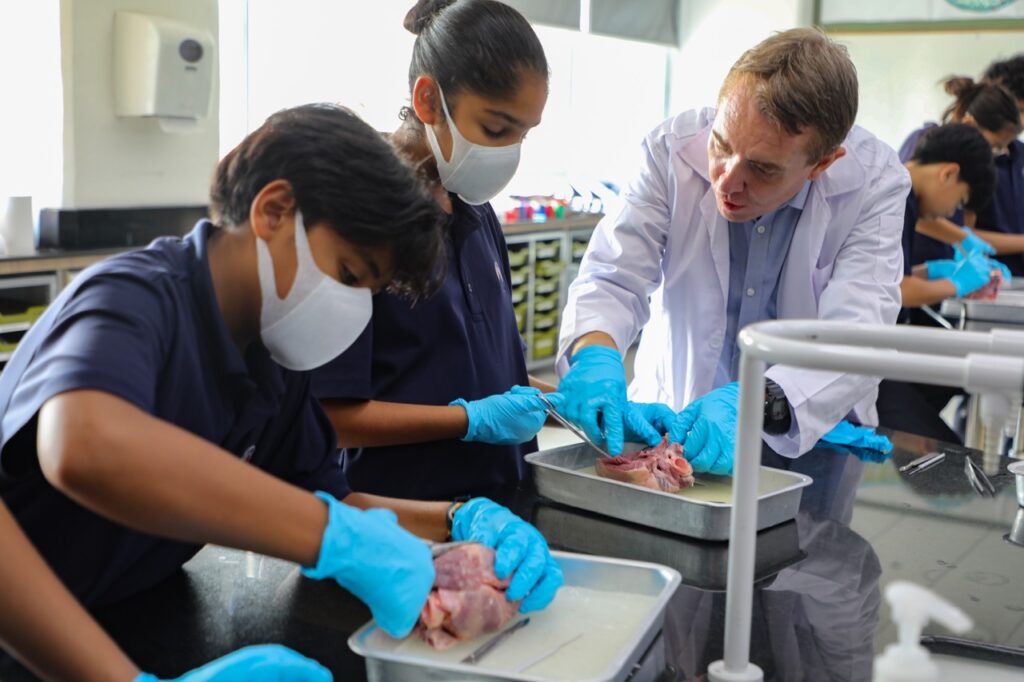
Within the Science Department, students undertook a Scavenger Hunt around all the informational boards and exhibits within the Science Centre, there were a series of science photographs to get students discussing what each one depicted, and a curiosity station set up in each of the Science Break Out Areas. Each of the stations showed ‘The Albedo Effect’ (Physics)’, Warming Properties of Carbon Dioxide (Chemistry) and Microplastics under the Microscope (Biology); topics that are highly relevant here in Thailand. Students also had the opportunity to take part in a range of activities at lunchtimes or after school this week outside of lesson time, such as Dissecting Hearts with Dr Holden, Exploring Liquid Nitrogen with Mr Baker and Making Rocket Fuel with Ms Lashkari.
With over 65 entries, the winners of each of the competitions received a hand-held Microscope or science experiment kit (if shared) as their prize. Congratulations to Tituan (Titou) Picard Schantz, Yu Ning (Emily) Wang, Milan Qureshi, Disiree (Luella) Diskul Na Ayudhaya, Nuttiphol (Nate) Shiawatra, Theodore (Theo) Willinger and Rachapol (Danny) Hattasingh, as well as all the students who successfully took part. A huge ‘Thank You’ to everyone involved.
Tech Tips #321: WhatsApp Introduces Parent‑Managed Accounts for Under‑13s
By Brian Taylor, Vice Principal, Technology for Learning
WhatsApp has announced a significant update that may be relevant for families with younger children. The app now offers Parent‑Managed Accounts, allowing children under the age of 13 to use WhatsApp with an account that is set up and overseen by a parent or guardian. This marks a change from previous age rules and reflects how widely WhatsApp is already used in family and school communities.
With a parent‑managed account, the child’s WhatsApp experience is deliberately limited. Parents set up the account by linking their own device with the child’s phone and then manage key settings from their own device. Parents control who can contact their child, which group chats they can join, and whether new contacts are approved. Messages from unknown contacts are sent to the parent for review first. 1
Parents also receive notifications about changes to the account, such as new contacts being added or a user being blocked or reported. Privacy settings are protected by a parent PIN, meaning children cannot change them independently. While messages remain end‑to‑end encrypted, many features available on standard WhatsApp accounts are disabled. This includes status updates, disappearing messages, location sharing, Meta AI features, and linked devices. The focus is on straightforward messaging and calling only.
It is important to remember that WhatsApp is still a social communication platform. The availability of parent‑managed accounts does not mean that every child under 13 should be using it. Age, maturity, and readiness all matter. For families whose children are already asking for access, or using WhatsApp informally via friends’ devices, this feature provides a safer and more visible alternative.
As always, technology tools work best alongside regular conversations at home. Staying involved, talking about group chats, and checking in frequently remain essential. This feature is being rolled out gradually, so it may not appear on all devices immediately.
Admissions Reminder for Leaving Families Withdrawal Reminder: If your child(ren) will be leaving Bangkok Patana in June, please submit a withdrawal form to the Admissions Office […]
What is Mathematical Communication?
By Scott Tooley, Head of Faculty, Mathematics
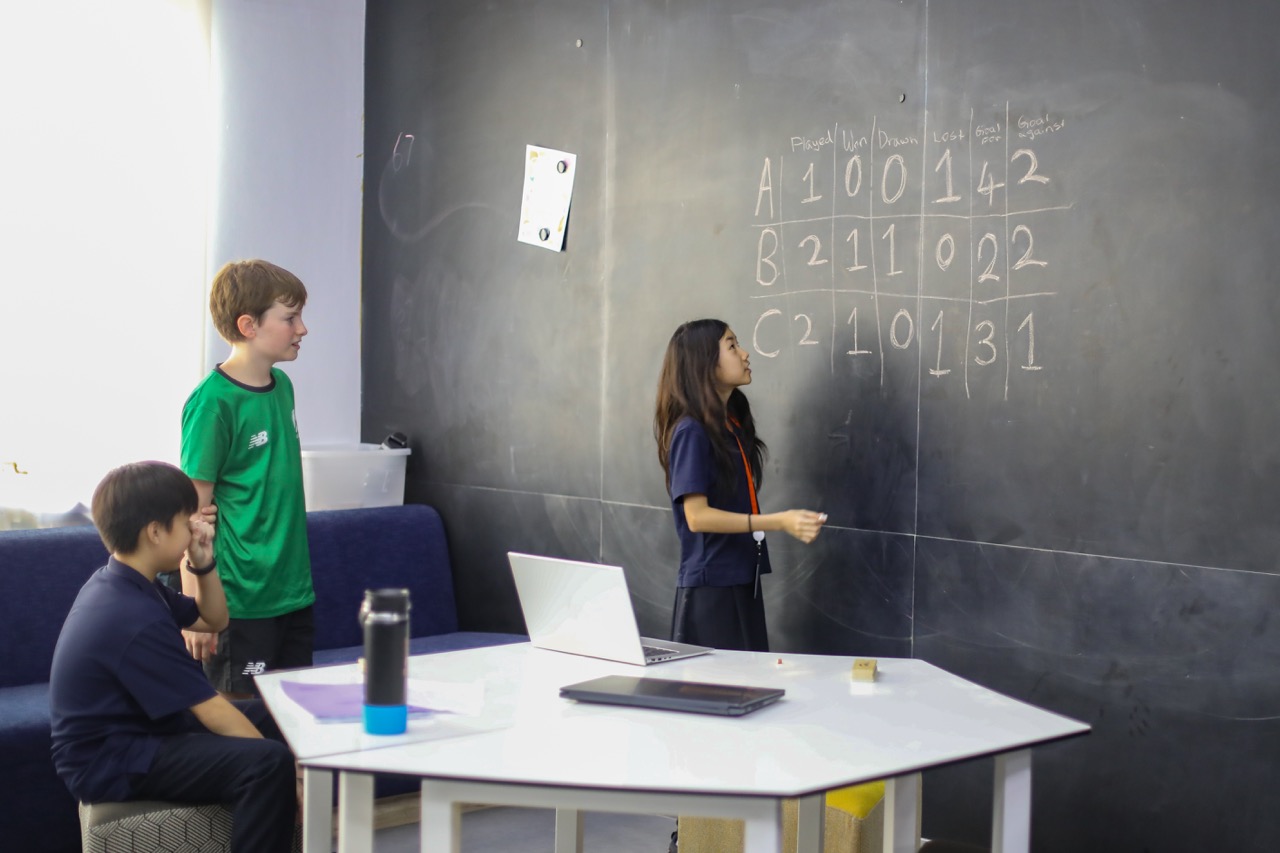
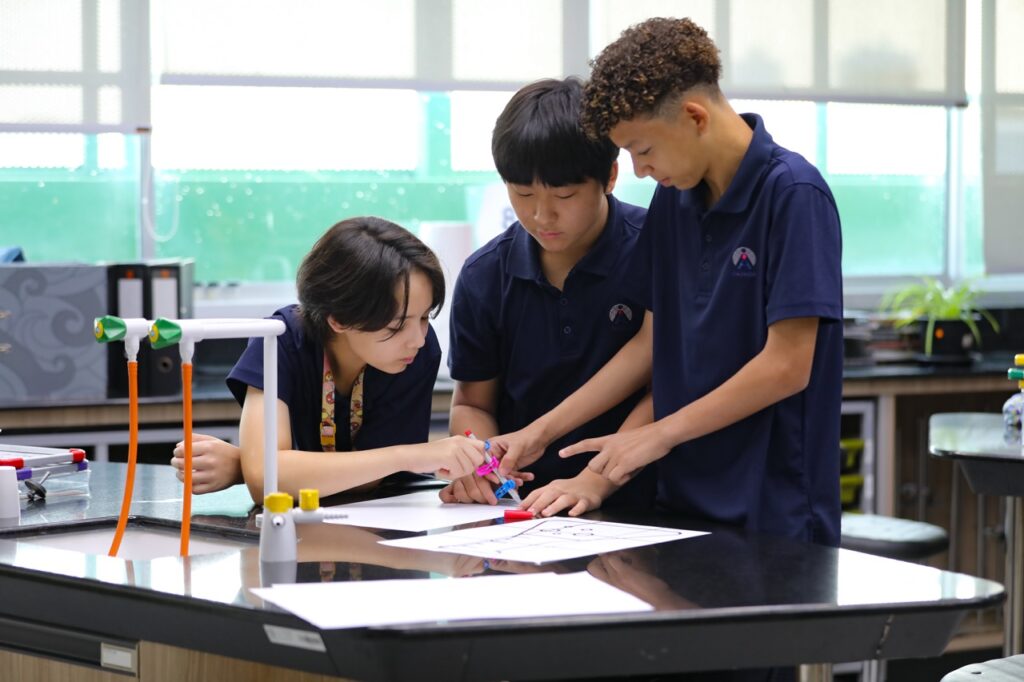
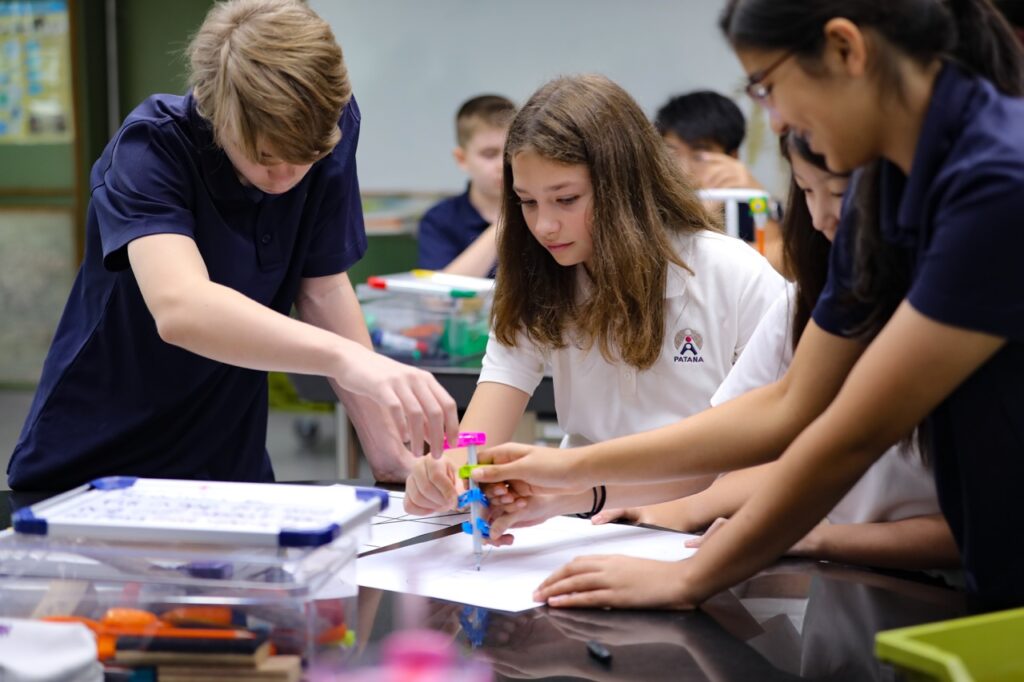
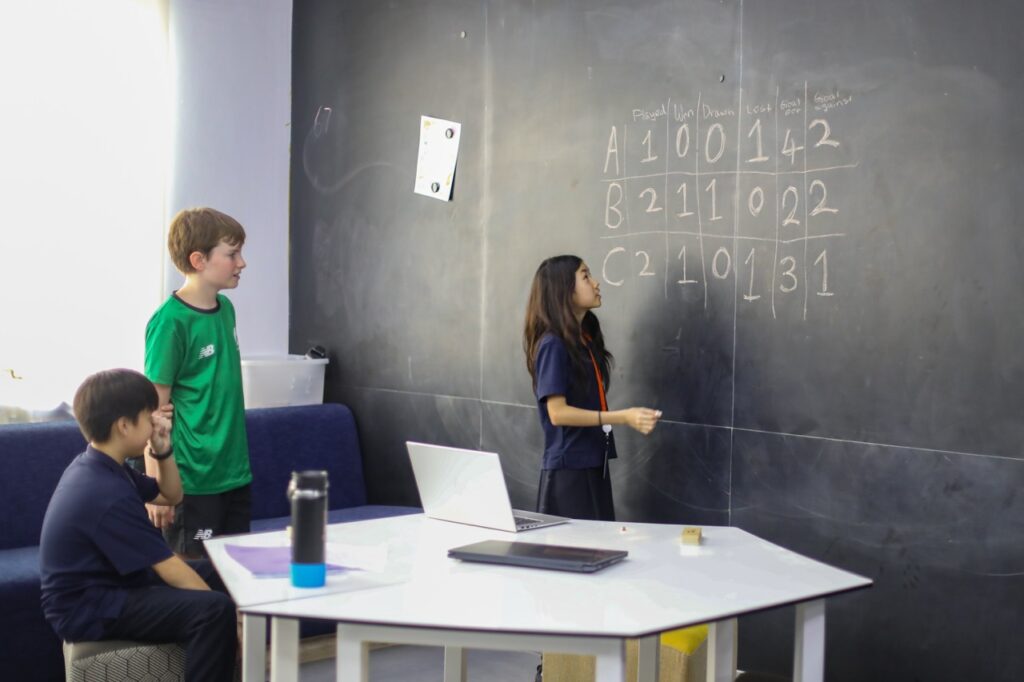
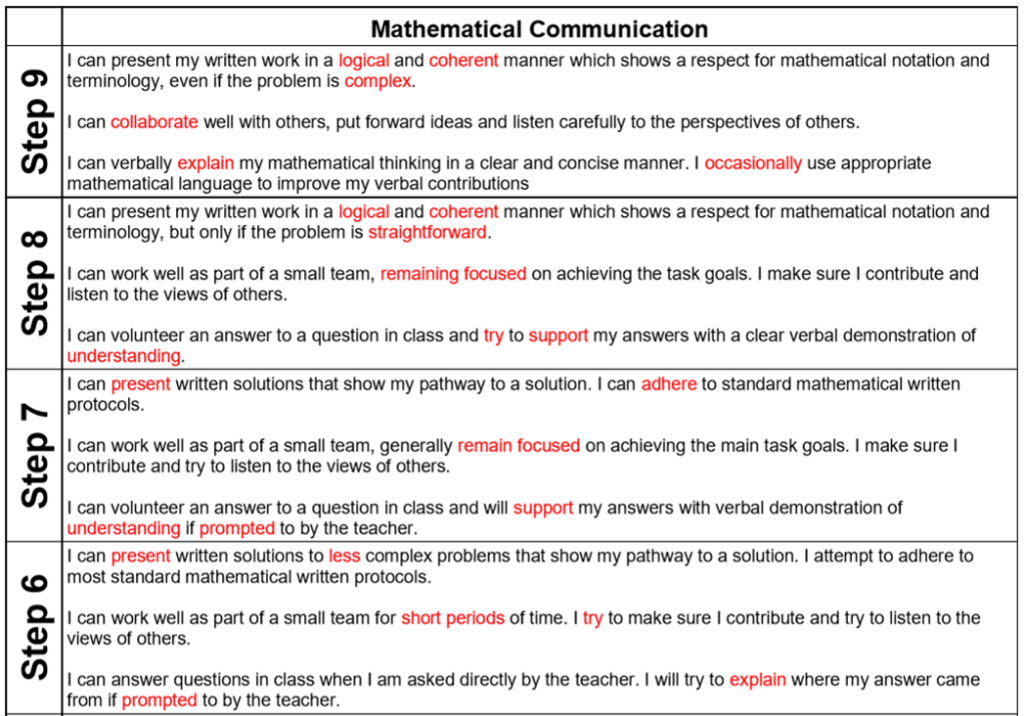
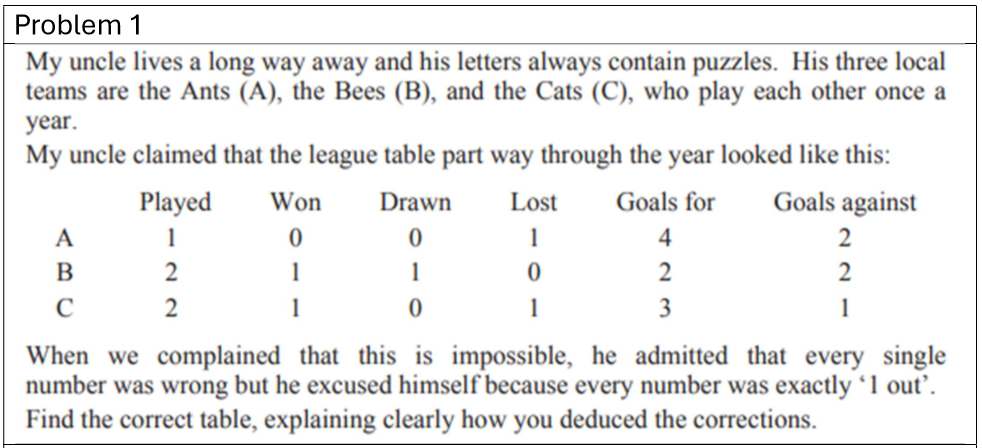
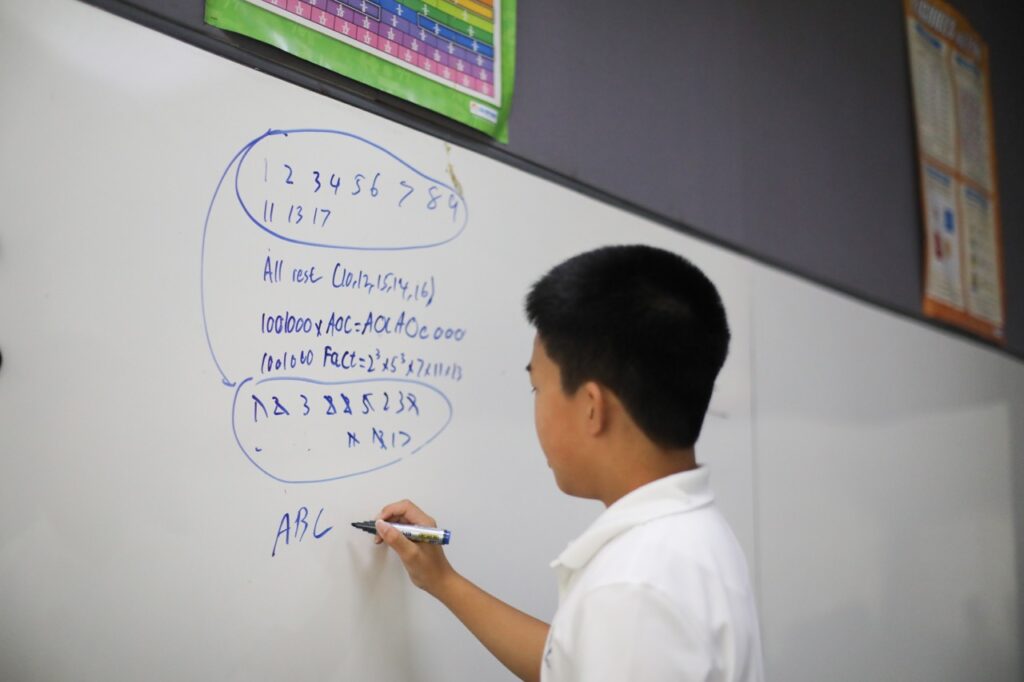
Some of our Year 7 Students have been developing their Mathematical Communication skills to help them work towards the Performance Goals. Mathematical Communication is an important strand of our Key Stage 3 Progress Map, as it helps students to develop sophistication and rigour in the way in which they communicate a complex solution. Two of the challenges required written solutions, and the third challenge asked the students to communicate their solution in a video format. How do you think you would do with the problems that they were given? Why not have a go at the problems first, before looking below to see some examples of what the students have put together? What advice would you give them?
Progress Map – Mathematical Communication Strand
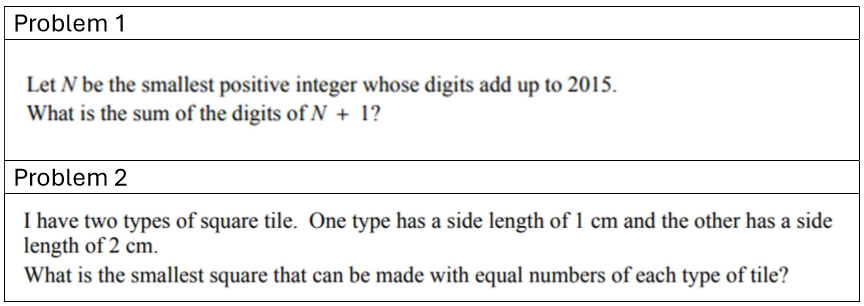
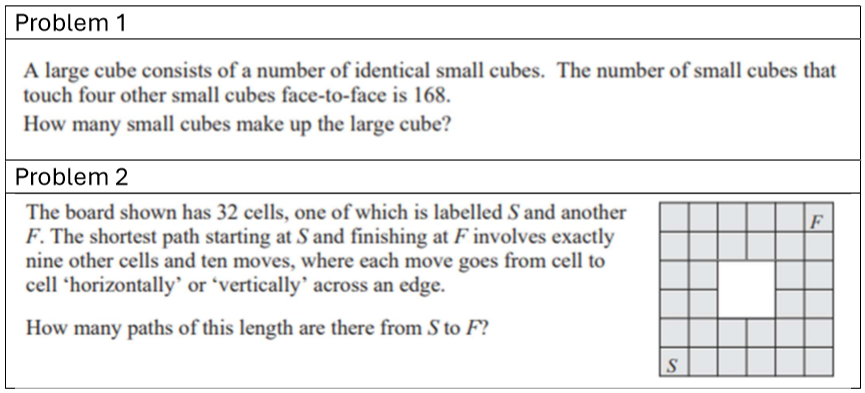
Two Challenges – Written Solutions
Challenge 1
Challenge 2
Problem 1 Solution Firstly, we looked at how we could make the smallest number of digits to make the sum of 2015. We found out that we should use the number 9 for most of the digits since it is the largest one digit number. With that, we looked at how many 9s fit in 2015. The answer is 223 9s and a remainder of 8. We then thought that the digit 8 should be at the start because it will make the smallest it can be. Now we know the number (N) so we had to add 1 to it. Adding 1 to a 224 digit number using column method will take way too long so we found out that if we start with adding 1 to the 9 in the one’s column, the ten will we transferred to the tens column and the ones will be a 0. Since this process will repeat we just need to look at the first two numbers. The one from the 9 adding one will be transferred to the 8 which will make the number 9 and 223 0s. Since adding 0 will not change the number, we found out that the sum of the digits N+1 will equal to 9.
Problem 1 Solution If you have a cube made from smaller cubes, the only small cubes touching 4 other cubes would be the highlighted cubes ***1*** is an exampleAnd these cubes are in “lines” along the edges but not corners. There are 12 such “lines” which means that 168 (the amount of cubes touching 4 other cubes) divided by 12 then plus 2 (for the corners) 168/12 + 2 = 16 so then 16^3 would be the total amount of small cubes there are which is 4096. 4096 is the answer.
Problem 2 Solution The question means that the squares come in pairs, for every 2 by 2, there is a 1 by 1. In total, 1 pair is 5 cm^2. Now we just have to find a square number that is a multiple of 5 and is even. It has to be even because we can’t overlap 2 by 2 squares to make the side odd ***1***This rules out 25cm^2/ 5 by 5. Next one is 10 by 10/100 cm^2 and that works.
Problem 2 Solution This is 26.92 percent of all the possible answers (52)Firstly, we looked at how many ways we could go to point A from the left is 4. From point A to F includes 5 ways. from point S to B only has one solution and from B to F has 6 possible ways so we multiply 6 by 1 which will equal to 6. Then, you add 20 and 6 which will be 26. After that, we will multiply it by 2 because that was only half of the ways so the answer is 52
One Challenge – Video Solutions
Challenge 3
The link to 3 videos that the students put together can be found here
Admissions Reminder for Leaving Families Withdrawal Reminder: If your child(ren) will be leaving Bangkok Patana in June, please submit a withdrawal form to the Admissions Office […]
When global conflict unfolds, it is natural to ask “what is my part in all of this?”. As parents and […]
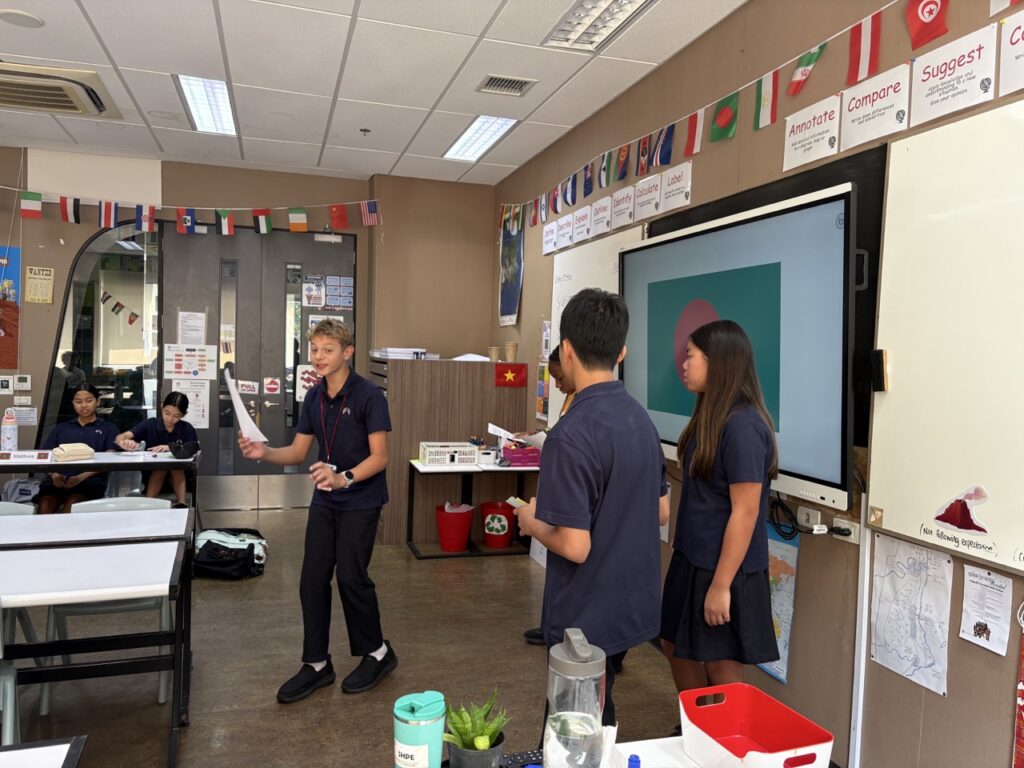
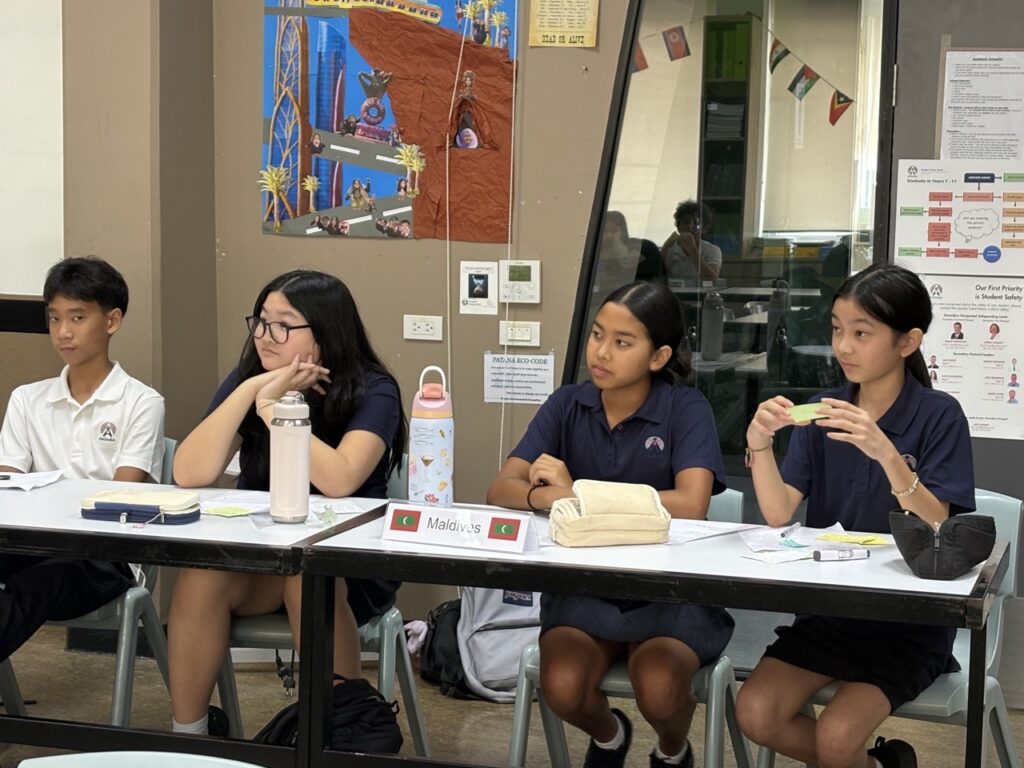
Year 8 Climate Change Debate
By Suzi Hobday, Geography Teacher and Lily Roff, Kedar Krishnan and Omar Ansari, 8M
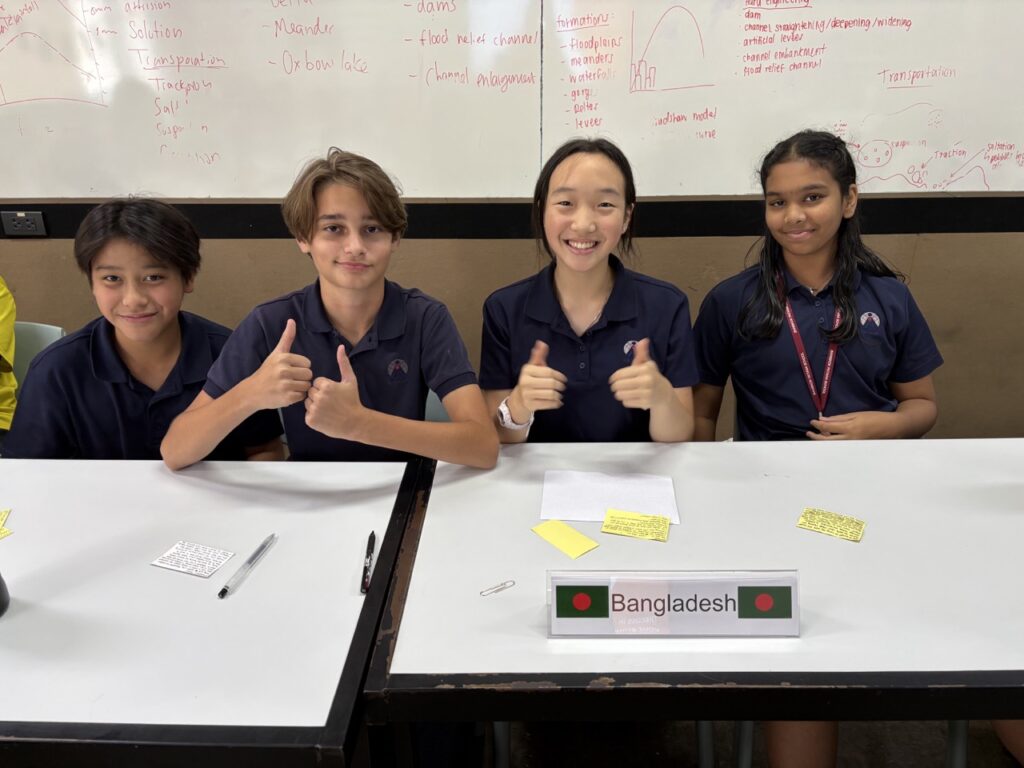
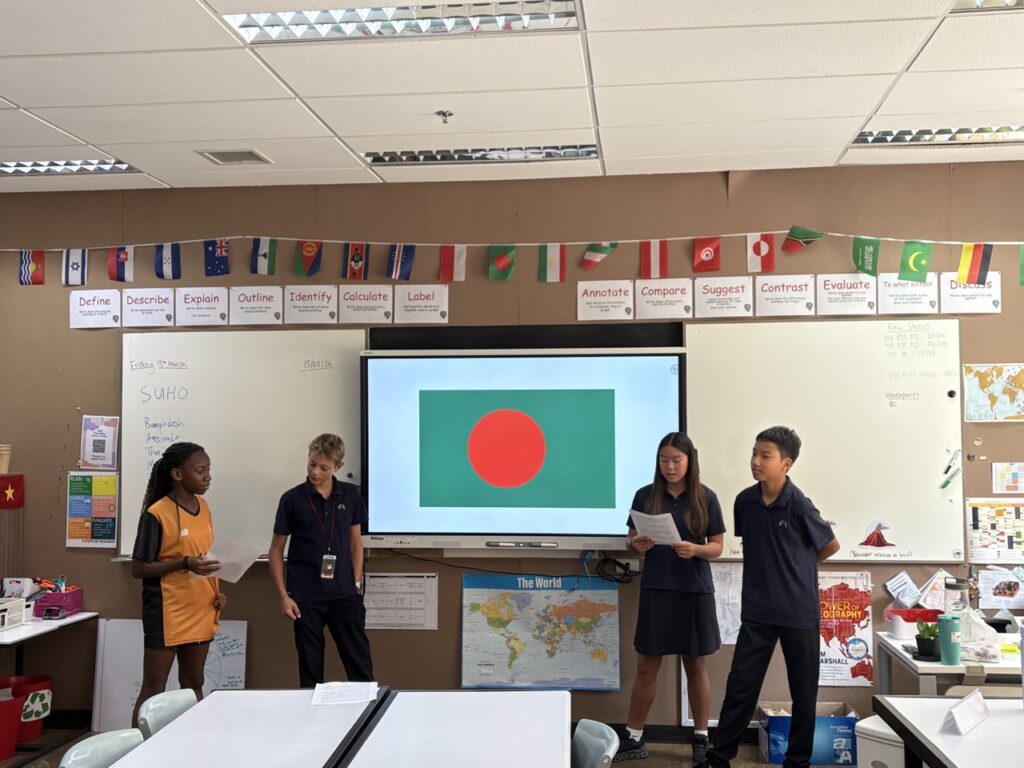
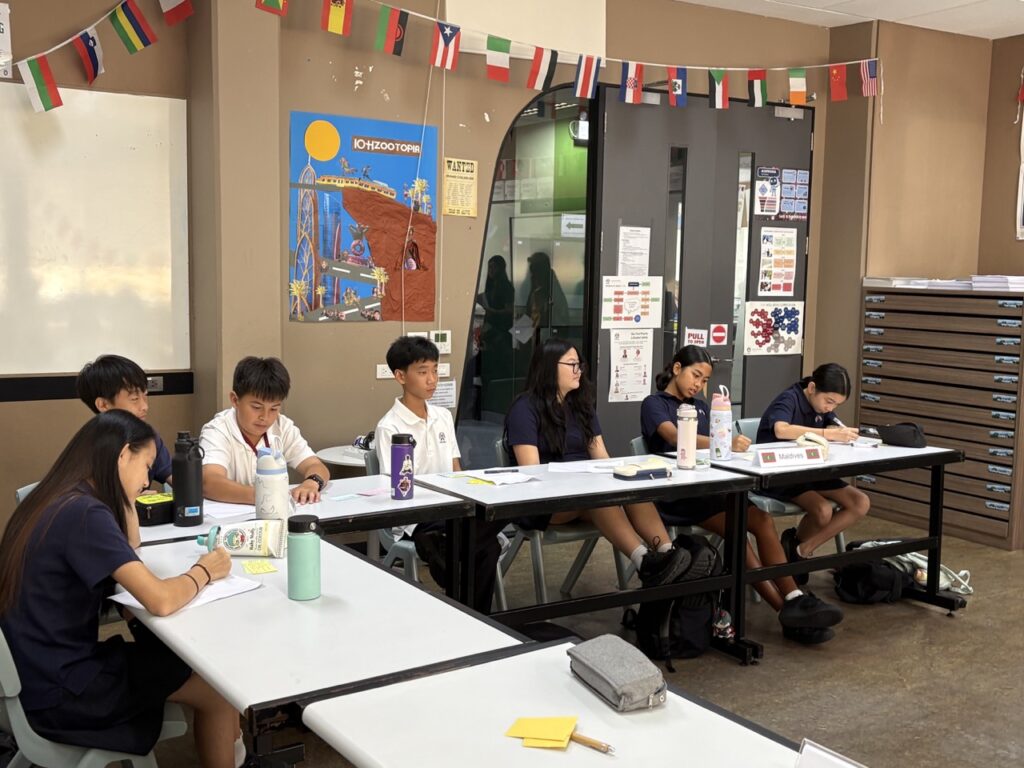
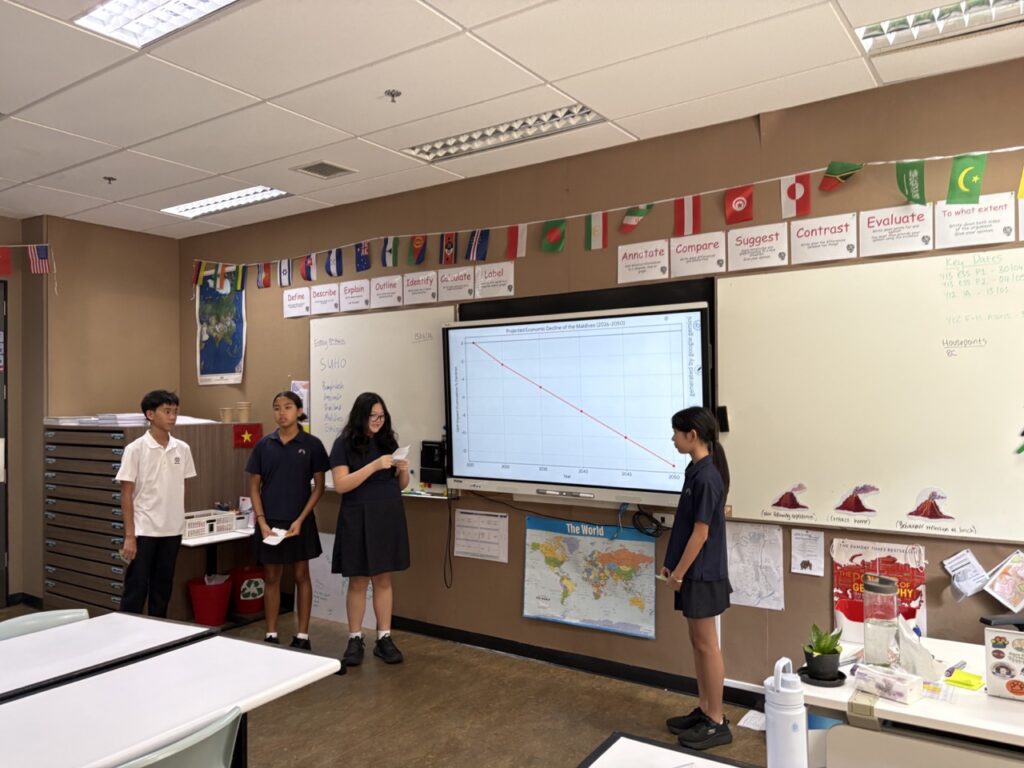
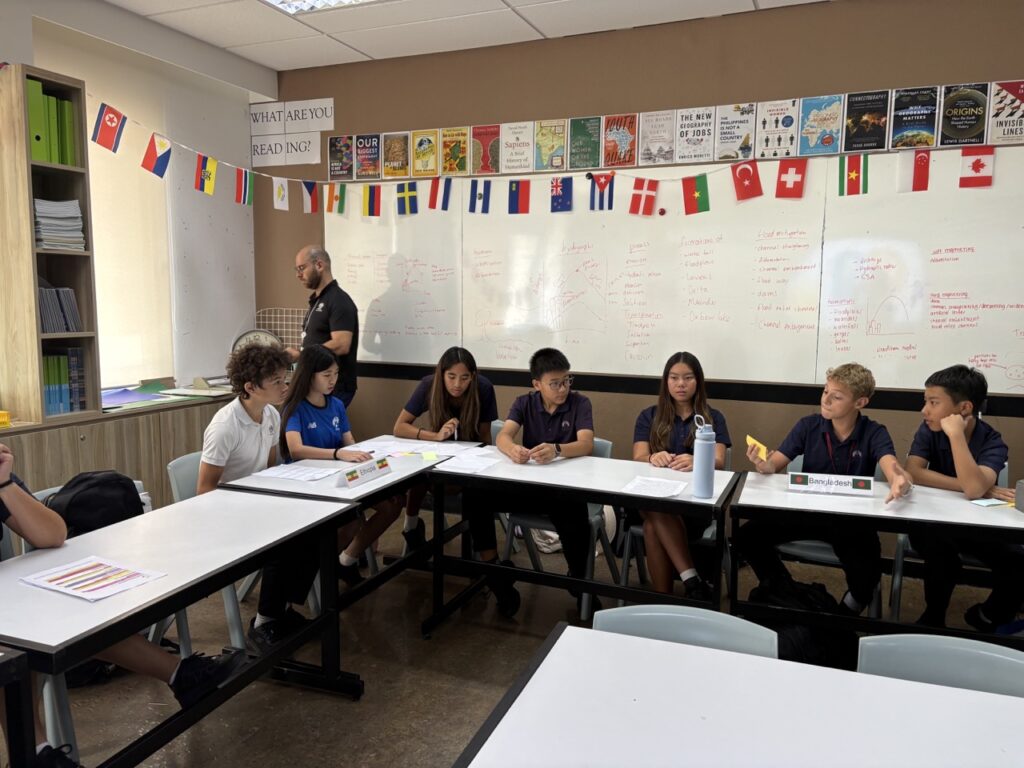
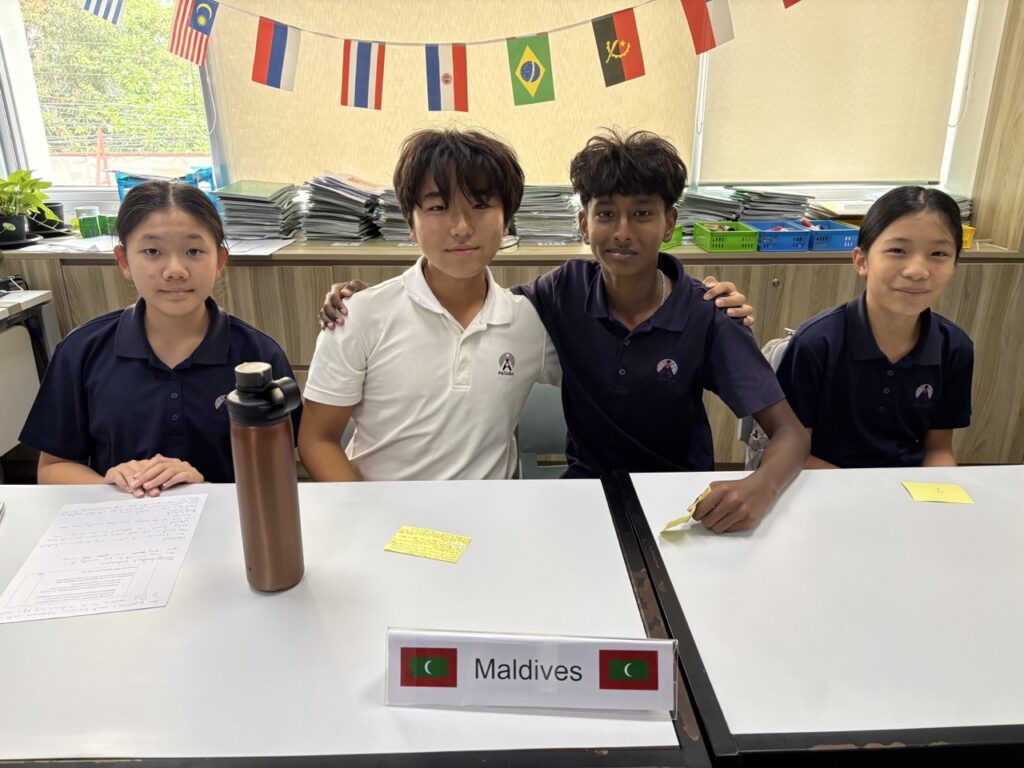
Year 8 students in Geography have been studying the causes and impacts of anthropogenic climate change, with a focus on key concepts such as climate vulnerability and climate justice. They applied this understanding through a country-based inquiry, analysing how and why different nations are affected, and evaluating their level of responsibility for emissions. This culminated in a Model United Nations-style debate, where students represented countries and presented evidence-based arguments for why their nation should receive UN climate funding. This process has developed students’ skills in analysis, evaluation and collaborative discussion, while encouraging them to consider issues of global equity and sustainability.
Kedar Krishnan, 8M:
The UN is an international organisation focused on preventing worldwide conflicts. However, in the modern age there are multiple problems that need to be addressed by the UN. One of those topics is climate change. In Geography, Year 8 experienced an MUN style conference where five countries, Australia, Bangladesh, Ethiopia, Maldives and Thailand, had a debate on who needed aid to tackle this problem. One thing I learned was the meaning of climate justice. Climate justice is the idea that climate change is a political/social issue and not just an environmental one.
My country, Bangladesh, posed the idea that even low to middle-income countries could be at equal risk as low income countries. Bangladesh is a highly populated low lying country. Our main competitor, Ethiopia is a dry landlocked low-income country that suffers from droughts and extremely low levels of rainfall. Even though Ethiopia had less money and funding, Bangladesh was equally at risk because of its population density. Instead of everyone being spread across the country, people lived mostly next to the sea and river.
The main challenges were being organised while saying our speeches, switching slides and communicating with our teammates at the same time. Preparing for our presentation was equally as difficult. Researching our own country while researching other countries to argue against them was quite hard to manage. This activity helped develop many essential skills that are extremely important in our learning environment.
Lily Roff, 8M:
In Geography we combined MUN, English and Geography skills to construct a debate on how the UN should give out limited funding, and which country deserves money the most. The options were Thailand, Ethiopia, Maldives, Bangladesh and Australia. This is important because of climate justice. We researched different countries and problems they face with climate change, such as flooding, droughts and extreme heatwaves. One challenge I faced was thinking quickly and responding to my classmates’ questions while keeping my point. This really improved my ability to speak better in public places and in front of the class.
Omar Ansari, 8M:
In our Year 8 Geography lessons we had a debate about climate change and how money should be shared between countries it matters because not every country is affected the same. For the debate we researched our country, Thailand and looked at problems like flooding and rising sea levels. We worked as a team to find information and plan what we were going to say. Teamwork helped me a lot because we could share ideas help each other and feel more confident speaking in front of others. We tried to convince the UN by using facts and persuasive language and also speaking clearly like we learned in English and MUN. One challenge was that other countries also had really strong arguments so it was hard to stand out. This activity helped us build skills like research, public speaking, listening and critical thinking. This also showed how important teamwork is when working together. Overall I learned that climate change is a complicated problem and it needs cooperation fairness and good communication to try and solve it.
Admissions Reminder for Leaving Families Withdrawal Reminder: If your child(ren) will be leaving Bangkok Patana in June, please submit a withdrawal form to the Admissions Office […]
Air travel connects us to the people and places we love. Whether it’s visiting family, exploring new cultures, or heading […]
Community Engagement at Bangkok Patana: For the Blind
By Naphisa (Imm-Aim) Songthong (Year 12)
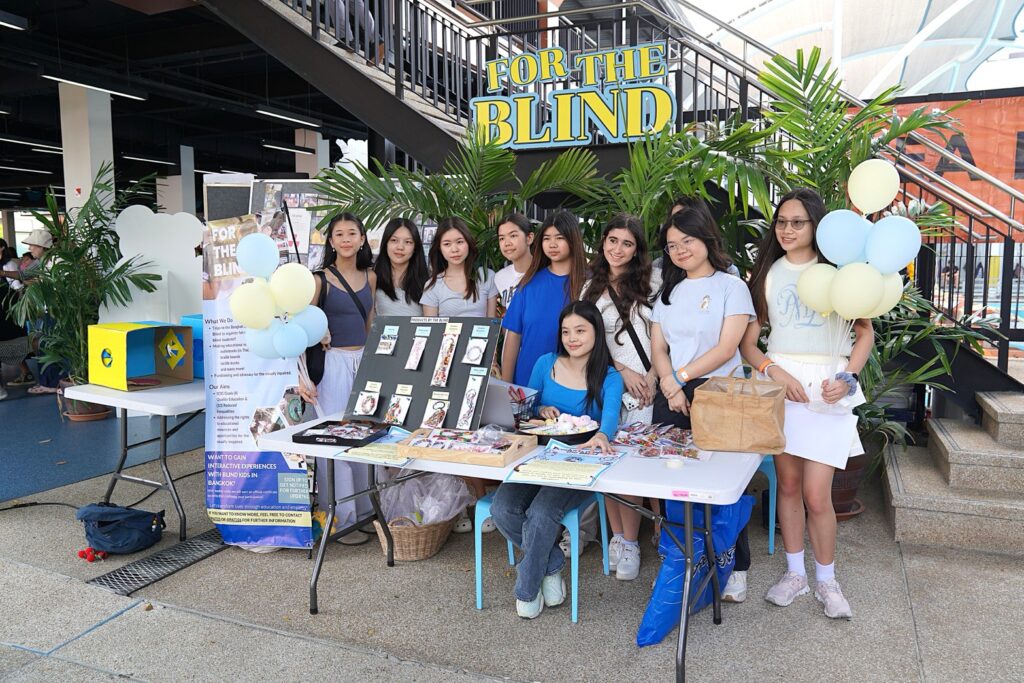
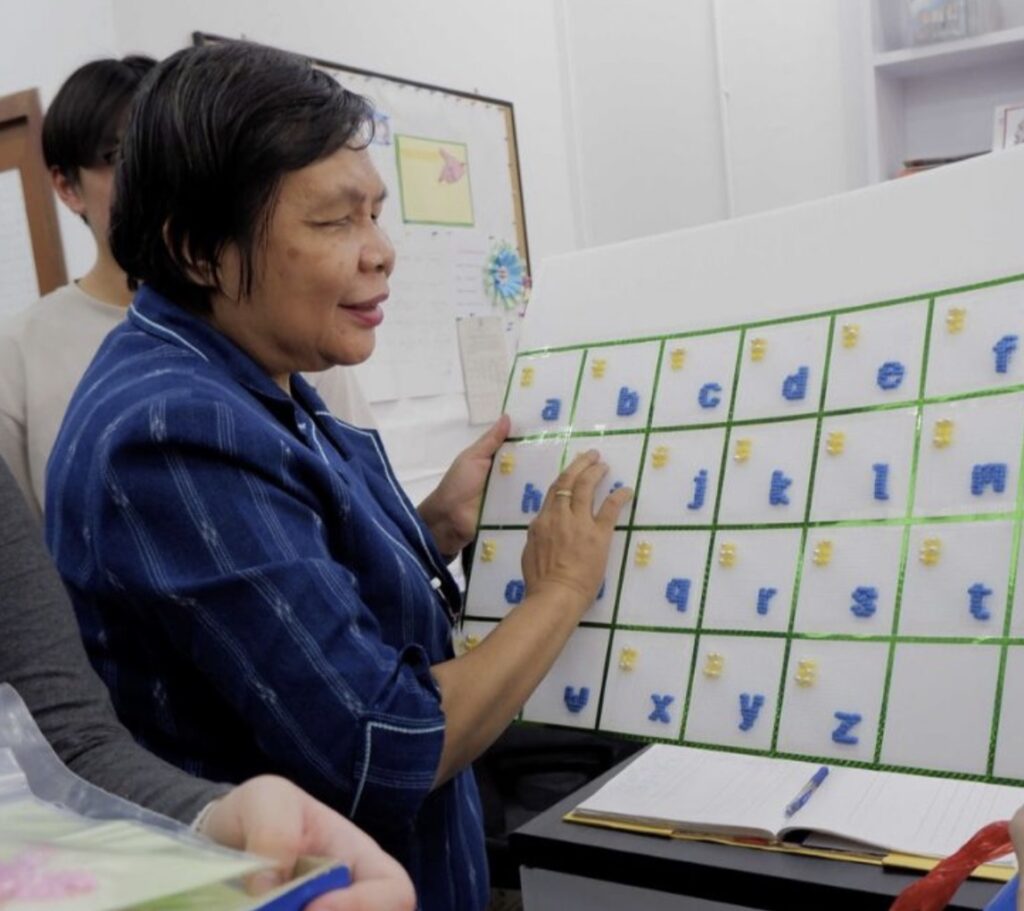
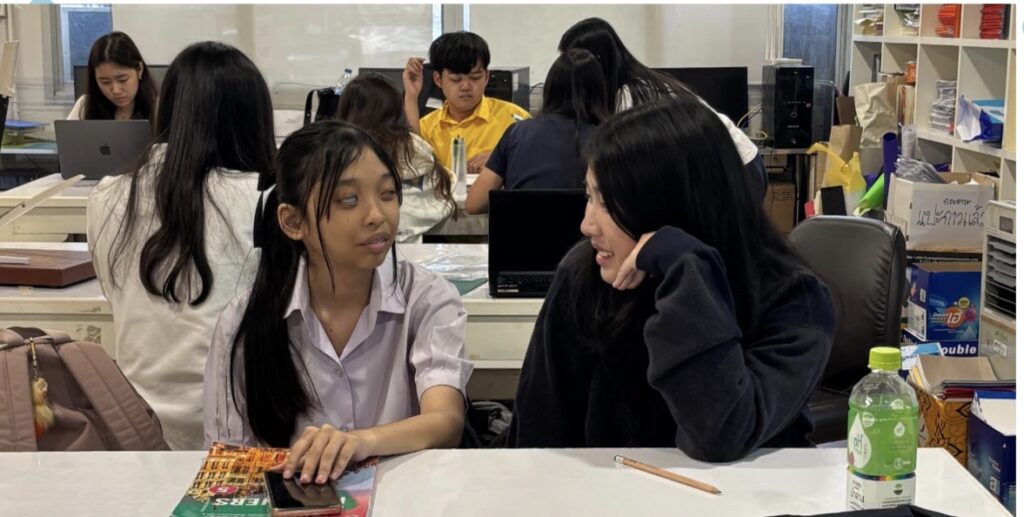
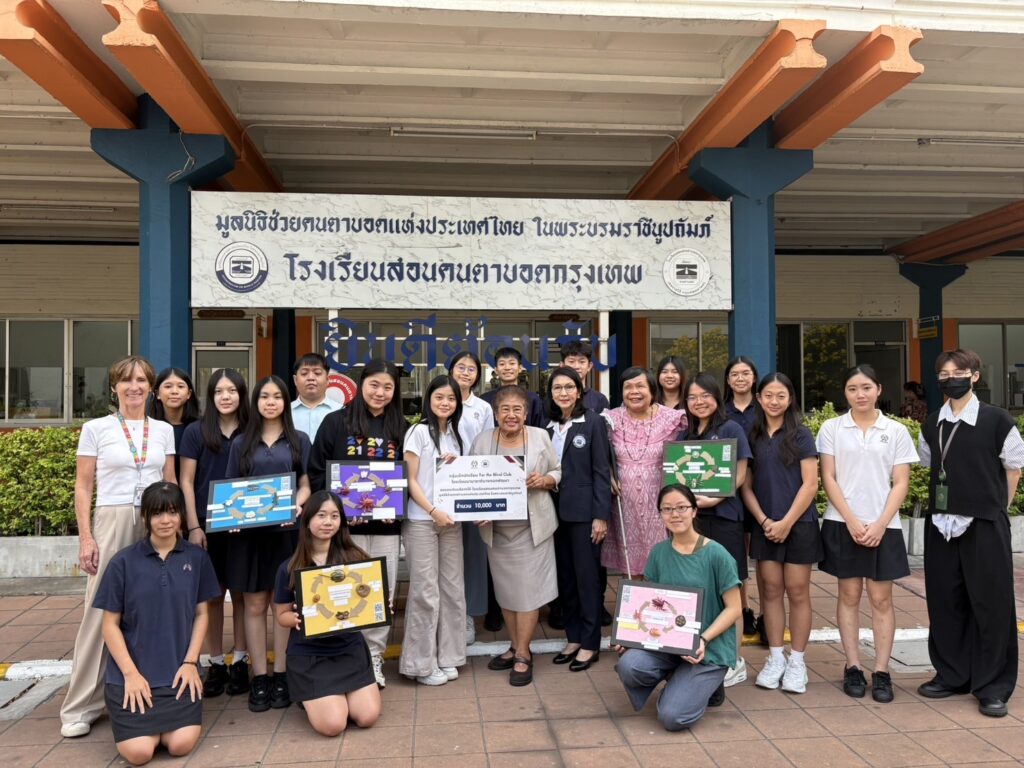
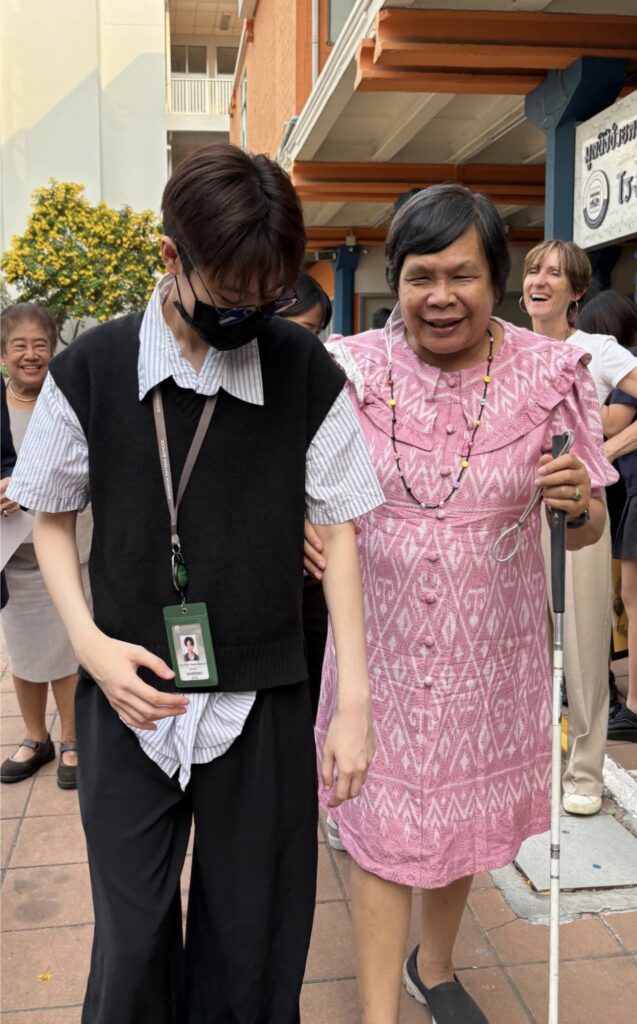
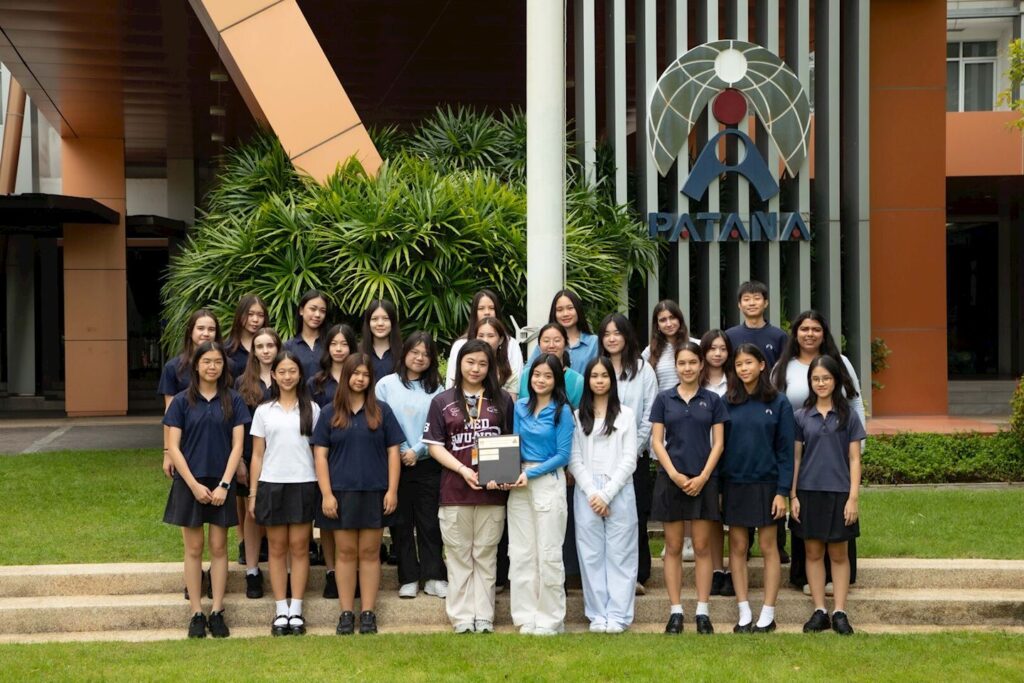
For the Blind is a student-led Community Engagement team that works with the Bangkok School for the Blind, which provides schooling and support for children and youths with visual impairments. Our efforts within the past two years have led our team to be able to receive the Bangkok Patana School ‘Community Engagement Team of 2025’ award.
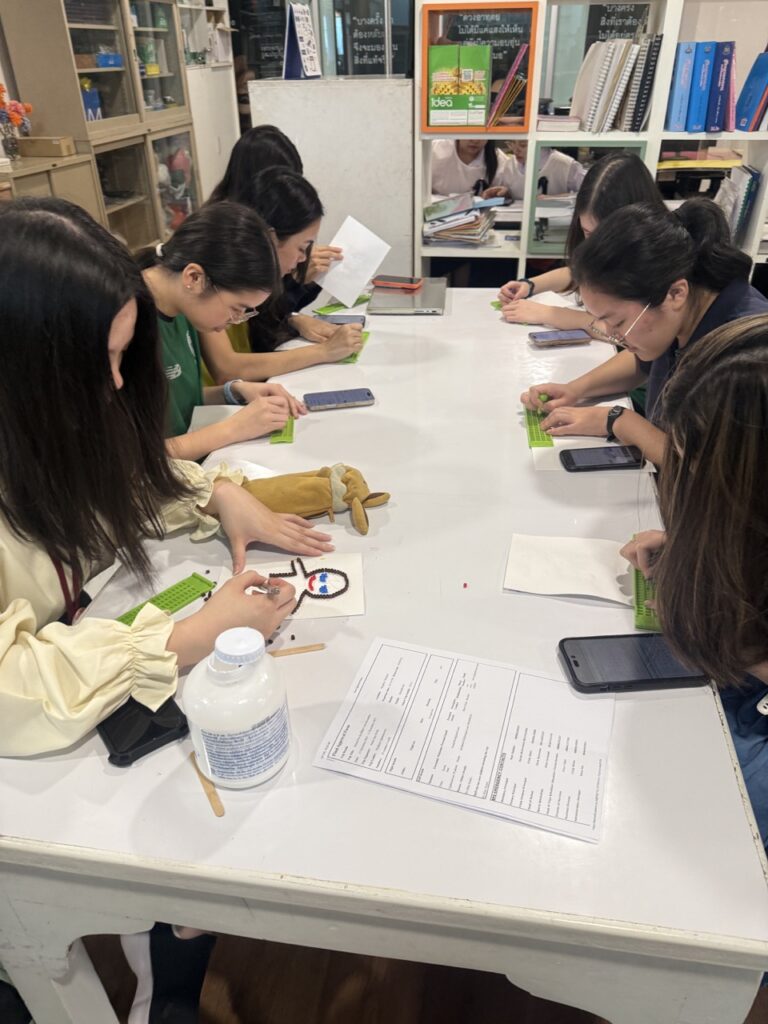
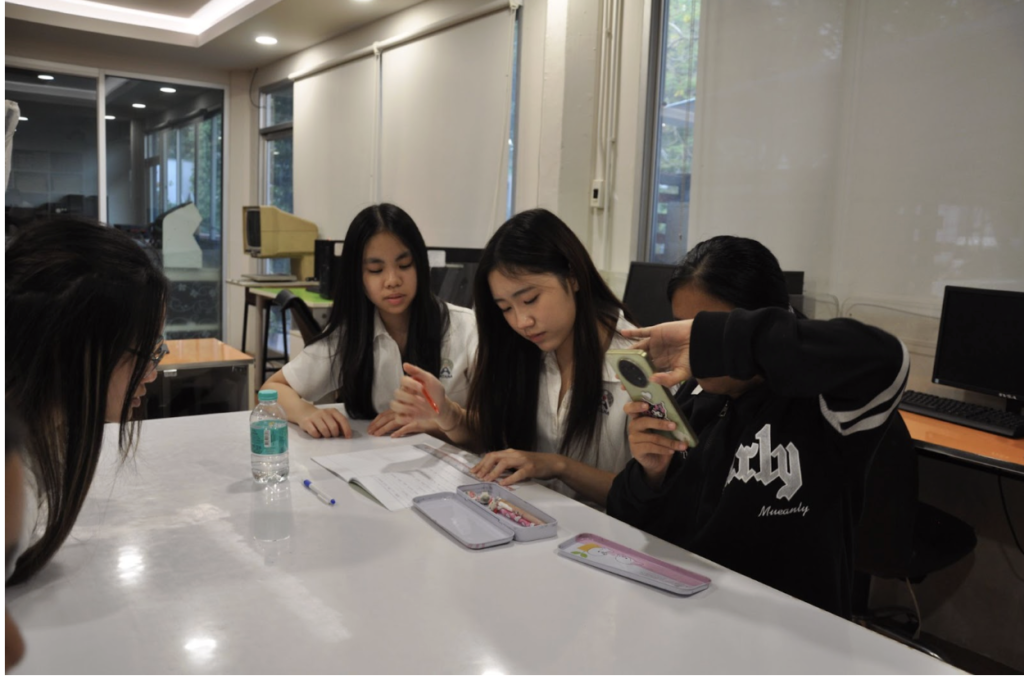
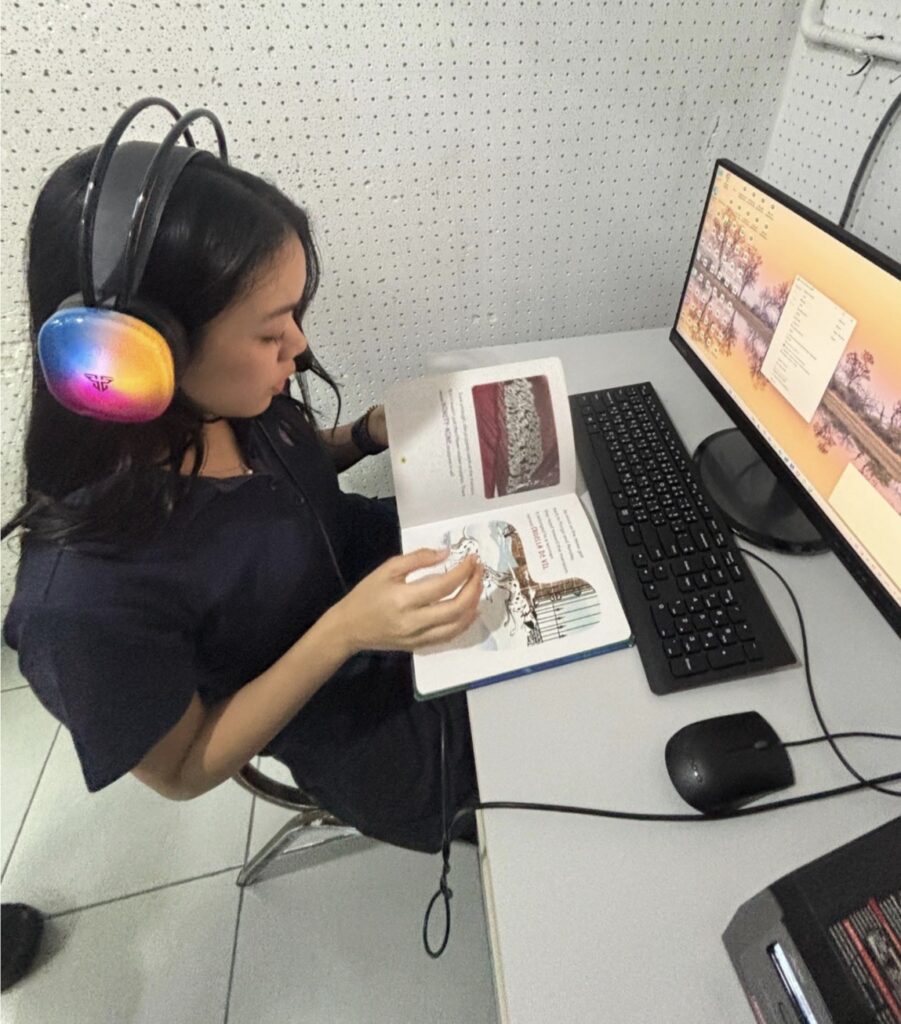
Established in 2024, our team has made monthly trips to tutor students, help with their schoolwork, record audiobooks for them to listen to, and engage in various hands-on activities. For the Blind mainly works to address educational inequality for the visually impaired as there is a lack of accessible educational resources to help visually impaired students understand complex learning concepts.
By using innovation and art to tackle this issue, our team has created several learning materials in the past such as tactile life cycle models, a Braille alphabet board, Venn diagrams and more. We also learn how to read and write in Braille so we can better communicate with and support the students. Aside from directly visiting the school and creating learning materials, For the Blind has raised funds by selling handcrafted accessories made by blind students, braille cookies and hosting interactive activities during school events.
Our achievements: In the 2025/26 academic year, we were given the opportunity to host a workshop at the AIELOC conference to raise awareness for educators and teach braille to foster inclusivity in education. Additionally, we engaged in direct action by visiting the Bangkok School for the Blind to tutor visually impaired students, give out sugar cookies our team baked and record more audiobooks.
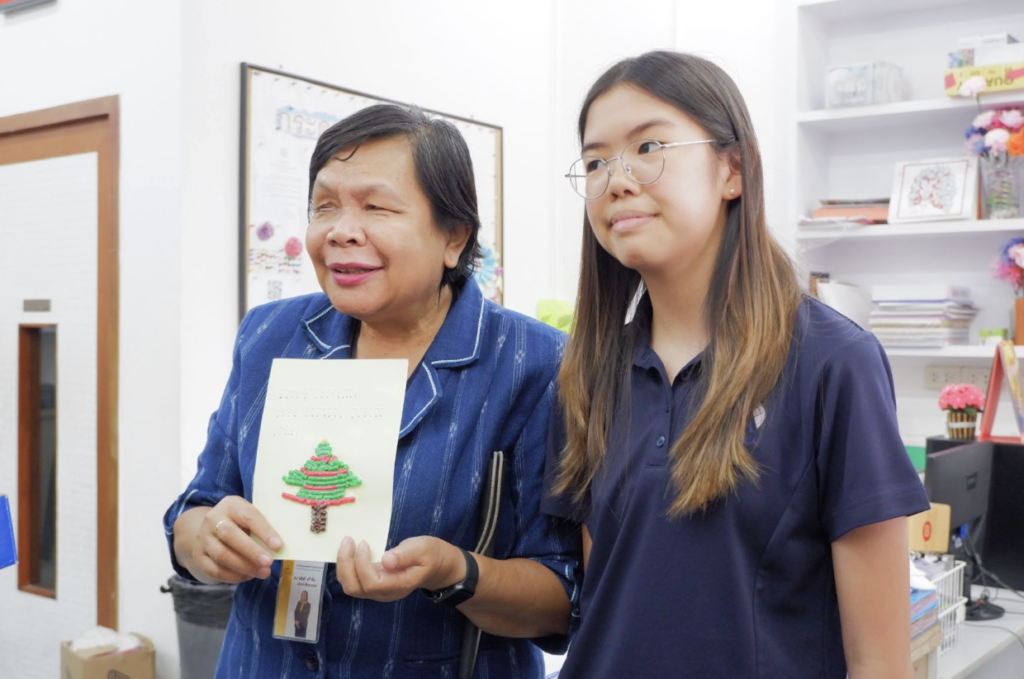
Furthermore, our projects that we produced this year include tactile Christmas cards written in Braille and tactile Moo-Deng models. Currently, we are working on creating a tactile map of Thailand with landmarks in the five regions.
Community Engagement Events
We have actively participated in events such as Fun Day, Social Inequality Week, and the Christmas Concert, where we raised awareness about visual impairment and engaged the wider school community through interactive and educational activities. During these events, we organized booths, games, and hands-on experiences that allowed others to better understand the challenges faced by visually impaired individuals. These activities not only helped educate others but also encouraged greater empathy and support within our school community.
Nextp Steps
Moving forward, we plan to continue raising funds and creating more learning resources for visually impaired students. This includes projects such as a tactile representation of the solar system and further developments of more interactive materials in Braille to make lessons easier to understand. We also hope to expand our activities and reach more students, so we can provide greater support and make a bigger impact on their education.
Admissions Reminder for Leaving Families Withdrawal Reminder: If your child(ren) will be leaving Bangkok Patana in June, please submit a withdrawal form to the Admissions Office […]
Walk into any Primary classroom at Bangkok Patana and you will see great teaching. Look a little closer and you will often […]
International Mother Language Day
By Aarushi Zariye and Rosalia (Tian) Suthiwongsunthorn, 9J
International Mother Language Day, celebrated every year on the 21st of February, is a global event established by UNESCO in 1999 to promote linguistic diversity and the preservation of native languages. There are around 7000 languages spoken around the world and many are at risk of disappearing. It commemorates the sacrifice of students in Bangladesh during the Bengali Language Movement, who fought for the recognition of their mother tongue, Bangla. The day highlights the importance of using and protecting mother languages, as they play a vital role in maintaining cultural identity and heritage, while also encouraging multilingual education around the world.
One’s mother tongue is very important because it is the first language we learn from our family and it helps us express our thoughts, feelings and ideas clearly. It plays a major role in education, as students understand lessons better and gain confidence when they learn in their own language. It also helps in preserving culture, traditions and values, keeping us connected to our roots. According to UNESCO, learning in one’s mother tongue improves learning ability and participation in school.
Furthermore, we think that language shapes thought in a free and unlimited way. Languages have different words to express emotions that other languages do not have. For example, in Sanskrit: “वसुधैव कुटुम्बकम्” (Vasudhaiva Kutumbakam) meaning that “the world is one family”. It highlights the interconnectedness of all people and living beings on Earth, urging compassion, unity and global harmony. Additionally, it explores the connection to agriculture and giving back to the ones that nourish us, as part of the “family” of life. Another example in Chinese, is the word “人情味” (rénqíngwèi), which describes a sense of human warmth, kindness and emotional connection in relationships, a feeling that cannot be fully expressed in a single English word.
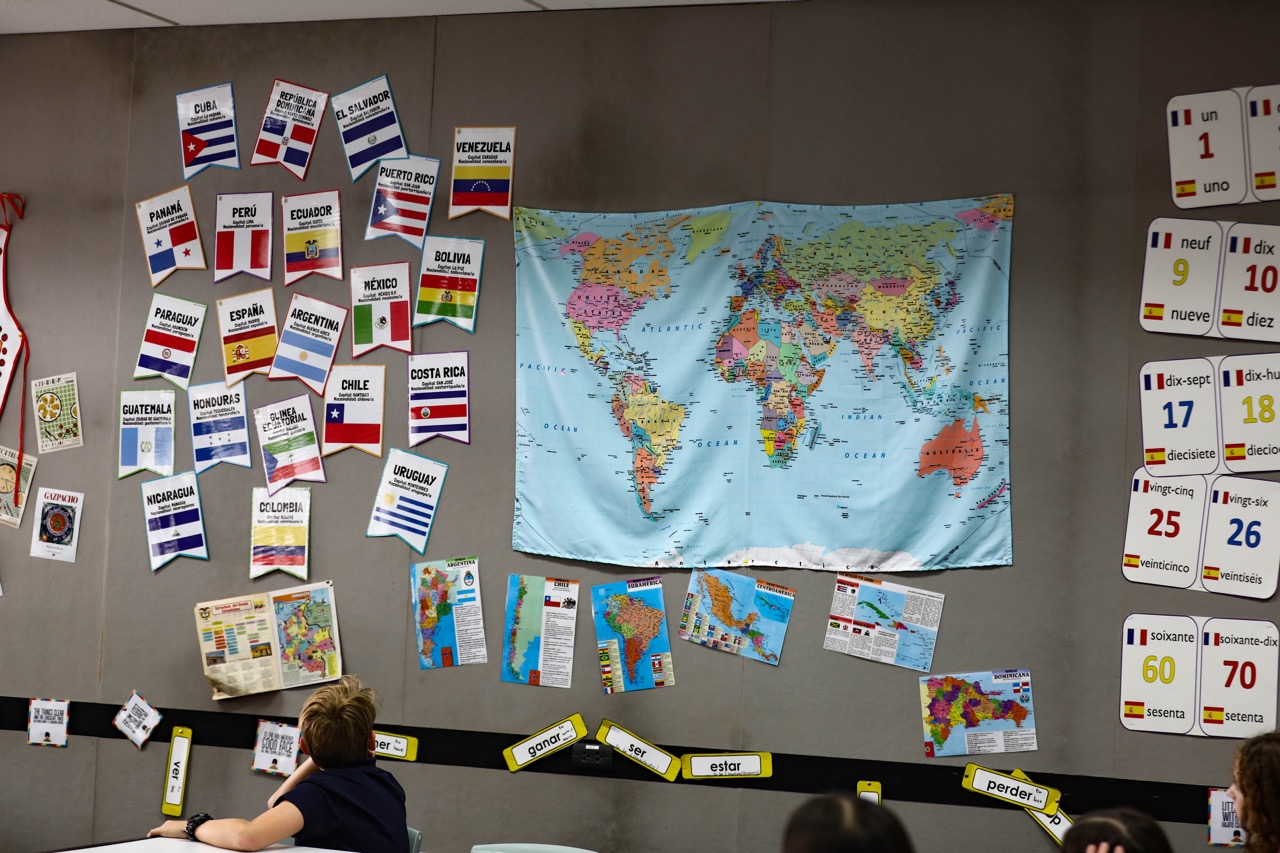
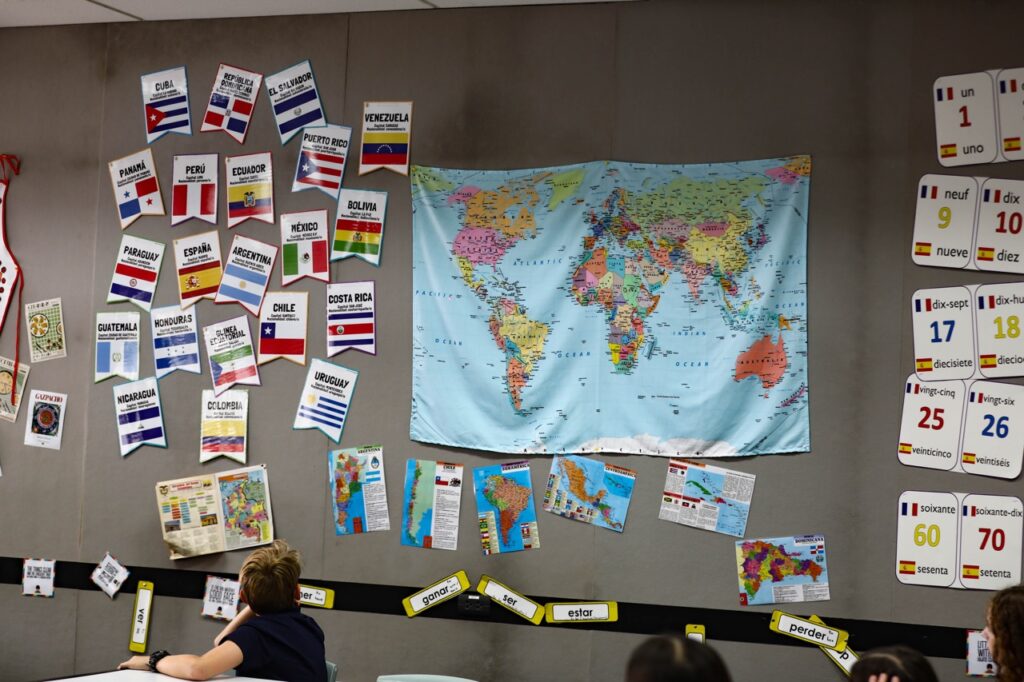
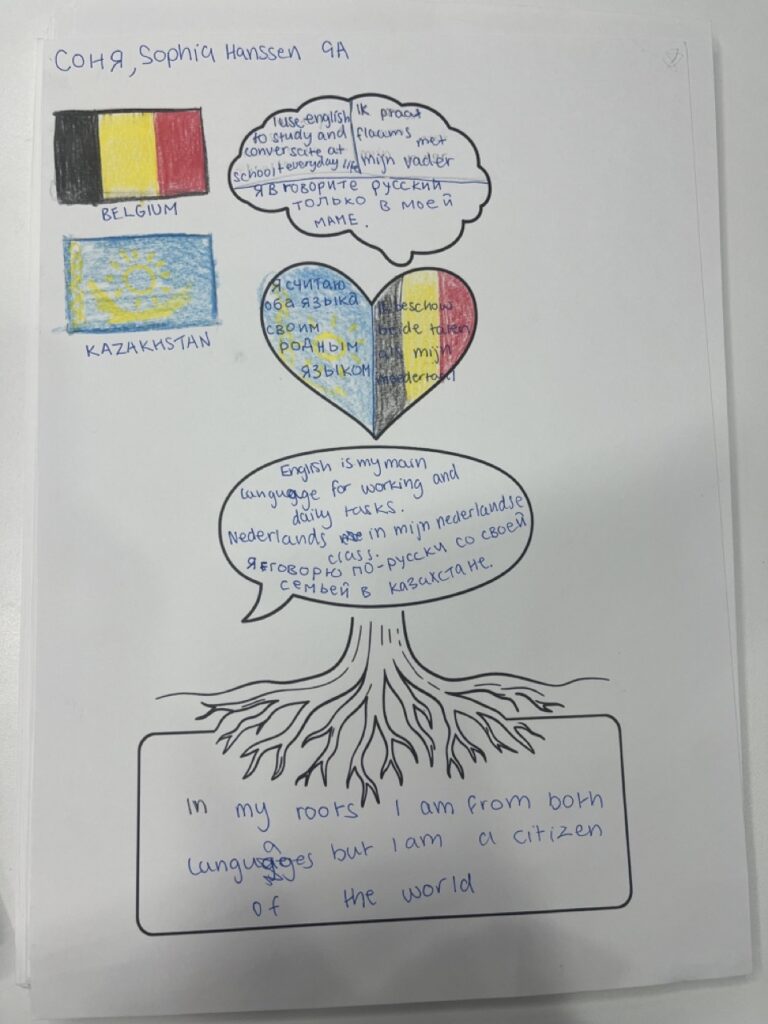
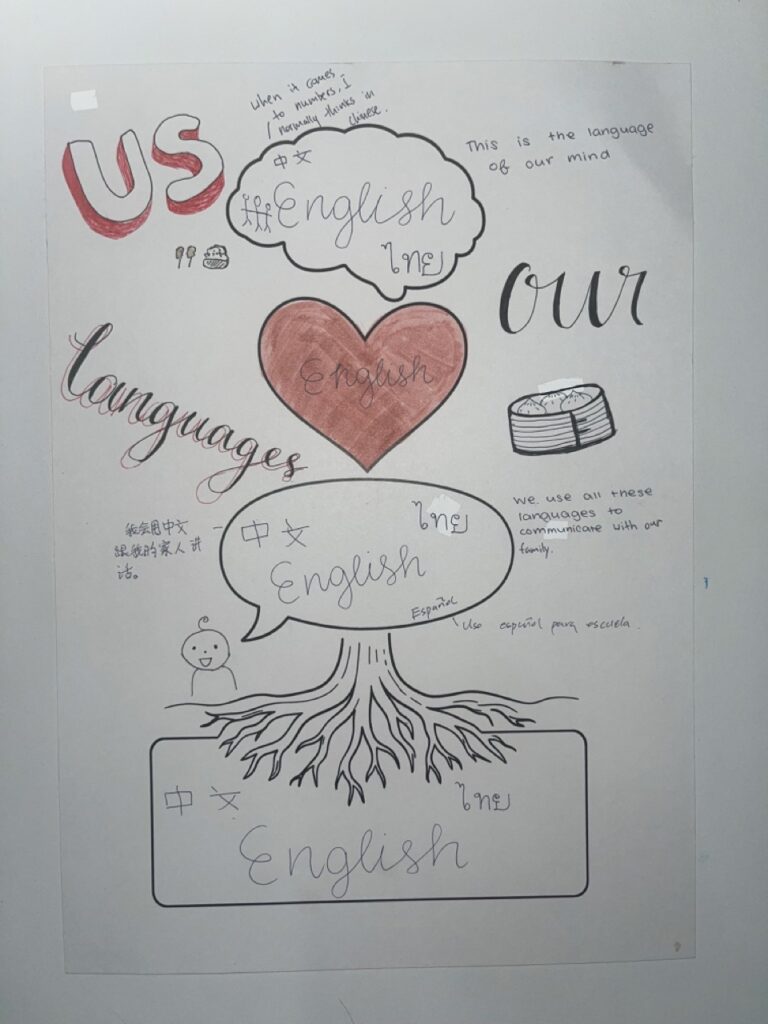
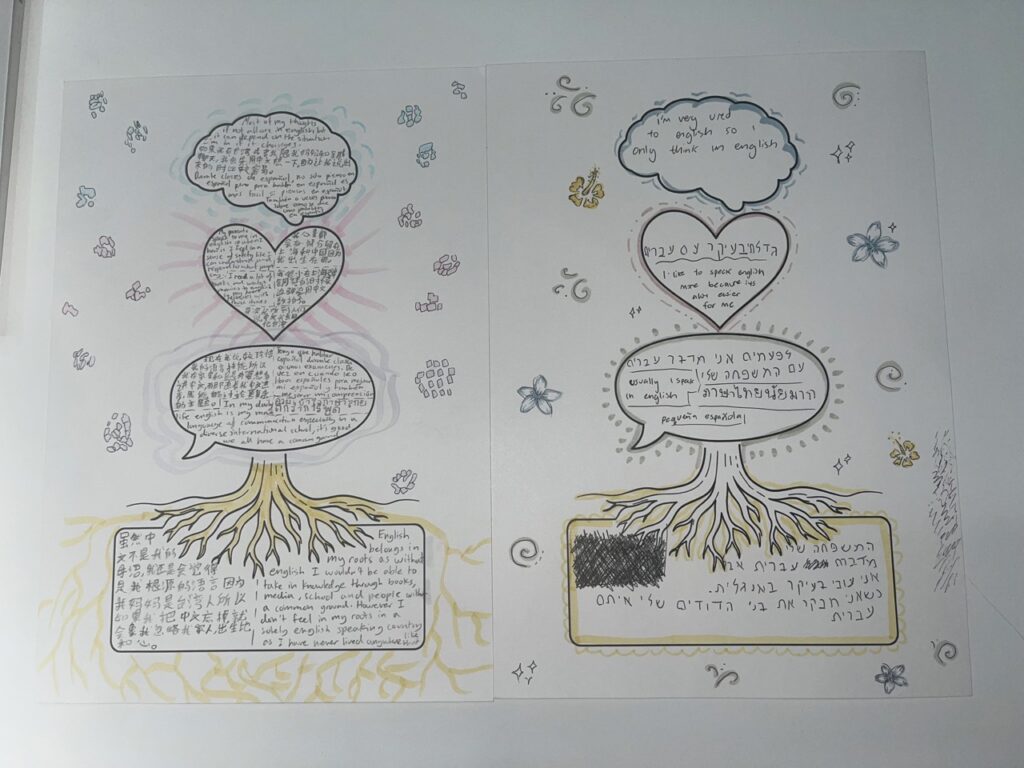
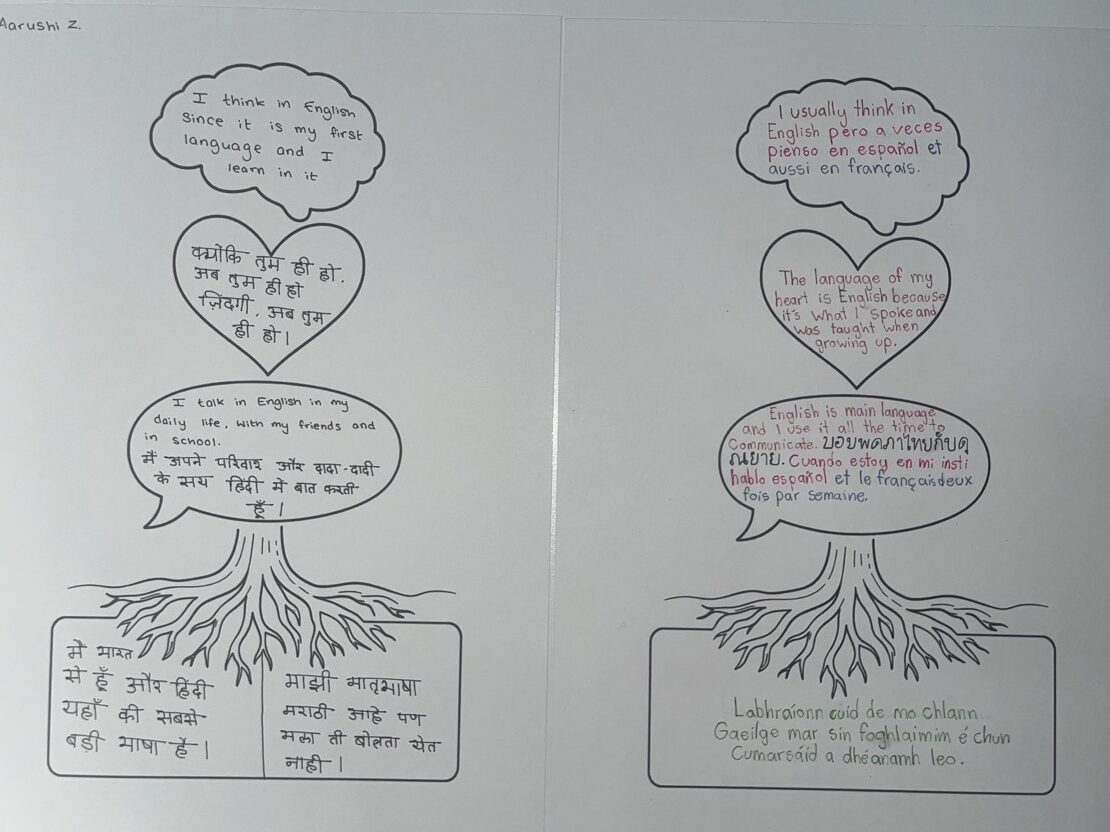
To celebrate International Mother Language Day, the MFL department organised a reflective classroom activity where we explored the role of language in different parts of our lives. Using a diagram, we thought about the “language of our brain,” “heart” and “roots,” and discussed which languages we use for thinking, expressing emotions and connecting with our cultural background. We also considered how and when we use different languages in daily communication and how much we rely on our first language. This activity helped us understand that language is not just about speaking, but is deeply connected to our identity, emotions and sense of belonging.
In conclusion, the languages we speak have a powerful influence on how we think, communicate and connect with the world. They shape our perspectives, guide our expression and reflect our cultural identity. Being aware of how, when and how much we use each language helps us better understand ourselves and others. Our first language, especially, holds deep emotional and cultural significance, as it is the foundation of our early learning and personal experiences. Ultimately, language is more than just a means of communication—it is a key part of our identity and the way we understand the world around us.
Admissions Reminder for Leaving Families Withdrawal Reminder: If your child(ren) will be leaving Bangkok Patana in June, please submit a withdrawal form to the Admissions Office […]
Admissions Reminder for Leaving Families Withdrawal Reminder: If your child(ren) will be leaving Bangkok Patana in June, please submit a withdrawal form to the Admissions Office […]
Admissions Reminder for Leaving Families Withdrawal Reminder: If your child(ren) will be leaving Bangkok Patana in June, please submit a withdrawal form to the Admissions Office […]
Where learning meets listening, and music becomes a shared experience. On 10th March, the Guitar Gathering at the Arts Centre […]
School Announcements
Admissions Reminder for Leaving Families
Withdrawal Reminder: If your child(ren) will be leaving Bangkok Patana in June, please submit a withdrawal form to the Admissions Office as soon as possible. The final deadline to submit the withdrawal form is Monday, 20th April 2026.
Questions & Support: We understand that moving can be a big transition for families, and we are here to support you. If you have any questions please refer to our Leavers’ Guide or contact Rachel Jones, Director of Admissions at rajo@patana.ac.th. Our Primary Leavers Transition ECA runs on Tuesdays at 2.30pm in Block D for children in Years 2 to 6, providing additional support during this time.
Transfer Certificates: Certain countries (including the United Arab Emirates, Panama and Argentina) require a Transfer Certificate that must be certified by the Thai Ministry of Education, the Thai Ministry of Foreign Affairs, and the respective country’s Embassy in Bangkok. As this process can take up to three months, please request as early as possible here if it will be required.
Leavers’ Workshop: Parents are warmly welcomed to join our workshop, Supporting your child with Transitions, at 8.00am on Wednesday 14th May. Please sign up here.
Important: Certificate of Enrolment and Visa Documentation Requests for Songkran Break
If you require documentation from the school to support visa applications or extensions over the Songkran break, please request this as soon as possible. To do so, kindly complete the online request form via the Parents’ Gateway: Document Request from Admissions.
Please note that we require at least 3 working days to process these requests. The final date to request certified letters or documentation for visa extensions is Monday 30th March 2026.
Kindly be aware that no requests can be processed between 4th – 19th April 2026. The Admissions Office will be open to support new requests starting from 20th April 2026.