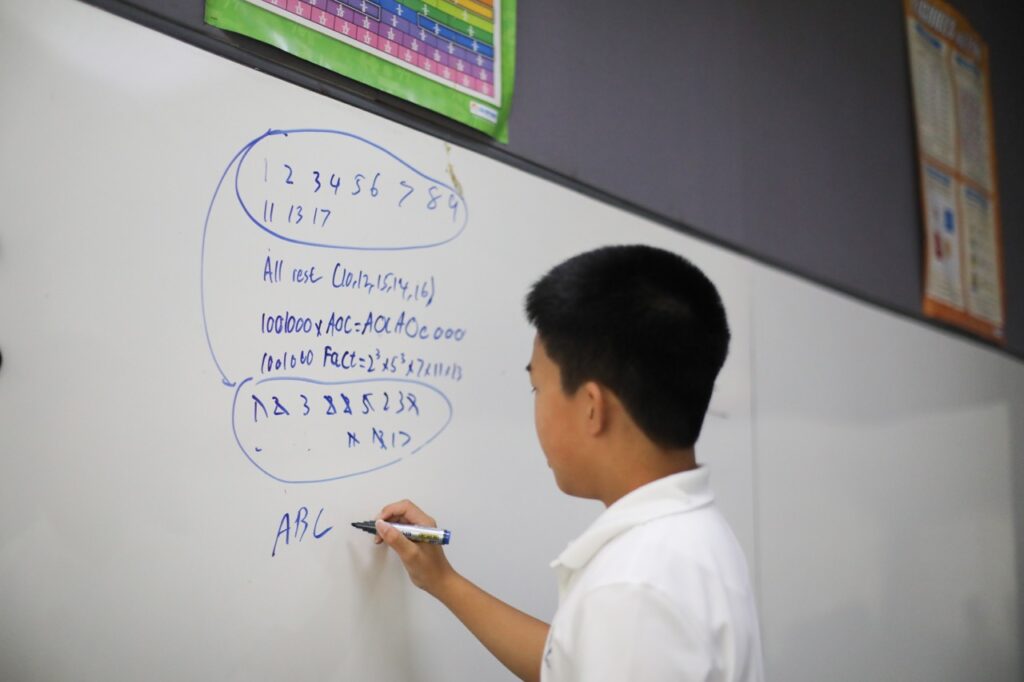
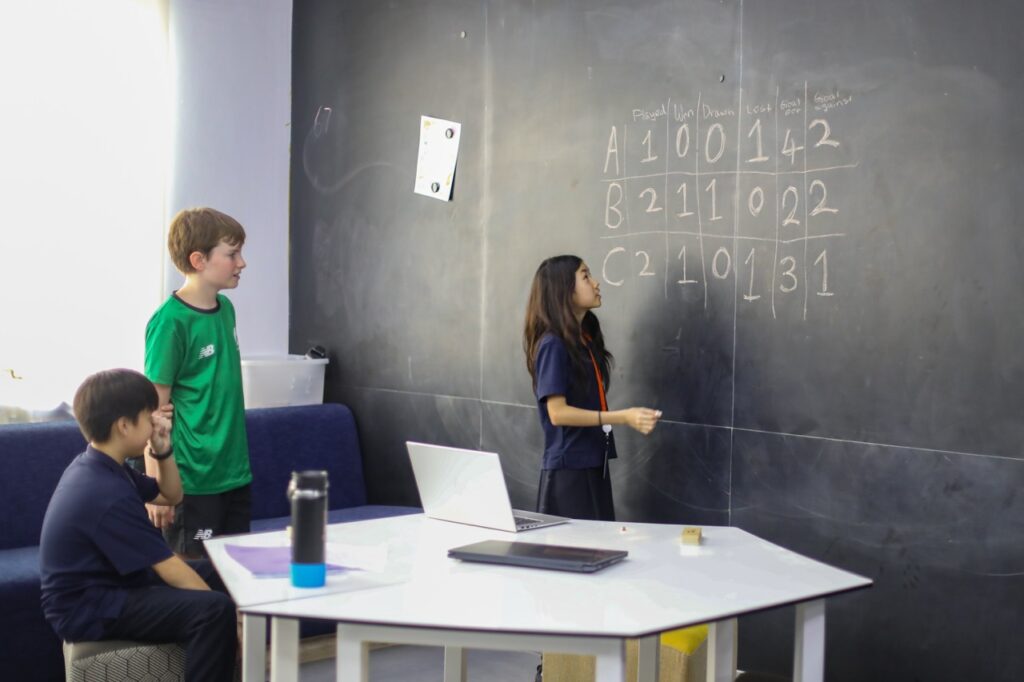
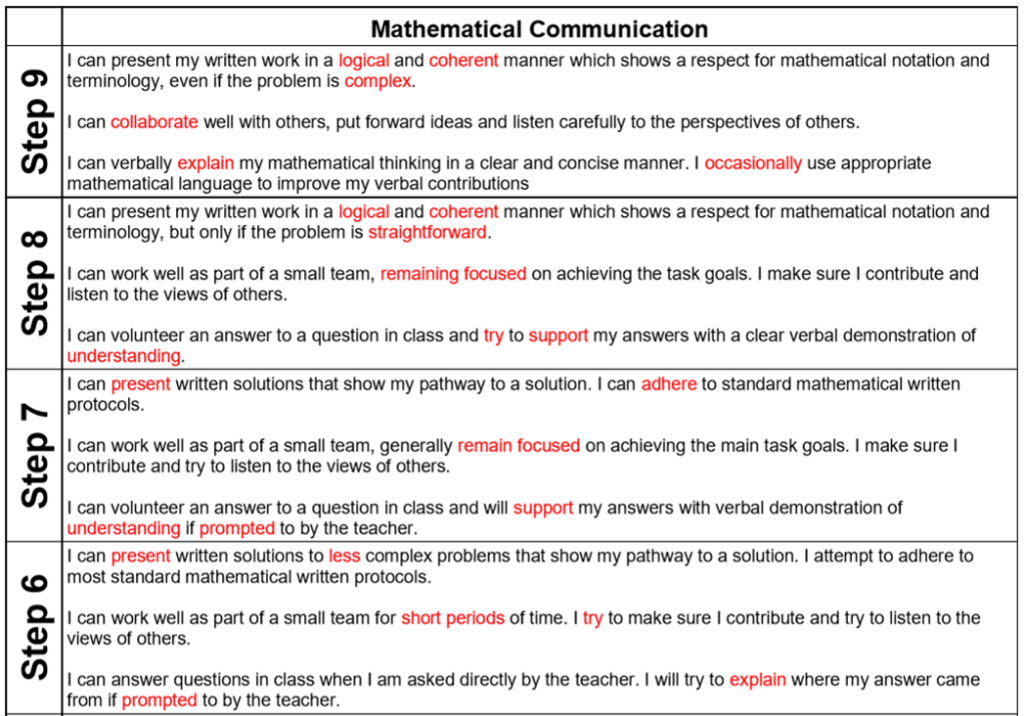
Some of our Year 7 Students have been developing their Mathematical Communication skills to help them work towards the Performance Goals. Mathematical Communication is an important strand of our Key Stage 3 Progress Map, as it helps students to develop sophistication and rigour in the way in which they communicate a complex solution. Two of the challenges required written solutions, and the third challenge asked the students to communicate their solution in a video format. How do you think you would do with the problems that they were given? Why not have a go at the problems first, before looking below to see some examples of what the students have put together? What advice would you give them?
Progress Map – Mathematical Communication Strand
Two Challenges – Written Solutions
Challenge 1
Challenge 2
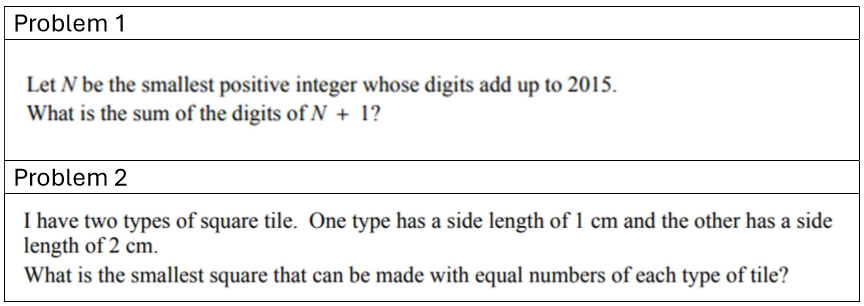
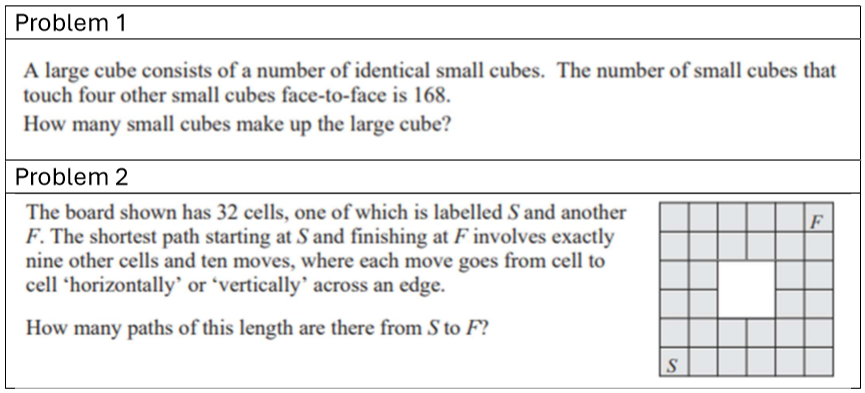
| Problem 1 Solution Firstly, we looked at how we could make the smallest number of digits to make the sum of 2015. We found out that we should use the number 9 for most of the digits since it is the largest one digit number. With that, we looked at how many 9s fit in 2015. The answer is 223 9s and a remainder of 8. We then thought that the digit 8 should be at the start because it will make the smallest it can be. Now we know the number (N) so we had to add 1 to it. Adding 1 to a 224 digit number using column method will take way too long so we found out that if we start with adding 1 to the 9 in the one’s column, the ten will we transferred to the tens column and the ones will be a 0. Since this process will repeat we just need to look at the first two numbers. The one from the 9 adding one will be transferred to the 8 which will make the number 9 and 223 0s. Since adding 0 will not change the number, we found out that the sum of the digits N+1 will equal to 9. | Problem 1 Solution If you have a cube made from smaller cubes, the only small cubes touching 4 other cubes would be the highlighted cubes ***1*** is an exampleAnd these cubes are in “lines” along the edges but not corners. There are 12 such “lines” which means that 168 (the amount of cubes touching 4 other cubes) divided by 12 then plus 2 (for the corners) 168/12 + 2 = 16 so then 16^3 would be the total amount of small cubes there are which is 4096. 4096 is the answer. |
| Problem 2 Solution The question means that the squares come in pairs, for every 2 by 2, there is a 1 by 1. In total, 1 pair is 5 cm^2. Now we just have to find a square number that is a multiple of 5 and is even. It has to be even because we can’t overlap 2 by 2 squares to make the side odd ***1***This rules out 25cm^2/ 5 by 5. Next one is 10 by 10/100 cm^2 and that works. | Problem 2 Solution This is 26.92 percent of all the possible answers (52)Firstly, we looked at how many ways we could go to point A from the left is 4. From point A to F includes 5 ways. from point S to B only has one solution and from B to F has 6 possible ways so we multiply 6 by 1 which will equal to 6. Then, you add 20 and 6 which will be 26. After that, we will multiply it by 2 because that was only half of the ways so the answer is 52 |
One Challenge – Video Solutions
Challenge 3
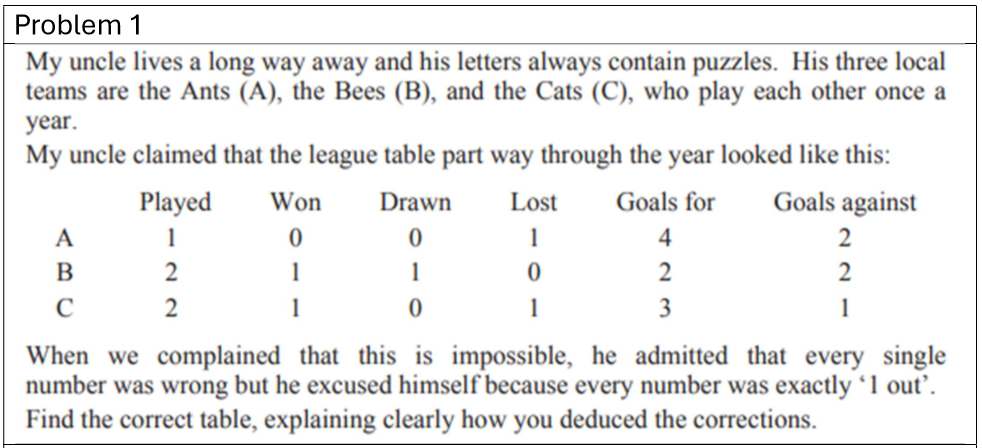
The link to 3 videos that the students put together can be found here
Math Resources