
Experience at the China (Shanghai) International Invention & Innovation Expo 2026
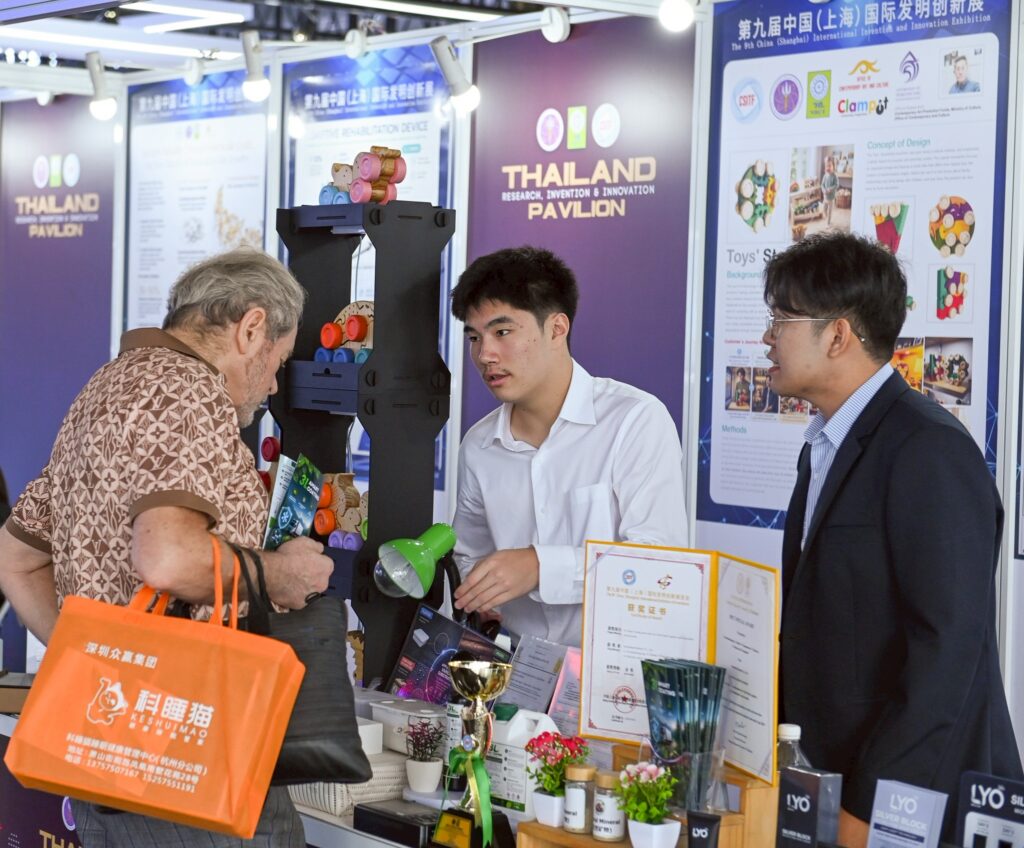
In June 2026, I participated in the China (Shanghai) International Invention & Innovation Expo 2026, one of the region’s largest innovation exhibitions. I attended along with a team from Rajamangala University of Technology Thanyaburi (RMUTT) and Kasetphand Industry Co., Ltd. (KPI).
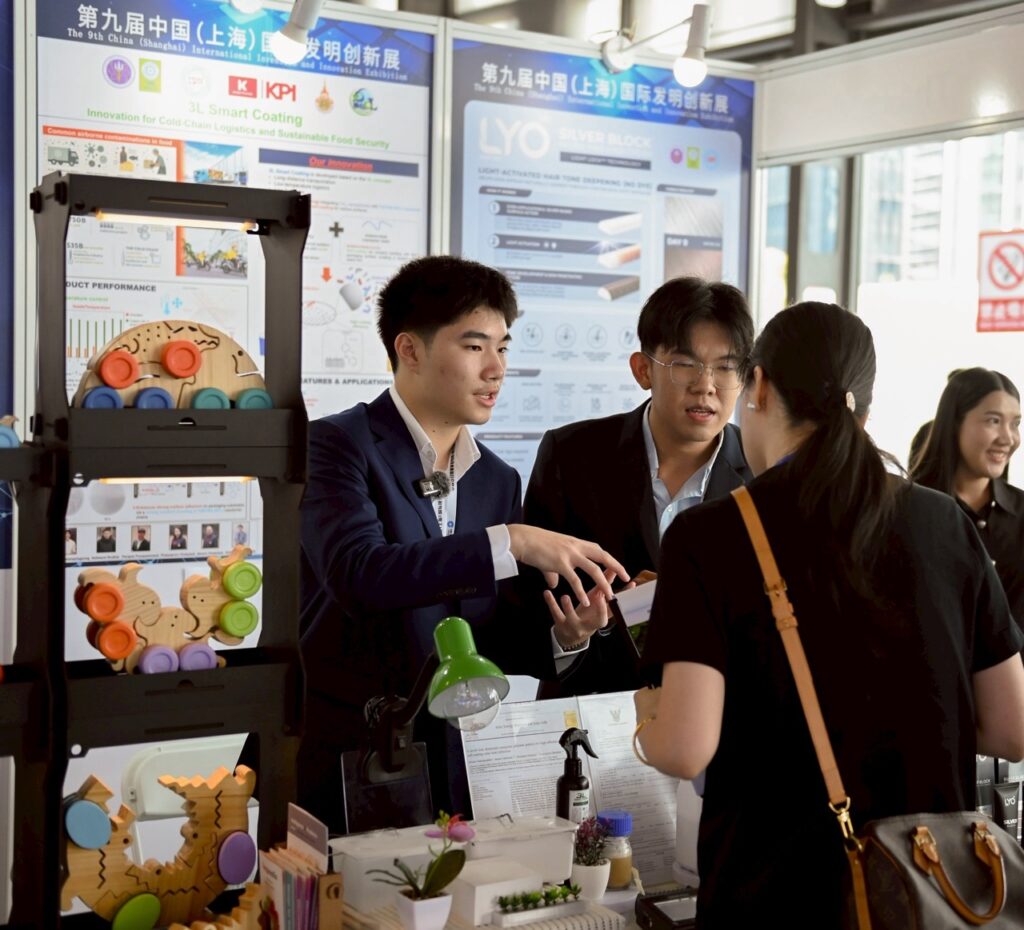
The team’s project focused on a thermal coating technology called **3L**, which is designed to reduce heat transfer and help stabilise temperatures inside containers. The technology is particularly relevant to cold-chain logistics, where maintaining low and consistent temperatures is essential for transporting food, medicine and other temperature-sensitive products. In countries with hot climates such as Thailand, cooling systems consume significant amounts of energy. By reducing heat entering a container, the 3L coating can lower energy consumption while helping preserve product quality during transportation. Testing demonstrated a significant reduction in internal temperatures when compared to untreated containers. In smaller test boxes, the temperature difference reached up to 8 degrees Celsius, highlighting the potential of the technology to improve efficiency throughout the cold-chain logistics industry.
Although I was not directly involved in developing the chemical composition of the coating, I was pleased to have a role in presenting the project to judges, visitors, researchers and industry representatives. My responsibility was to explain the overall concept, practical applications, business potential, and impact of the innovation. One of the most valuable lessons from this experience was learning how to work within a multidisciplinary team. The project brought together university researchers, industry professionals, and students with different backgrounds and expertise. Through this collaboration, I learned that innovation depends not only on technical knowledge but also on communication, teamwork and the ability to connect ideas from different fields.
Presenting at an international exhibition was also very different from presenting in a classroom environment. One of the most challenging aspects was adapting the way I communicated the project to different audiences. Each visitor approached the project with a different perspective and expectation. Some visitors were primarily interested in the science and technology behind the coating. They wanted to understand how the material worked, how it reduced heat transfer, and the testing methods used to evaluate its performance. Others approached the project from a business perspective and focused on practical applications, scalability, market demand,and future commercial opportunities.
Meanwhile, judges were often looking for a balance of both, evaluating not only the technical innovation itself but also its originality, impact and value. I learned that effectively communicating innovation is not simply about explaining the same information repeatedly. It requires understanding your audience and adjusting your message to address what they value most. This helped me appreciate the importance of connecting technology with both scientific understanding and practical implementation.
Beyond presenting our own project, I as able to explore innovations from around the world. The exhibition featured projects from China as well as other countries including Switzerland, Scotland, Indonesia and Iran. Seeing the variety of technologies on display was inspiring and gave me a broader perspective on the speed at which innovation is advancing globally. I was particularly impressed by the scale of technological development in China and the emphasis placed on transforming research into practical solutions that can be adopted by industry and society.
The event also demonstrated the importance of connecting innovation with real needs. During the exhibition, our project attracted interest from representatives within the logistics industry, some of whom saw potential applications for the technology in their businesses. Factors such as scalability, market demand, cost-effectiveness, and implementation challenges are often just as important as the scientific breakthrough itself.
The team was honoured to receive two awards during the exhibition: a Special Award from Thailand’s National Science and Technology Development Agency and a Gold Medal Award presented by the judges of the China (Shanghai) International Technology Fair. Whilst these recognitions were encouraging, the most valuable outcome of the experience was the opportunity to engage with experts, industry professionals and fellow innovators from around the world.
Looking back, this experience broadened my perspective on innovation, entrepreneurship,and international collaboration. It strengthened my confidence in public speaking, improved my ability to communicate complex ideas to different audiences and showed me how innovations move from research into real-world applications. It also encouraged me to think about how emerging technologies can be developed and applied to address challenges in Thailand.
Most importantly, the experience inspired me to continue exploring projects that combine technology, sustainability and practical problem-solving. What began as a single project ultimately became a broader lesson about innovation, collaboration, and the potential to turn ideas into solutions that create meaningful impact for society.
I am grateful to the team RMUTT, Kasetphand Industry Co., Ltd., the Thailand Pavilion organisers, and everyone who supported our participation. The experience was both rewarding and inspiring, and I look forward to applying the lessons I learned to future projects and opportunities.