
21st August 2026

Platinum Success to Begin our Platinum Year

By Chris Sammons, Head of School

The Graduating Class of 2026 was unique. It included parents from Bangkok Patana’s first graduating cohort in 1997. They have now seen their own children complete their education at Patana, graduate across our stage and now become members of the honoured Alumni. The Class of 2026 received remarkable academic results from the latest IBDP examinations: 

• 1 student achieved a full 45 points (joining the world’s elite 0.5% of perfect scorers)
• 7 students achieved an exceptional 43 points or higher
• 22% students achieved 40 points or above
• The average total score was 36 points
• 65% of students achieved 35 points or more
• 99% pass rate

Six students from the Class of 2026 were the first to complete a new programme introduced just two years ago. They also achieved excellent results in the IBCP demonstrating incredible progress in a unique combination of academic study, career-related learning and personal development.

• 99% pass rate
• 90% Distinction or higher

I have nothing but praise for all our students who have completed the world’s most elite curriculum model. They have achieved above world averages, scored personal bests and most importantly, learned to be critical thinkers. They not only have a passport to enter the most competitive universities of their choice; they have acquired critical thinking and study skills to sustain the very highest rankings as they travel all the way through university and beyond.

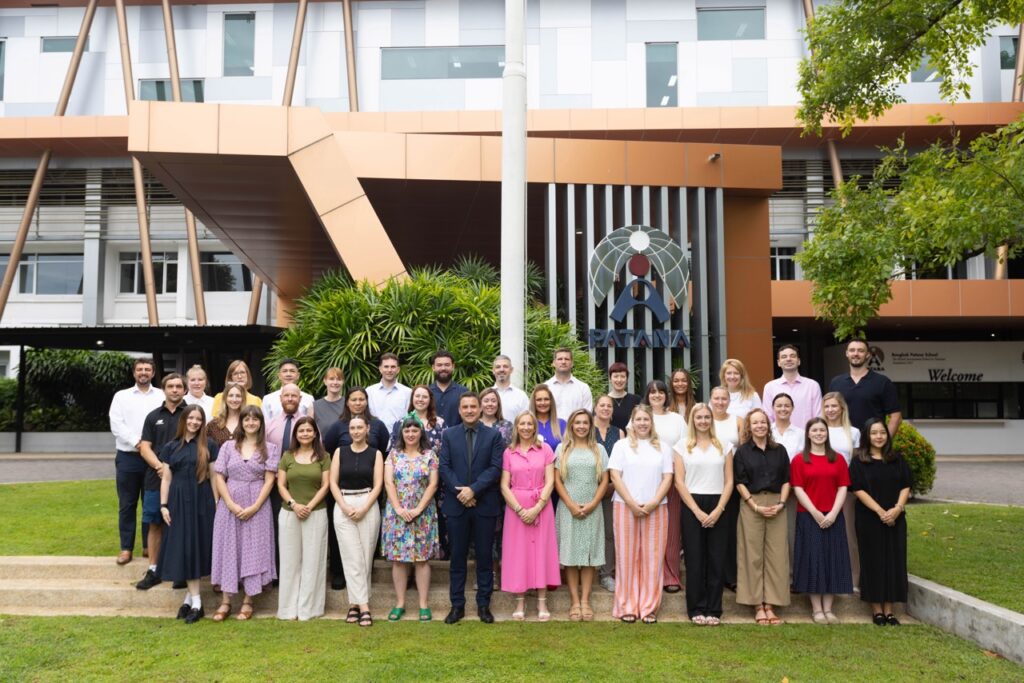
We begin this academic year with even more ambition for ourselves. We are supported by new teachers with considerable international experience. They herald from all over the globe and are trained to the highest British teaching standards; two of whom are Patana Alumni. For the sporty amongst you, Emily Scott joins the PE team having gained 38 caps for England and representing team GB for Rugby at the Rio Olympics. Another first is the appointment of Nikki Regalado to the highly successful football academy. She joins as Assistant Head Football Coach to lead our girls’ football programme to even greater success. A further shout out for Kru Pim who achieved her doctorate this summer after four years of additional study. She joins five doctorate holders in our wider teaching team which is an incredible achievement for her personally and the teaching talent of our school. 


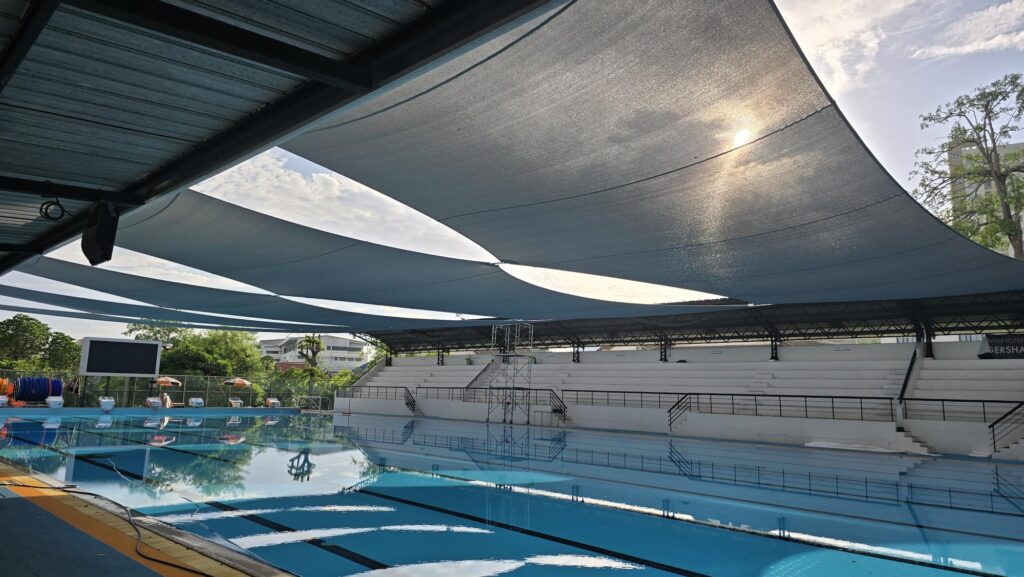
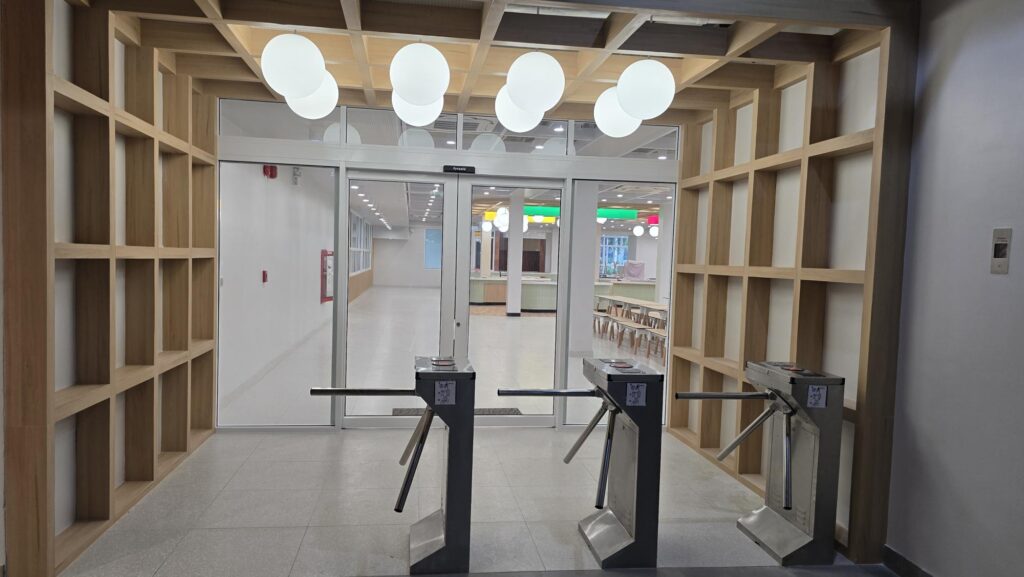
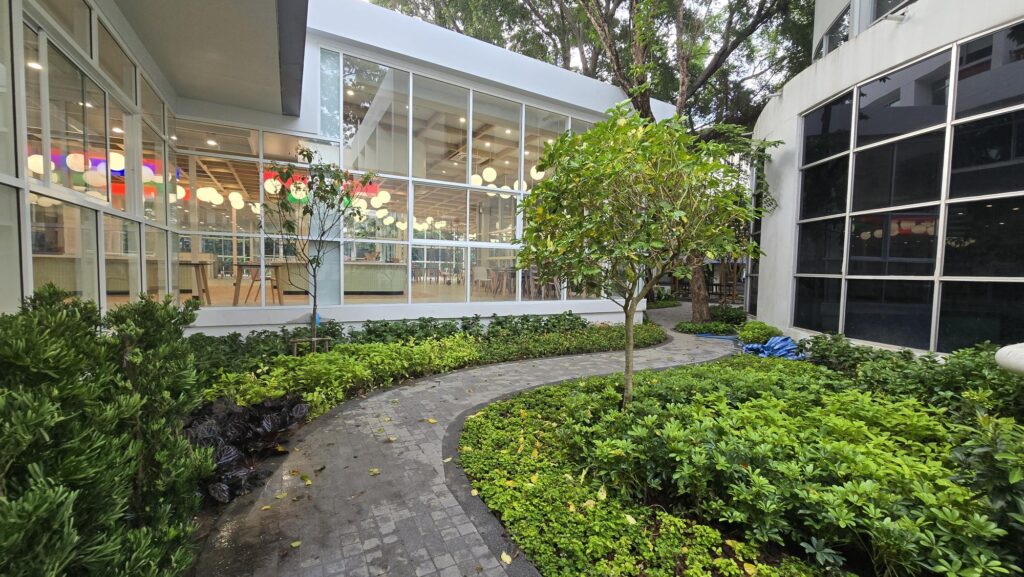
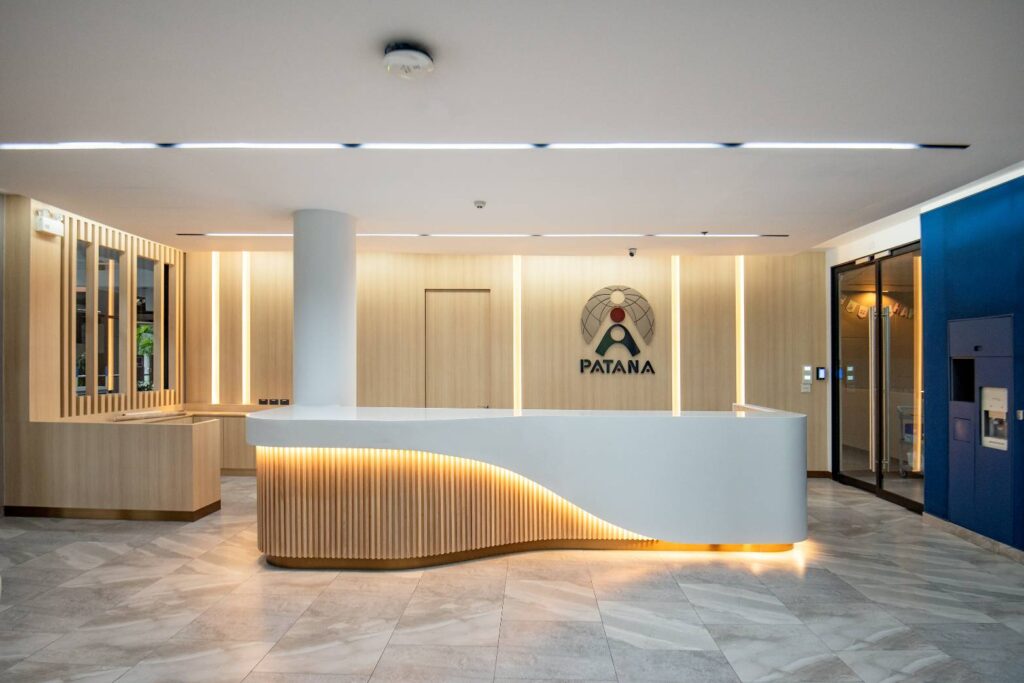
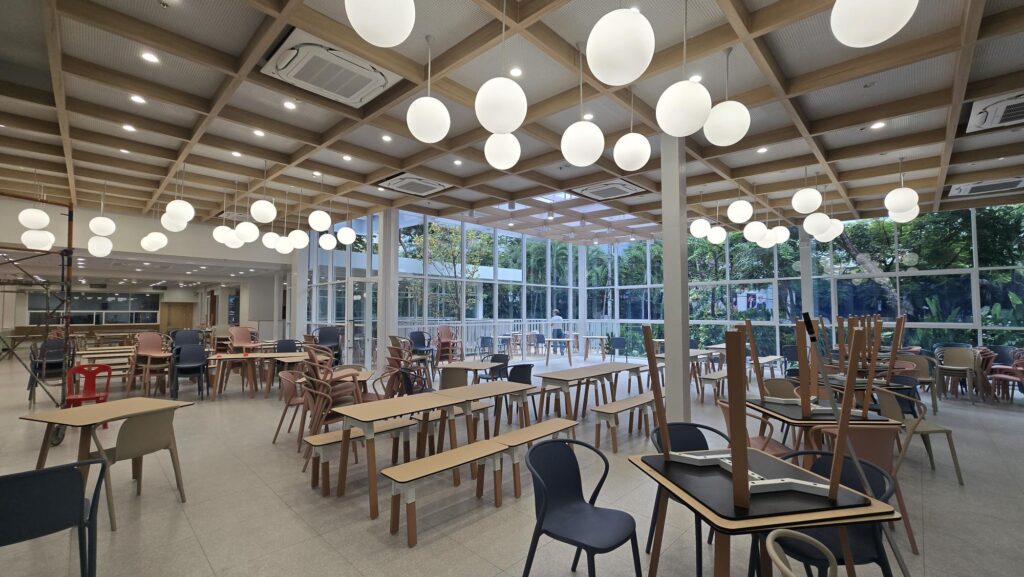
The school looks stunning, thanks to the Business teams who have been busy during our break. They completed extensive maintenance agendas and renovated several spaces. This includes a remodelled reception area, enclosed and upgraded Secondary dining facilities, new fencing and purpose-built storage areas for our grounds team, new theatre standard lighting in the Drama rooms, shades over the large pool area and the opening of our Discovery Centre. These facilities continue to elevate the daily experience and what we can achieve. You will see more building this year as we develop improved parking facilities that enables further facility development in the next few years. 
I look forward to welcoming you again at the morning gates and, you wouldn’t want to miss the opening assembly next Friday as we welcome Year 70 with dance and music. We will begin the next decade of  academic excellence and irreplaceable humanness together; deepening our investment in the distinction we enjoy in Thailand, South-East Asia and one of the World’s best independent schools.   

Community Expectations for Wearable Technology

Wearable Technology

We have a shared responsibility for creating a community where privacy, wellbeing, safety and learning are respected. During the last two years, technology companies have been gradually integrating AI beyond smart phones and watches into wearable glasses. Follow these rules in our community which apply on school premises, on school-owned or commissioned transport, and during all school-related activities and visits:

  • Wearable devices must not be used in our school to capture, store, retrieve, transmit or share information about others without appropriate authorisation and consent.
  • Smart glasses of any description are not permitted for students, staff or visitors

Teachers have authority to determine whether any wearable technology is appropriate and/or where a device is being used inappropriately. Staff may request they are removed for safekeeping, stored in the central office and collected by a parent or guardian.

Nursery to Year 6

To support learning, concentration and age-appropriate independence, students in Nursery to Year 6 should not bring wearable technology that functions as a communication, messaging, internet-enabled or data-capturing device. Exceptions may be approved by the Principal where there is a medical need (such as a glucose monitor) or an additional learning requirement. Analogue watches are encouraged as a tool for learning about time.

Year 7 to Year 13

Students in Years 7 to 13 may use wearable smart watches provided they are used responsibly and in accordance with school expectations. Wearable devices must remain on silent mode with notifications and communication functions disabled throughout the school day. Wearable devices are never permitted in examinations or formal assessments; their presence can result in disqualification in accordance with assessment regulations.

Staff, Visitors and Parents

We expect all staff, visitors and parents to support our commitment to privacy, safeguarding and respectful community conduct by also complying with these expectations regarding wearable technology. Always follow guidance, including being asked to remove any wearable tech device, cease using it, or leave the school site.
Share This Article

In this Issue

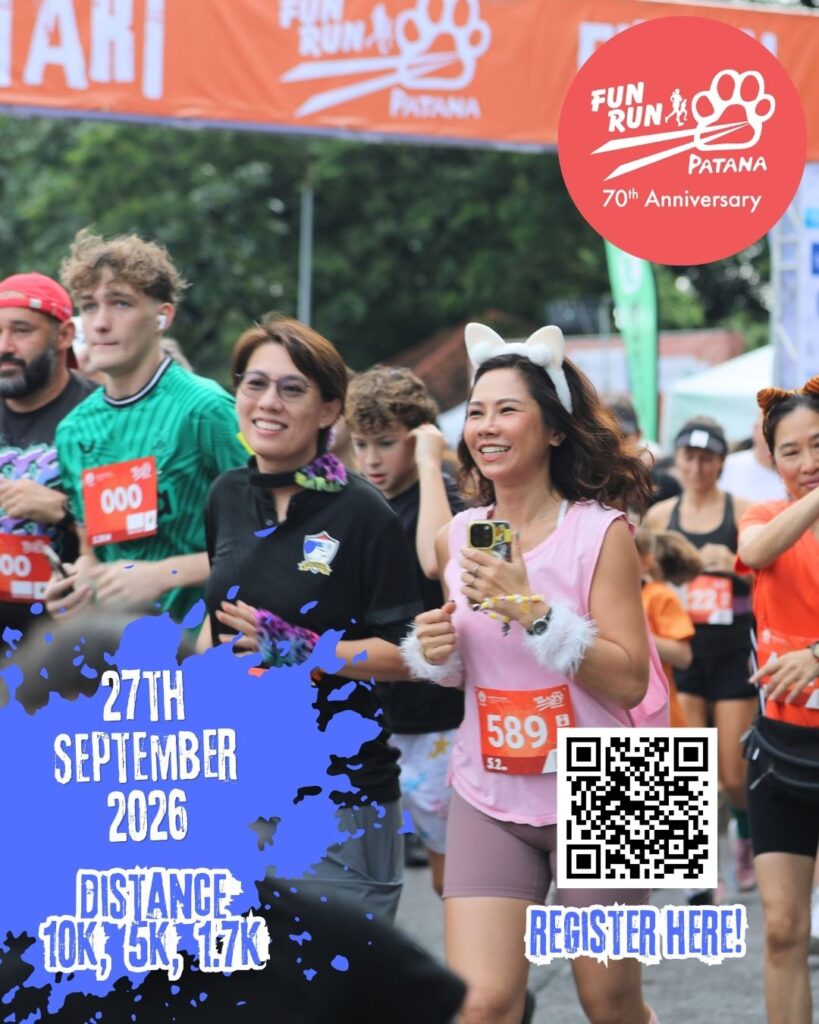
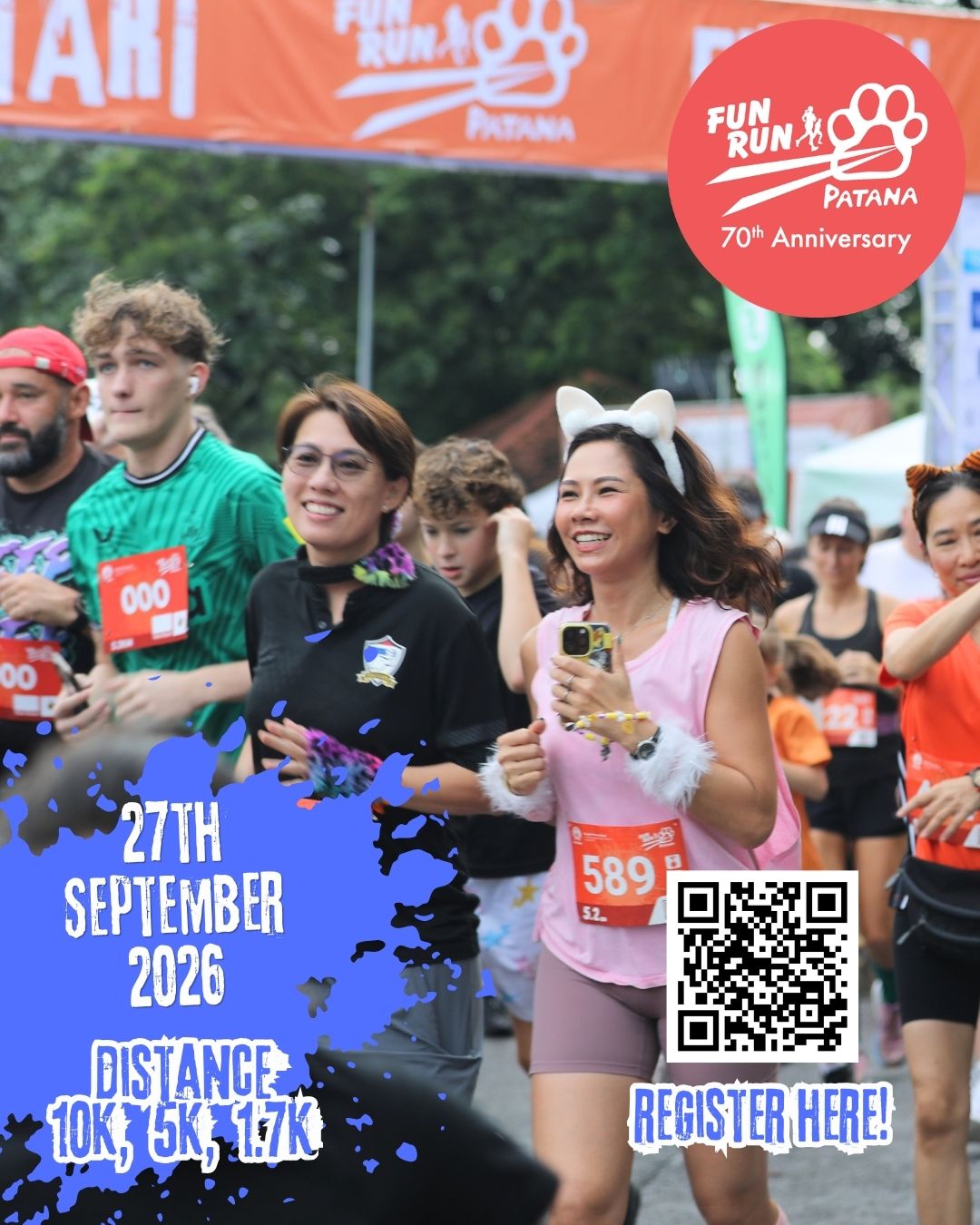
Fun Run 2026

Mark your calendars for our FUN RUN 2026 on 27th September!

Register now! https://race.thai.run/bpf26

Share This Article

In this Issue

Safeguarding on Campus

By Chris Sammons, Head of School

Site Security
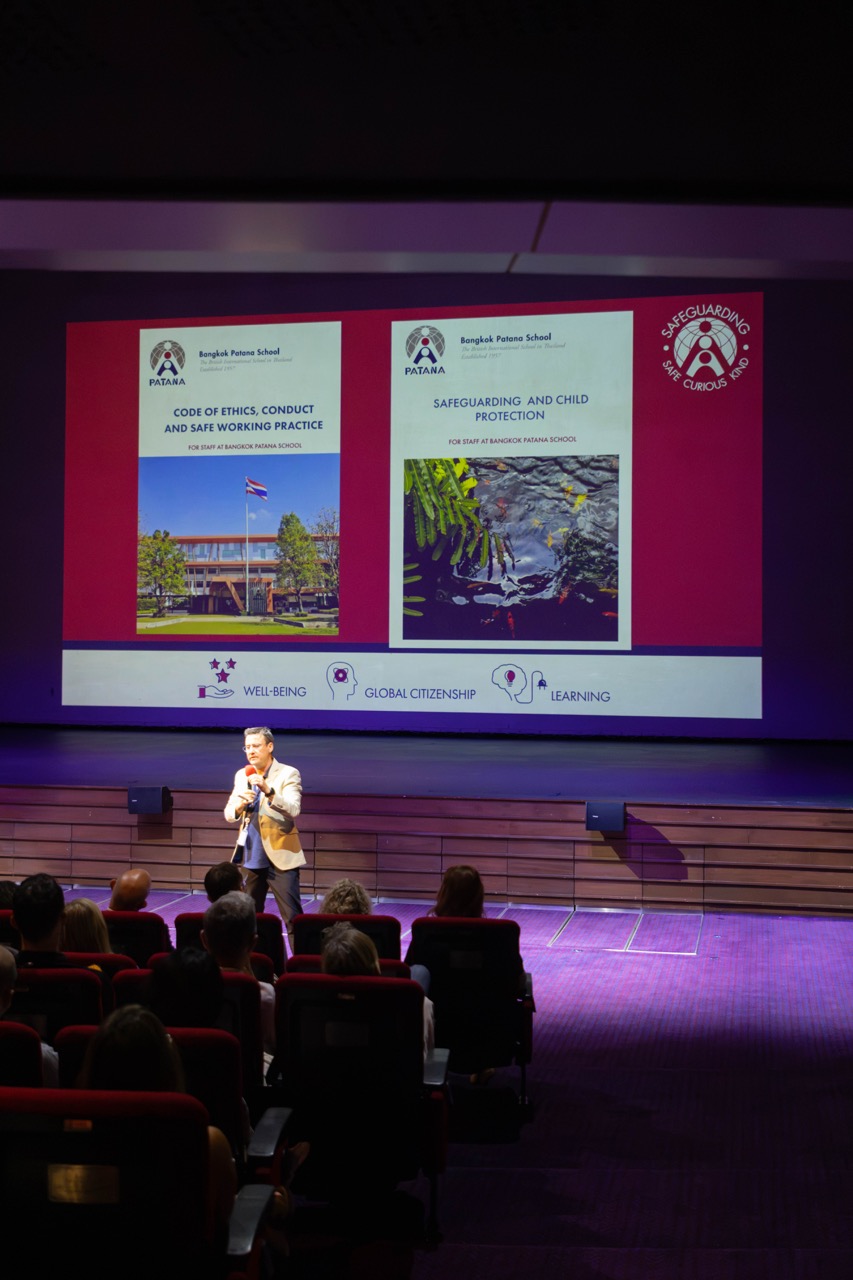
Access to our site is controlled and monitored. All members of our community must agree to a safeguarding code of conduct.

Identification
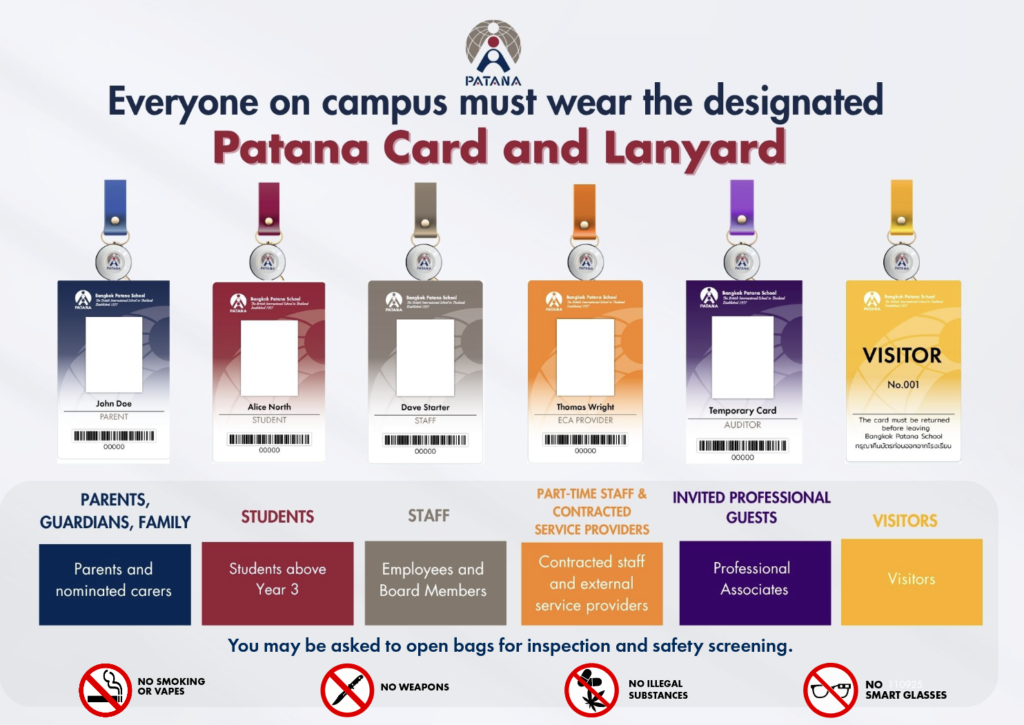
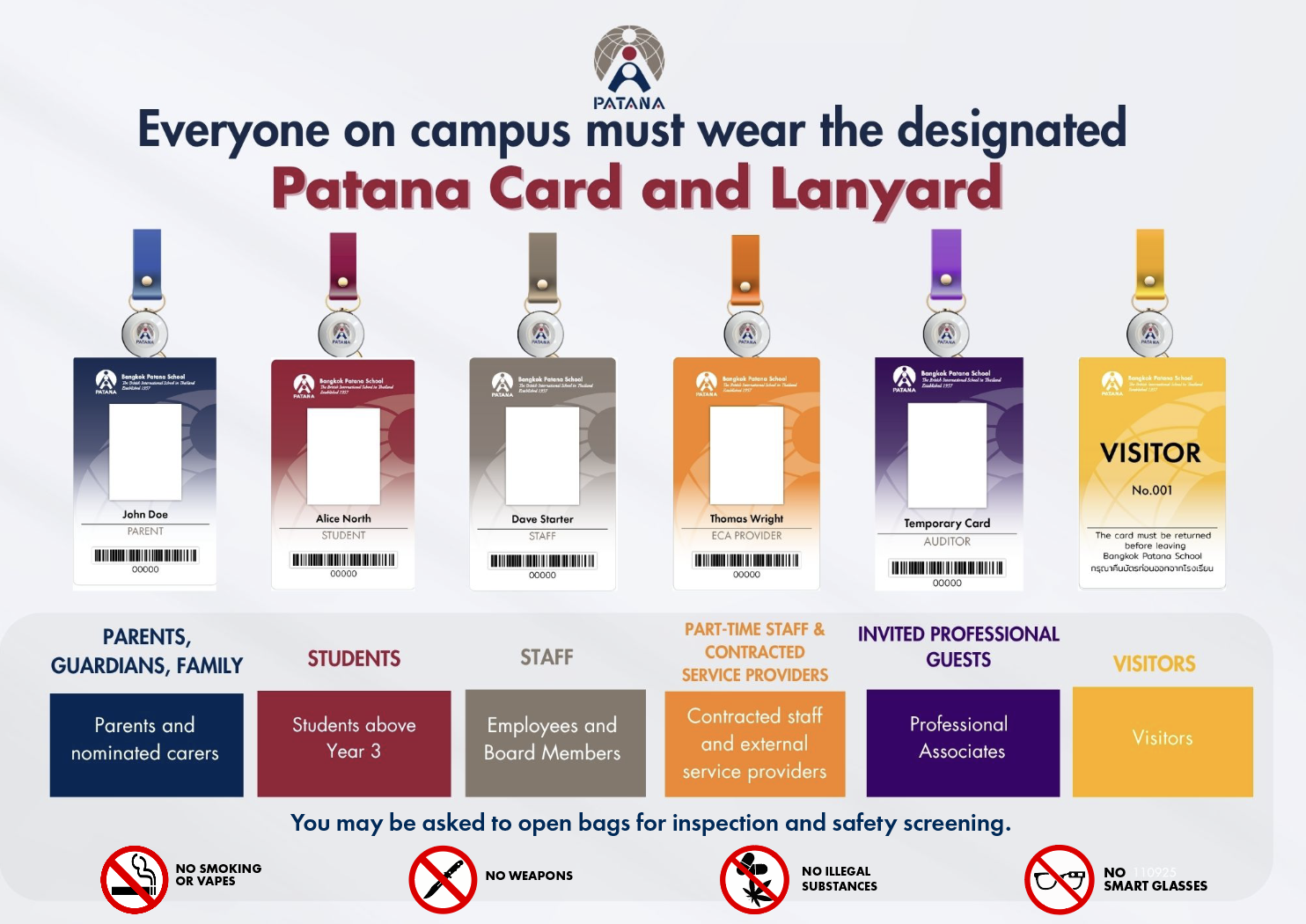
A reminder that all members of the community including parents and guardians are required to wear the appropriate lanyard on our site at all times. The lanyard must not be replaced with any other bespoke designs.

Site entry
Our security guards control the perimeter of our campus with an automatic gate system. Nobody may enter the school site without a pass.

Each internal teaching area has age-appropriate rules about access by parents. eg parents are permitted to enter the FS area in the first few weeks of term during settling in. Secondary parents are never permitted to enter teaching areas without a teacher.

Emergency Procedures
Our staff are trained in our emergency procedures which are tested and reviewed termly including evacuation and lock down drills.

Visitors
All new visitors to the site must register with their identification documents prior to entry and may only access the school site on approved school business.

Prohibited
Our rules remain unchanged. No weapons, illegals substances, smoking materials (including vapes) on school transport, school premises or school visits outside of the premises. From August 2026, we are also prohibiting smart glasses.

Wearable Technology

We have a shared responsibility for creating a community where privacy, well-being, safety and learning are respected. During the last two years, technology companies have been gradually integrating AI beyond smart phones and watches into wearable glasses. Follow these rules in our community which apply on school premises, on school-owned or commissioned transport, and during all school-related activities and visits:

  • Wearable devices must not be used in our school to capture, store, retrieve, transmit or share information about others without appropriate authorisation and consent.
  • Smart glasses of any description are not permitted for students, staff or visitors

Teachers have authority to determine whether any wearable technology is appropriate and/or where a device is being used inappropriately. Staff may request they are removed for safekeeping, stored in the central office and collected by a parent or guardian.

Nursery to Year 6

To support learning, concentration and age-appropriate independence, students in Nursery to Year 6 should not bring wearable technology that functions as a communication, messaging, internet-enabled or data-capturing device. Exceptions may be approved by the Principal where there is a medical need (such as a glucose monitor) or an additional learning requirement. Analogue watches are encouraged as a tool for learning about time.

Year 7 to Year 13

Students in Years 7 to 13 may use wearable smart watches provided they are used responsibly and in accordance with school expectations. Wearable devices must remain on silent mode with notifications and communication functions disabled throughout the school day. Wearable devices are never permitted in examinations or formal assessments; their presence can result in disqualification in accordance with assessment regulations.

Staff, Visitors and Parents

We expect all staff, visitors and parents to support our commitment to privacy, safeguarding and respectful community conduct by also complying with these expectations regarding wearable technology. Always follow guidance, including being asked to remove any wearable tech device, cease using it, or leave the school site.

Bag checks and Safety Screening

Moving forward, anybody entering the school site may be asked to open their bags for a random and discreet bag check. If anything is found that is not permitted, we will take appropriate steps in line with school policy.

We will discuss this with students during assemblies in the next few weeks and before it commences. Parents would always be contacted if any concerns arise.

Counselling Support
Each child has a class teacher (primary) or tutor (secondary) as their first point of contact for anything which concerns them. We also have a team of five full time social and emotional counsellors for more specific needs which may arise.  

Concerns

If your child, or any member of your family, notice something which makes them feel concerned then please let us know in the usual way by reporting to the Designated Safeguarding Lead:

Hannah Pinkney (Primary) hapi@patana.ac.th
Grant Roberston (Secondary) grro@patana.ac.th
Alice Curwood (Cross Campus) alcu@patana.ac.th

Safeguarding – Bangkok Patana School

Share This Article

In this Issue

What Makes Us Irreplaceable? A Student Perspective on AI and Human Skills

As part of our staff professional development programme before the start of the academic year, Year 13 student Janya Phlaphongphanich challenged our teachers to think differently about artificial intelligence and the uniquely human qualities that technology cannot replicate. Drawing on her work as founder of LivLit, Janya shared insights from the AI literacy workshops she has delivered to hundreds of students in Thailand and internationally.
We are delighted to share her recent article, originally published in The Nation, in which she explores the skills that will matter most in an AI-driven world and why staying curious, creative, empathetic and connected may be more important than ever.

Janya’s article in The Nation

Share This Article

In this Issue

Tech Tips #330: Switch this AI Feature Off in Snapchat Privacy Settings

By Brian Taylor, Vice Principal, Technology for Learning

As artificial intelligence becomes more integrated into the apps young people use every day, it is increasingly important for families to understand how personal content may be used. A recent online safety update from Wayne Denner highlights a little-known Snapchat setting that parents may wish to review with their teenager.

By default, Snapchat may use certain public content, including Stories, Spotlight videos and Snap Map posts, to help train its generative AI systems. While this is outlined in the platform’s settings, many parents and young people may not be aware that the option is enabled automatically. The update encourages families to have an informed conversation about privacy, digital footprints and personal data, and to make decisions that align with their own preferences. 

The video above explains what the setting does, where it can be found within Snapchat, and how users can change their preferences if they choose to do so. The focus is not on creating alarm, but on helping families understand the choices available to them and make informed decisions about how their content is used online. 

The wider message is one that resonates across all social media platforms: maintaining awareness of privacy settings, understanding how data is collected and used, and regularly reviewing account preferences with children and teenagers. These conversations help develop critical digital literacy skills and support young people in becoming informed, responsible users of technology. 
As a school, we encourage parents to take a few minutes to explore privacy settings together with their children and use these opportunities to discuss online safety, digital wellbeing and the responsible use of emerging technologies, including AI. Small conversations today can help young people develop safer and more confident online habits for the future. 

Have a great weekend.

Share This Article

In this Issue

From Classroom Presentations to Real-World Innovation

By Sorawit Limvatanayingyong, Year 13

Experience at the China (Shanghai) International Invention & Innovation Expo 2026

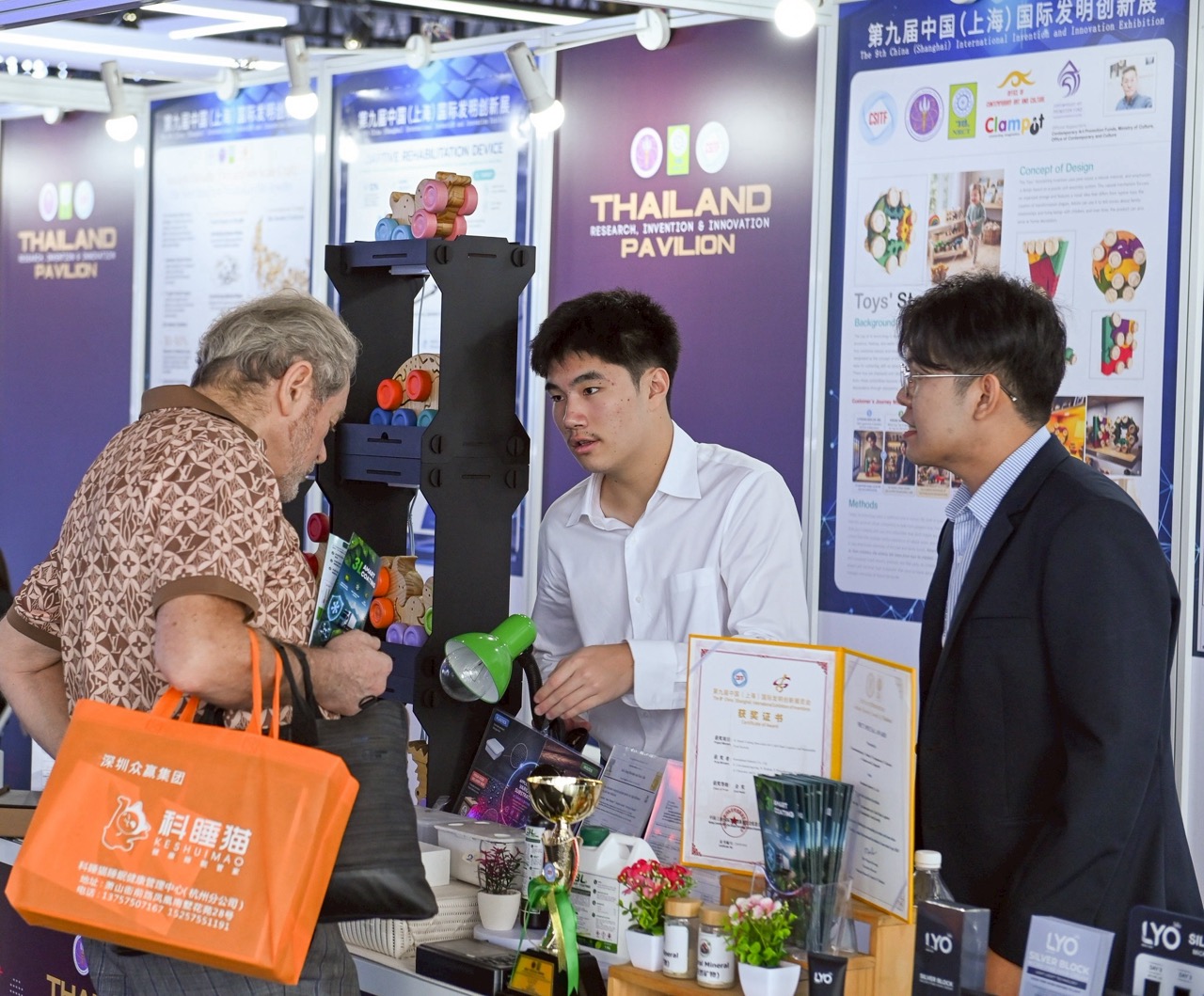
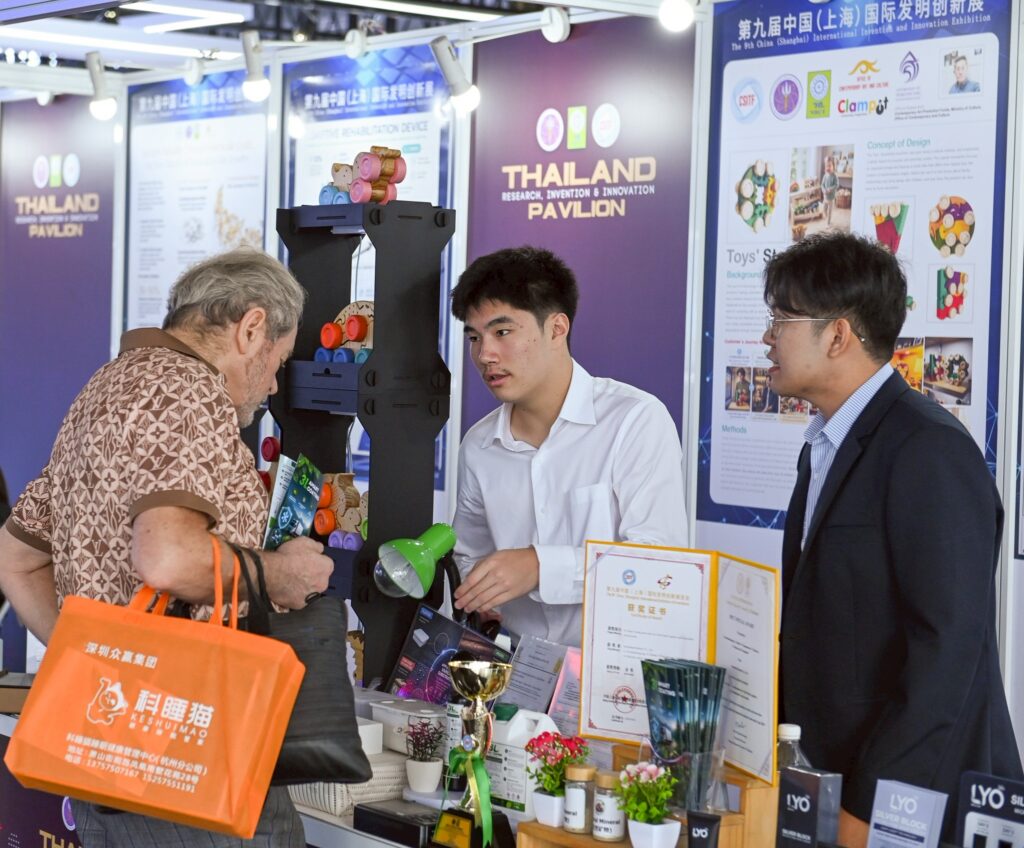
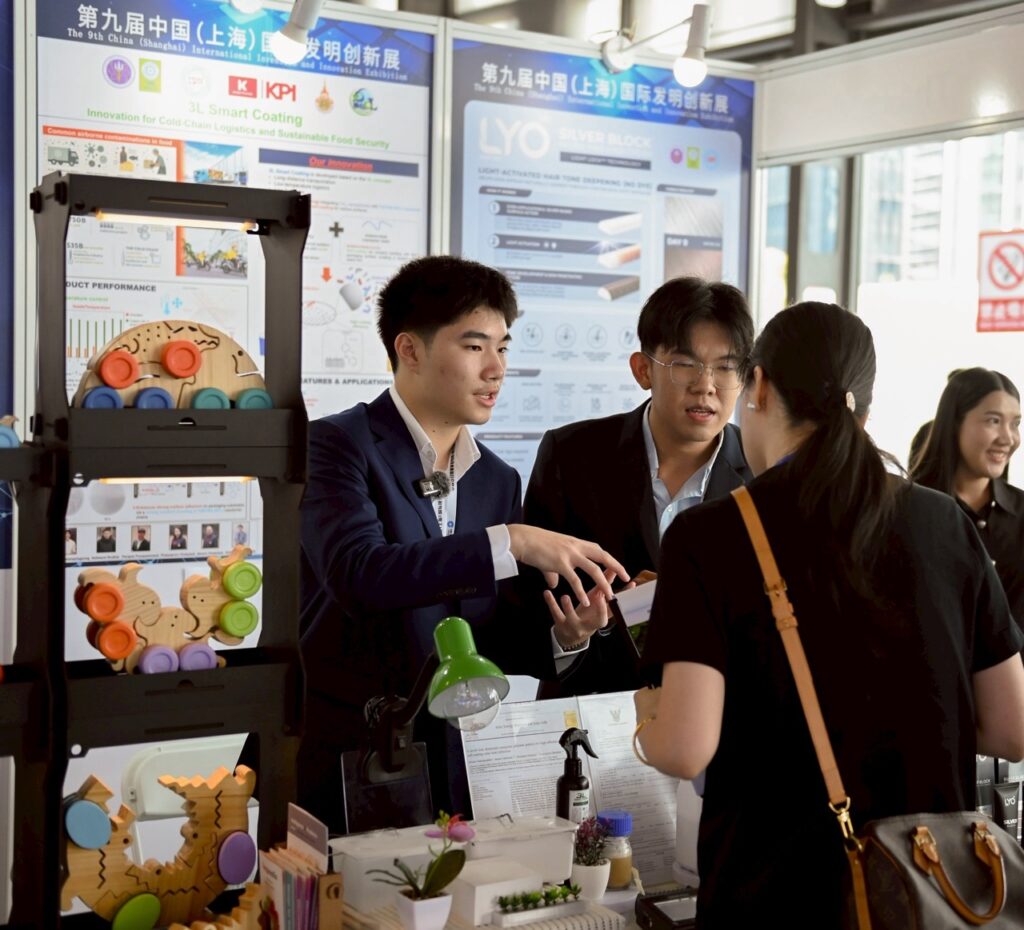
In June 2026, I participated in the China (Shanghai) International Invention & Innovation Expo 2026, one of the region’s largest innovation exhibitions. I attended along with a team from Rajamangala University of Technology Thanyaburi (RMUTT) and Kasetphand Industry Co., Ltd. (KPI).

The team’s project focused on a thermal coating technology called **3L**, which is designed to reduce heat transfer and help stabilise temperatures inside containers. The technology is particularly relevant to cold-chain logistics, where maintaining low and consistent temperatures is essential for transporting food, medicine and other temperature-sensitive products. In countries with hot climates such as Thailand, cooling systems consume significant amounts of energy. By reducing heat entering a container, the 3L coating can lower energy consumption while helping preserve product quality during transportation. Testing demonstrated a significant reduction in internal temperatures when compared to untreated containers. In smaller test boxes, the temperature difference reached up to 8 degrees Celsius, highlighting the potential of the technology to improve efficiency throughout the cold-chain logistics industry.

Although I was not directly involved in developing the chemical composition of the coating, I was pleased to have a role in presenting the project to judges, visitors, researchers and industry representatives. My responsibility was to explain the overall concept, practical applications, business potential, and impact of the innovation. One of the most valuable lessons from this experience was learning how to work within a multidisciplinary team. The project brought together university researchers, industry professionals, and students with different backgrounds and expertise. Through this collaboration, I learned that innovation depends not only on technical knowledge but also on communication, teamwork and the ability to connect ideas from different fields.

Presenting at an international exhibition was also very different from presenting in a classroom environment. One of the most challenging aspects was adapting the way I communicated the project to different audiences. Each visitor approached the project with a different perspective and expectation. Some visitors were primarily interested in the science and technology behind the coating. They wanted to understand how the material worked, how it reduced heat transfer, and the testing methods used to evaluate its performance. Others approached the project from a business perspective and focused on practical applications, scalability, market demand,and future commercial opportunities.

Meanwhile, judges were often looking for a balance of both, evaluating not only the technical innovation itself but also its originality, impact and value. I learned that effectively communicating innovation is not simply about explaining the same information repeatedly. It requires understanding your audience and adjusting your message to address what they value most. This helped me appreciate the importance of connecting technology with both scientific understanding and practical implementation.

Beyond presenting our own project, I as able to explore innovations from around the world. The exhibition featured projects from China as well as other countries including Switzerland, Scotland, Indonesia and Iran. Seeing the variety of technologies on display was inspiring and gave me a broader perspective on the speed at which innovation is advancing globally. I was particularly impressed by the scale of technological development in China and the emphasis placed on transforming research into practical solutions that can be adopted by industry and society.

The event also demonstrated the importance of connecting innovation with real needs. During the exhibition, our project attracted interest from representatives within the logistics industry, some of whom saw potential applications for the technology in their businesses. Factors such as scalability, market demand, cost-effectiveness, and implementation challenges are often just as important as the scientific breakthrough itself.

The team was honoured to receive two awards during the exhibition: a Special Award from Thailand’s National Science and Technology Development Agency and a Gold Medal Award presented by the judges of the China (Shanghai) International Technology Fair. Whilst these recognitions were encouraging, the most valuable outcome of the experience was the opportunity to engage with experts, industry professionals and fellow innovators from around the world.

Looking back, this experience broadened my perspective on innovation, entrepreneurship,and international collaboration. It strengthened my confidence in public speaking, improved my ability to communicate complex ideas to different audiences and showed me how innovations move from research into real-world applications. It also encouraged me to think about how emerging technologies can be developed and applied to address challenges in Thailand.

Most importantly, the experience inspired me to continue exploring projects that combine technology, sustainability and practical problem-solving. What began as a single project ultimately became a broader lesson about innovation, collaboration, and the potential to turn ideas into solutions that create meaningful impact for society.

I am grateful to the team RMUTT, Kasetphand Industry Co., Ltd., the Thailand Pavilion organisers, and everyone who supported our participation. The experience was both rewarding and inspiring, and I look forward to applying the lessons I learned to future projects and opportunities.

Share This Article

In this Issue

Let’s Keep Patana Green

By Cindy Adair, Cross Campus Principal

As active stewards of the environment and our communities, here are a few sustainability tips/reminders as we head into the new school year:

  • We have a fantastic recycling station community members are encouraged to use at the front of the Foundation Stage carpark area. Feel free to bring in your items from home. Please do sort your recyclables to ensure the housekeeping team who process the donations can do so with safety and ease. No car or motorbike batteries.
  • Other collections we have include:
    • E-waste in partnership with AIS (outside Secondary DT – no batteries please)
    • Batteries (in the Secondary Library (Regularly transported to IKEA as part of their large recycling programme)
  • We try to minimise single use plastic wherever we can and have made huge strides in this area in recent years. Please do bring your own water bottle.
  • Please do not idle in our carparks, this creates poor AQI for young lungs. If your family employ a driver, please share this expectation with them.
  • Consider including more vegetarian and plant-based snacks if you are hosting a meeting/event and providing snacks. Our fantastic catering team have a growing range, ask to see their menu.
  • Our Foundation Stage and Key Stage 1 students LOVE to junk model, if you do have materials (cardboard boxes etc) you no longer want/need, contact the team to see what they can use. We love to upcycle at Patana 💚
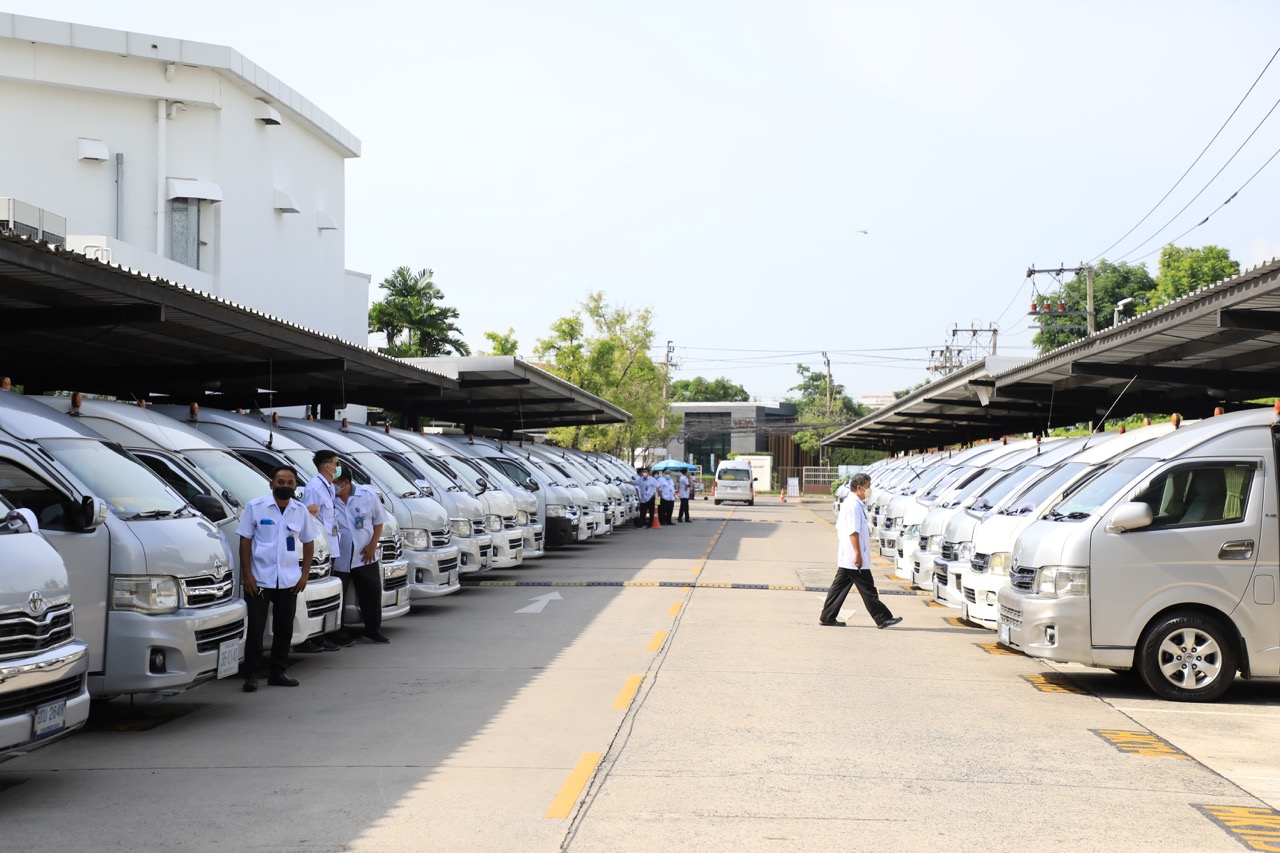
  • Don’t forget our Transport team offer regular shuttles to the BTS and the Yellow MRT line on a coupon based system. Leave the car at home and utilise public transport to do your part for the planet.

Attached is a handy event guide which was created by our Student Environmental Committee with lots of practical tips to make your events this year as sustainable as possible. It’s a great little read with some nice innovative ideas.

Share This Article

In this Issue

Outstanding International School Student Award 2026

Pinkarn Vajrapana (Kru Pim), Head of Thai Programme

The Office of the Private Education Commission (OPEC) established the Outstanding International School Student Award” this year for students from international schools. The award recognises students in the international school system who have demonstrated outstanding abilities and achievements in various fields and who serve as positive role models. It also seeks to honour their achievements and encourage and inspire students to continue striving for excellence.

We are delighted and proud to announce that five of our students were among the recipients of this inaugural award:

Arts, Culture and Music:

1.Thanatcha Tanompongphandh – Year 5

Academic Achievement:
2. Thitichat Voravutvitayarak – Year 6

Sports and Recreation:
3. Nisa Bhuridej– Year 7
4. Nicha Bhuridej – Year 8/ 2025–26

5. Thannicha Voravutvitayarak – Year 8/ 2025–26

The award presentation ceremony was presided over by Dr. Phinya Rattanaworachat, Deputy Secretary-General of the Office of the Private Education Commission, alongside OPEC executives and representatives from international schools.

We are immensely proud of our students for their remarkable accomplishments and dedication.

Share This Article

In this Issue

Train the Trainer Programme

By Kristen Meadows, Head of Year 9

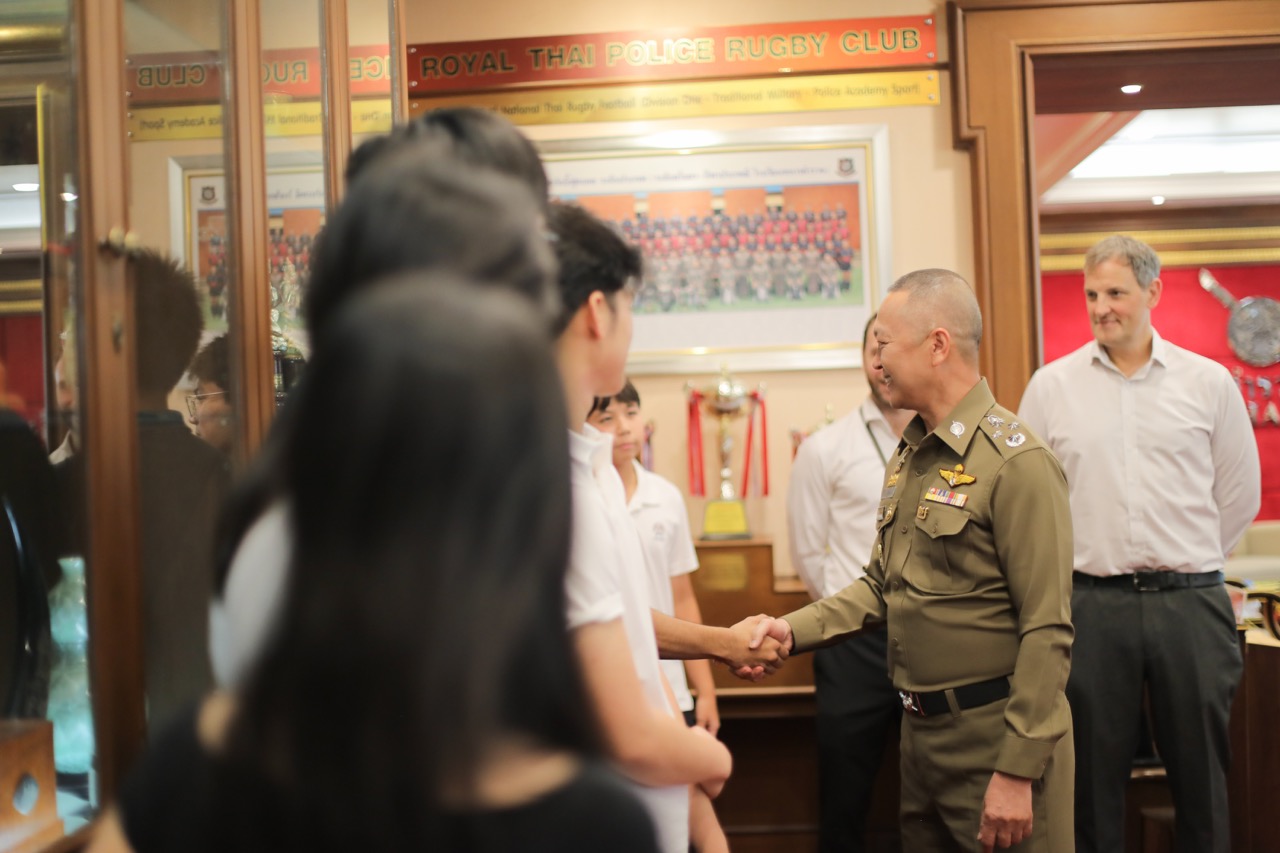
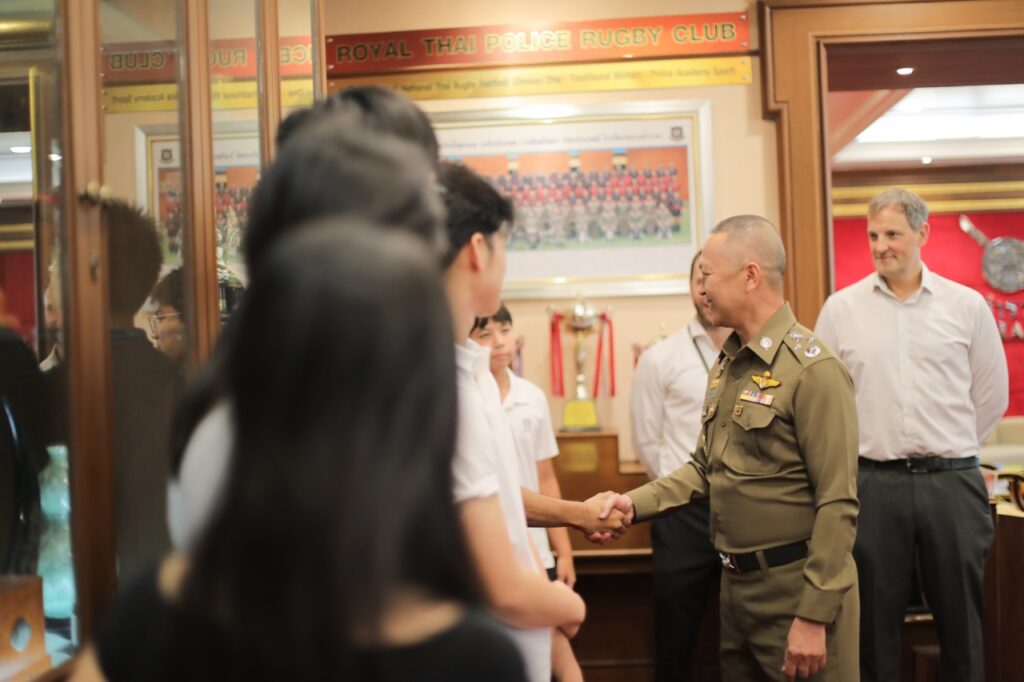
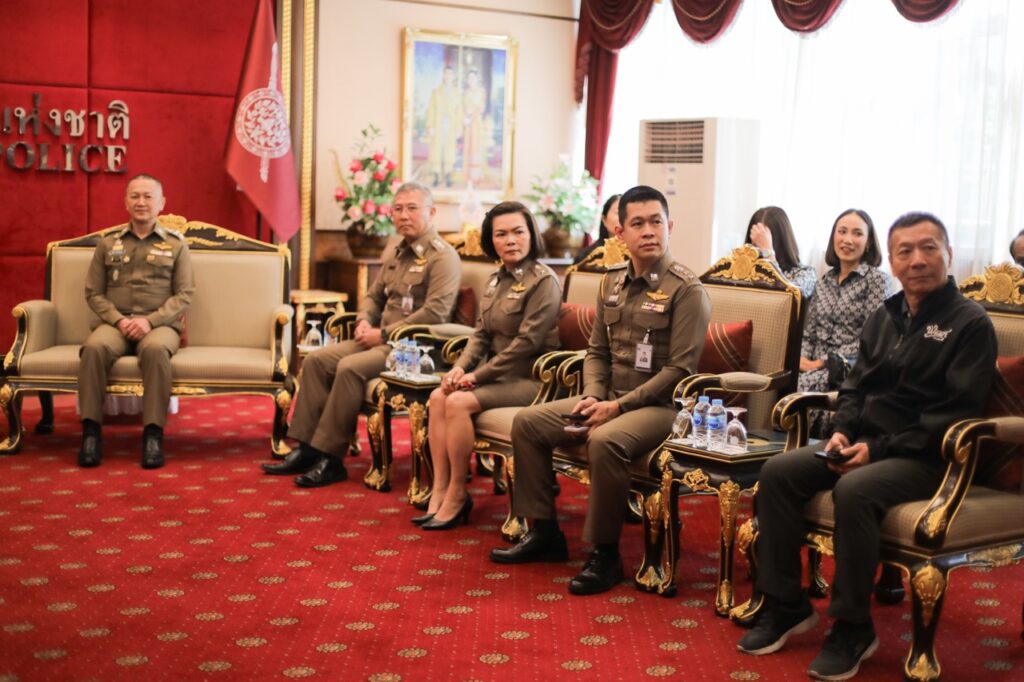
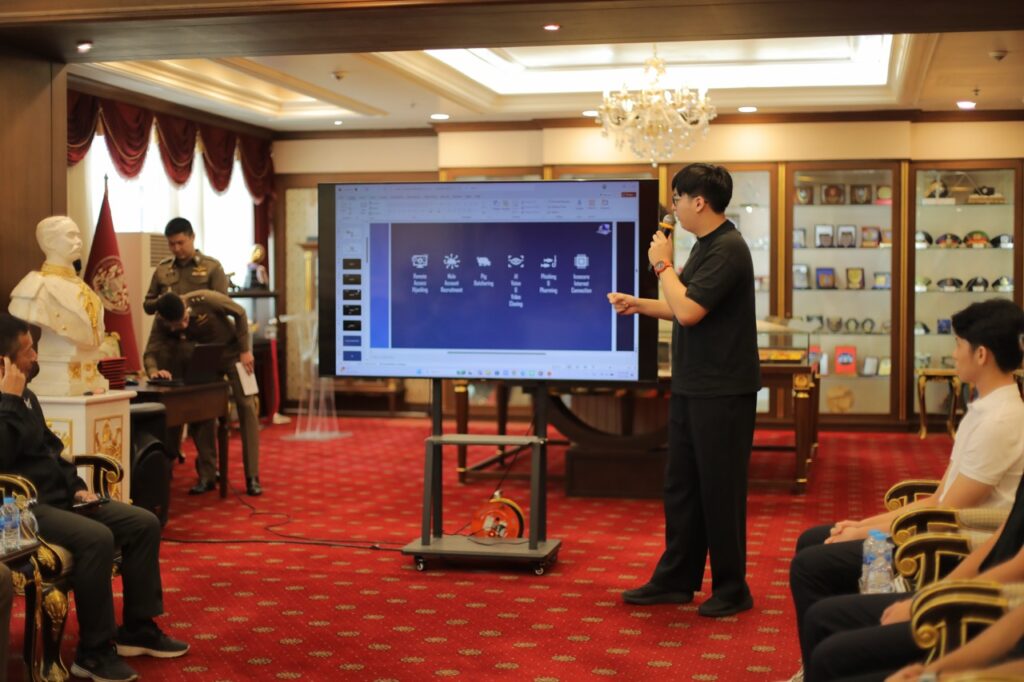
A group of Bangkok Patana students enjoyed a memorable and prestigious day at the Royal Thai Police Headquarters, where they were recognised for their outstanding contribution to the Train the Trainer Programme, a cyber safety initiative delivered in partnership with the Royal Thai Police.

The programme began following a presentation delivered at Bangkok Patana in November 2025, highlighting the growing impact of cybercrime on young people. Inspired by the session, Year 8 and Year 12 students worked alongside police officers and experts to develop projects aimed at raising awareness and helping others stay safe online.

The awards ceremony was attended by the Guest of Honour, Police General Thatchai Pitaneelaboot, who congratulated all participants on their commitment to making a positive difference in their communities.

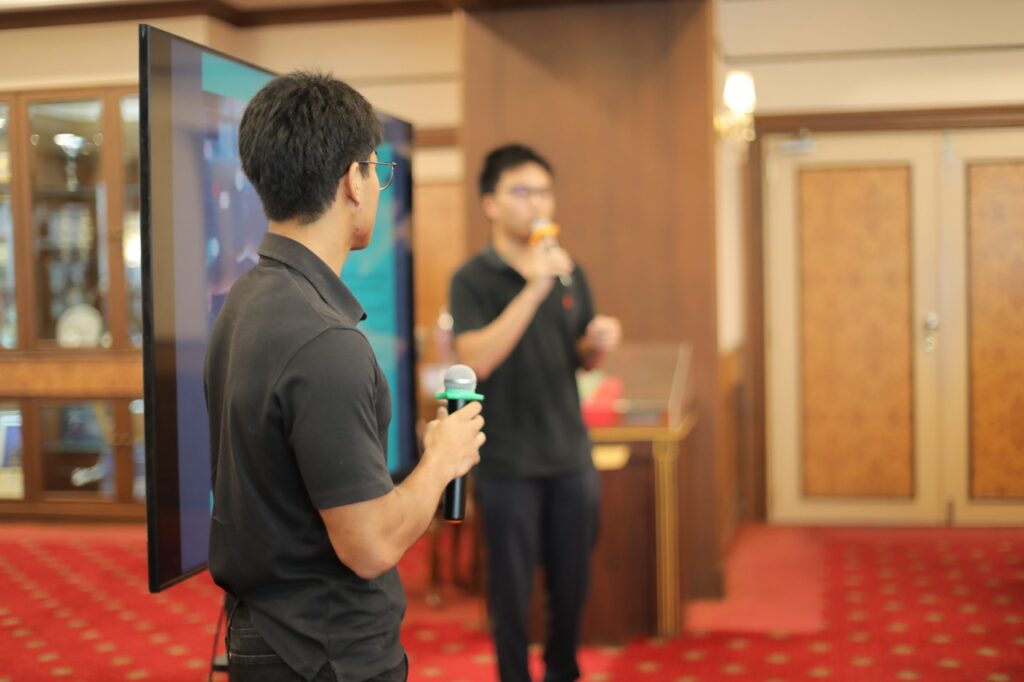
Representatives from the three Bangkok Patana teams each presented a summary of their projects to an audience of police officials, educators and fellow participants. Their work showcased an impressive range of ideas, including supporting refugee communities through cyber awareness, developing a website to help users identify legitimate web addresses, creating an interactive platform to teach people how to avoid online scams, and delivering cyber safety workshops for Bangkok Patana parents.

Team Fishguard received the award for the outstanding project, and every student who took part was presented with a certificate recognising their dedication and achievement.

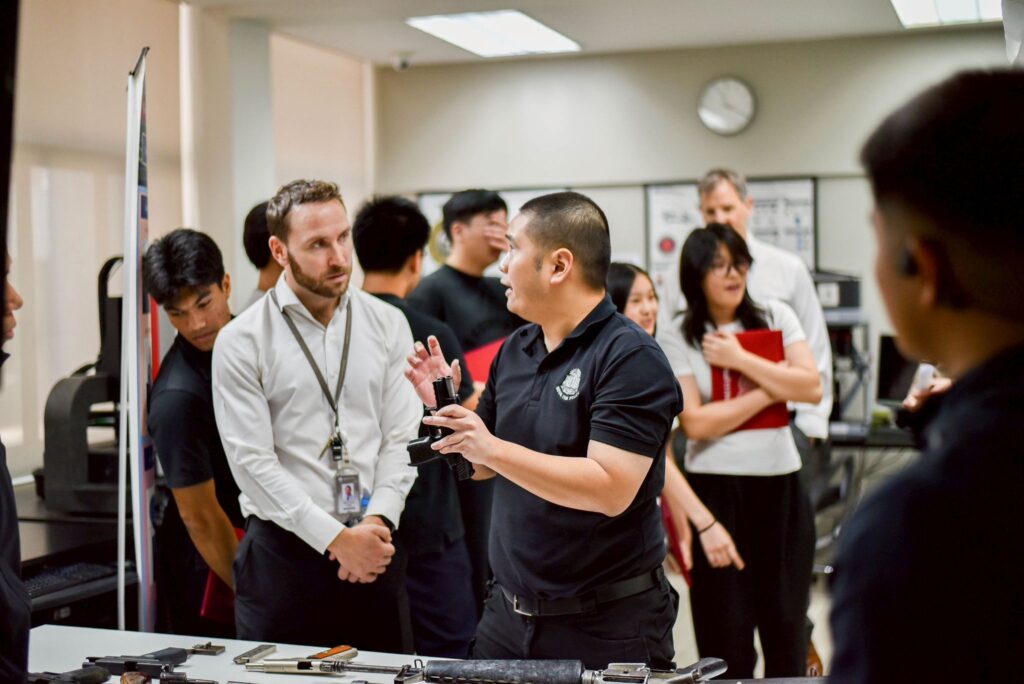
Following the ceremony, students were given an exclusive tour of the Royal Thai Police Headquarters, providing a fascinating insight into the work of the organisation and the important role it plays in tackling cybercrime across Thailand.

The day was a fitting celebration of our students’ creativity, collaboration and commitment to using their skills to make the online world a safer place for everyone.

Share This Article

In this Issue

Volunteering at Karen Hilltribes Trust

By Charles (Shi-Yi) Pitcher, Year 13

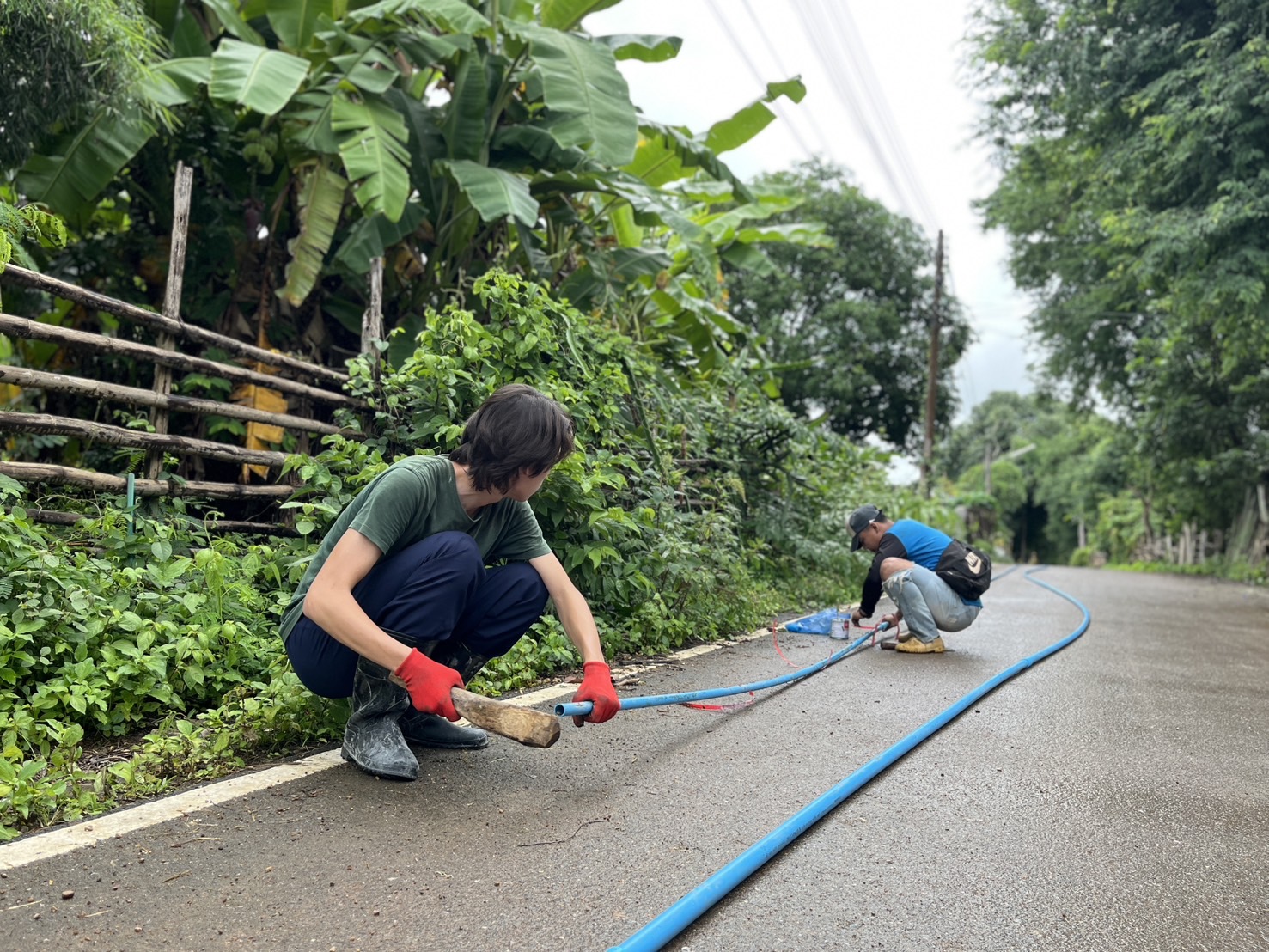
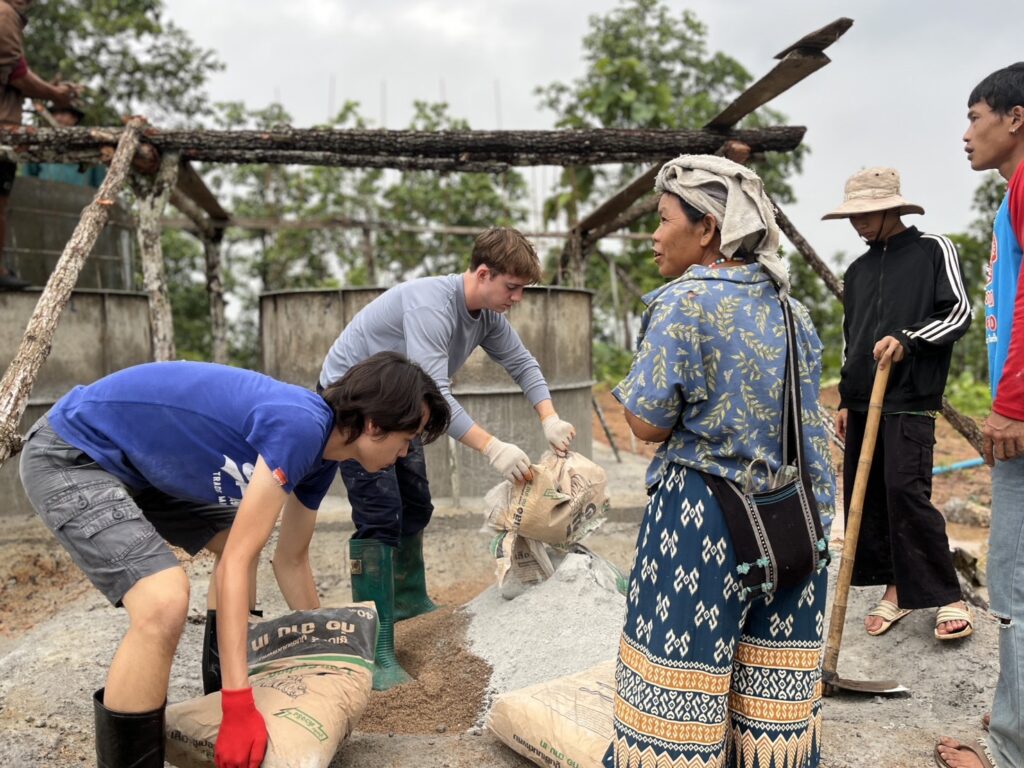
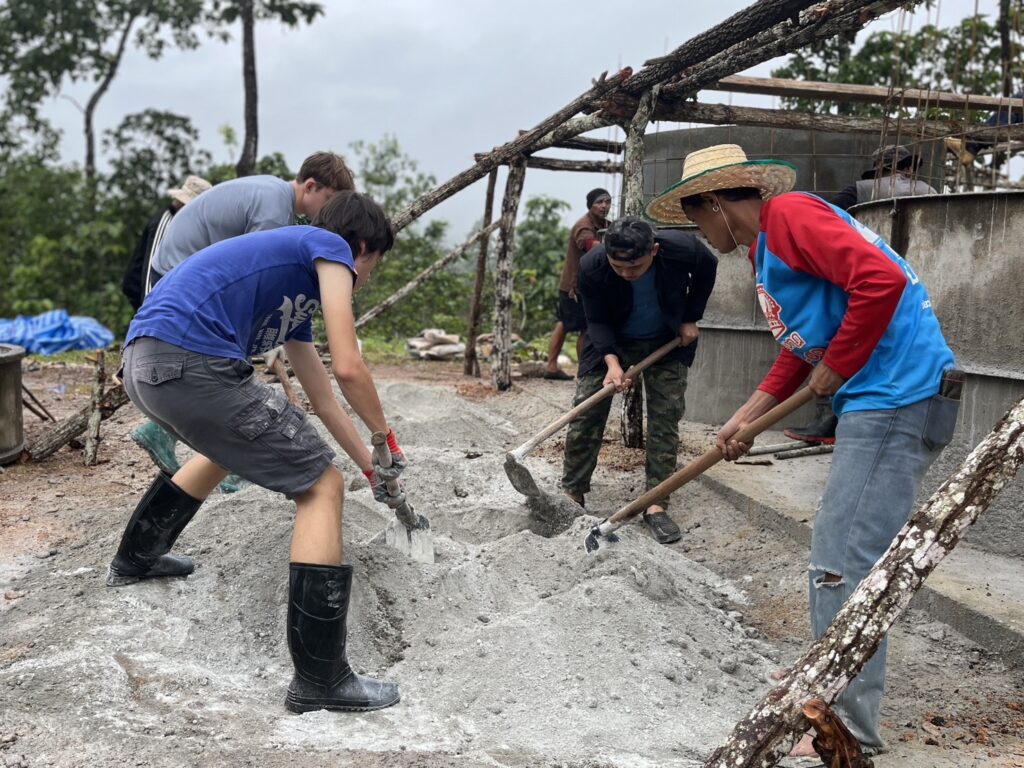
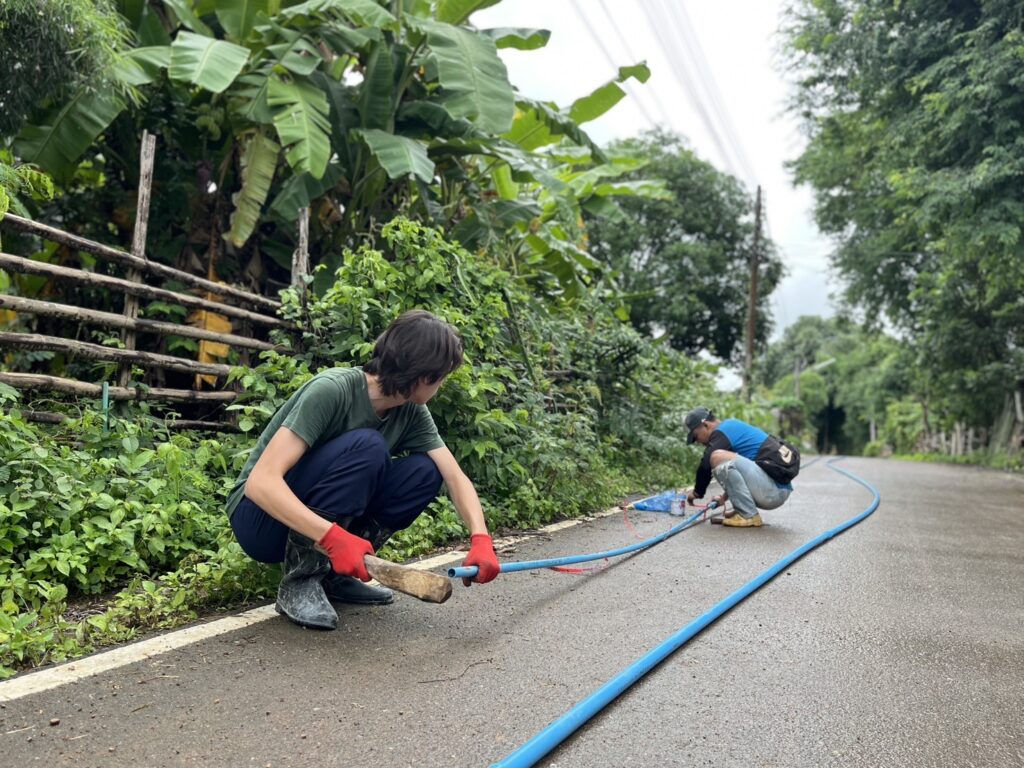
I was looking for an opportunity to both enrich my understanding of the Karen community as well as make a difference for marginalised communities in Thailand and Karen Hilltribes Trust (KHT) seemed perfect. Volunteering before for effective charities who make real improvements to Karen communities in the south, I had no doubt that KHT similarly did so in Thailand’s north. These hopes were very much confirmed on my journey to Mae Salabb as a volunteer for KHT’s Water Project in July of this year, seeing KHT’s networks of pipes running into homes all across the village.

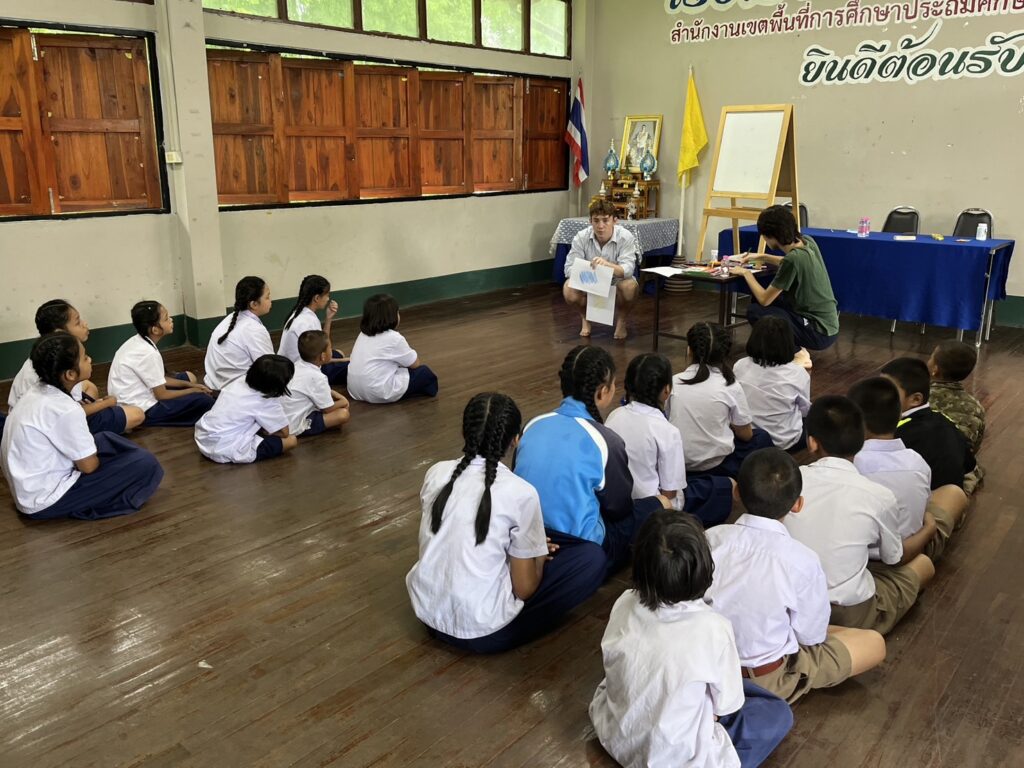
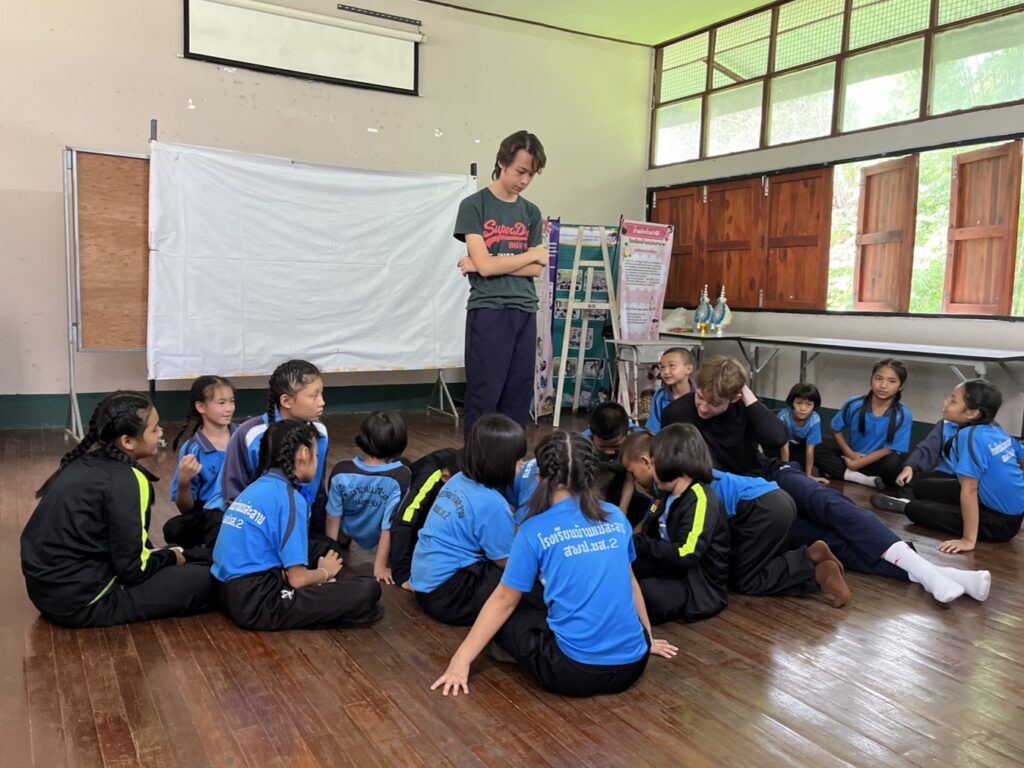
A typical day as a volunteer started with breakfast at 7.00am and immediately getting to work on either installing pipes throughout the village or working day-by-day to build two sterile tanks, to connect a water source high in the mountains to the rest of the village. Often other volunteers and I would get the amazing opportunity to teach basic Maths and English skills to younger students at the local school; also making deeper community connections.

KHT seeks to help. This is exactly what makes the organisation so unique, by living among the villagers and interacting with them on a daily basis, KHT volunteers make a difference to people’s lives directly independent of whether it furthers the goal of the specific project, enriching infinitely the impact that KHT can bring to marginalised communities like in Mae Salabb.

Overall, my experience as a volunteer at KHT was one of the most rewarding experiences in my life and I can’t help but to appreciate and thank the staff both in and outside Thailand in putting in the work to better the lives of the Karen in Northern Thailand. I cannot wait to volunteer next year, and I implore you to do so as well.

Share This Article

In this Issue

See You on Classlist!

Bangkok Patana School parents are encouraged to join Classlist, our dedicated parent community platform, as we complete the transition away from Year group and school LINE and WhatsApp groups. The move is designed to provide one consistent, school-supported space for parent-to-parent communication and PTG updates, while also supporting privacy and data protection expectations. The platform has been adopted to create a more inclusive and consistent experience for all Bangkok Patana families.

Over the past two months, families have been gradually joining Classlist and connecting with their Year groups and class communities. As we enter the final stage of the rollout, all existing parent LINE and WhatsApp groups will be closed within the next week. Families who have not yet joined are encouraged to do so as soon as possible to ensure they continue receiving PTG updates and can stay connected with their parent community.

Only parents of current Bangkok Patana students will be able to join the Bangkok Patana group on Classlist. Parents should have received their unique joining link from noreply@classlist.com. If you have not seen this, please check your junk folders, and if you don’t have it please fill in a ticket with our IT helpdesk. You must use the personal email you have registered with the school to access Classlist (do not use a login email ending with patana.ac.th).

Thank you to the many families who have already joined – 80% of our parent community is already on Classlist!. We look forward to welcoming the rest of our community onto Classlist as we move to one shared platform for parent connections and PTG communication.

Share This Article

In this Issue

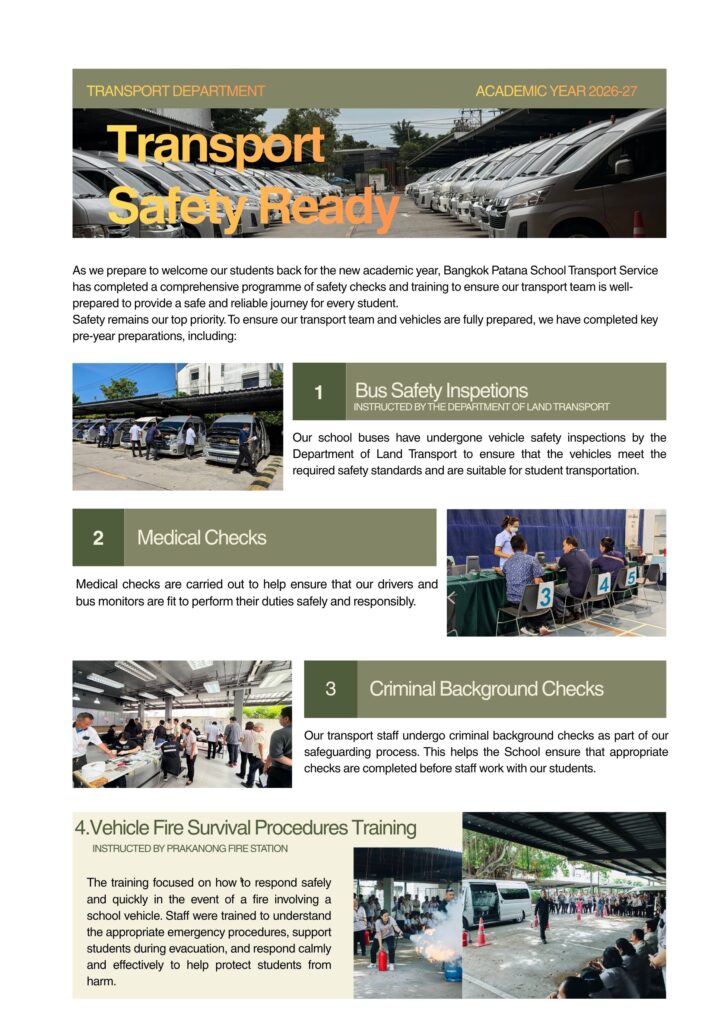
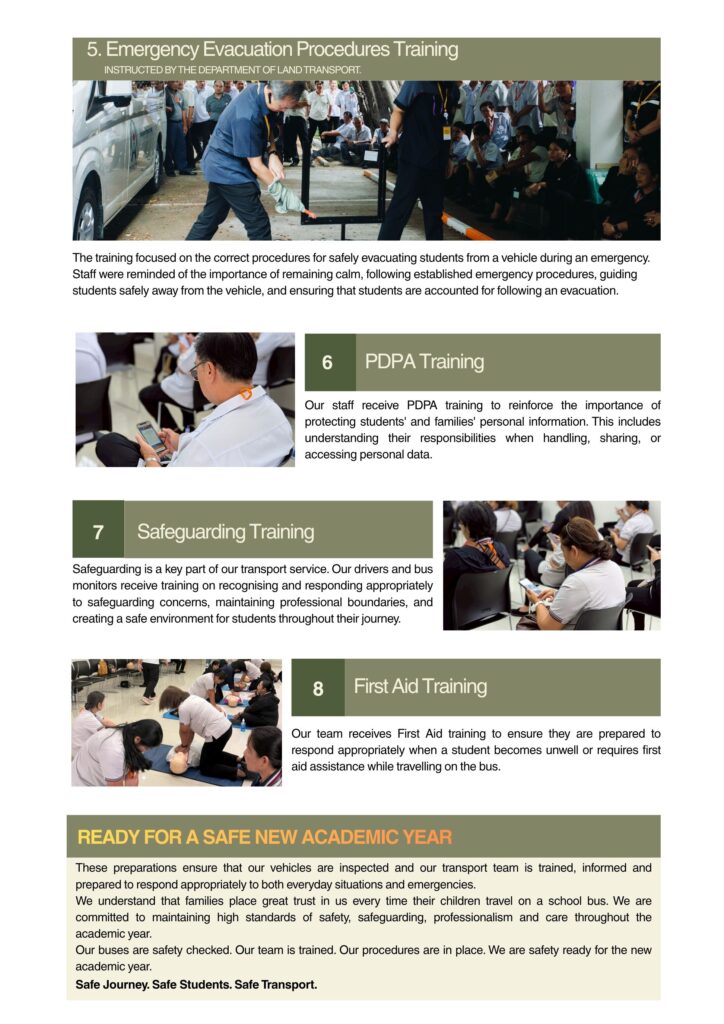
Transport Update

Transport Department 

Share This Article

In this Issue

BPS Competitive Sports Pathways

For families with children in Year 5 and above, our Competitive Sports Pathways page is a helpful tool for understanding and planning your child’s sporting opportunities across the year.

The interactive page allows you to filter by age group (via year overview tab) and sport (via timetable tab), making it easy to see when seasonal sports take place alongside our year-long Academy programmes. Whether you are wondering “When does Year 5 Rugby start?” or “Which sports are available to my child this year?”, this is a great place to start. 

We encourage families to take a look and use the pathway to help plan ahead – BPS Competitive Sports Pathways

Share This Article

In this Issue

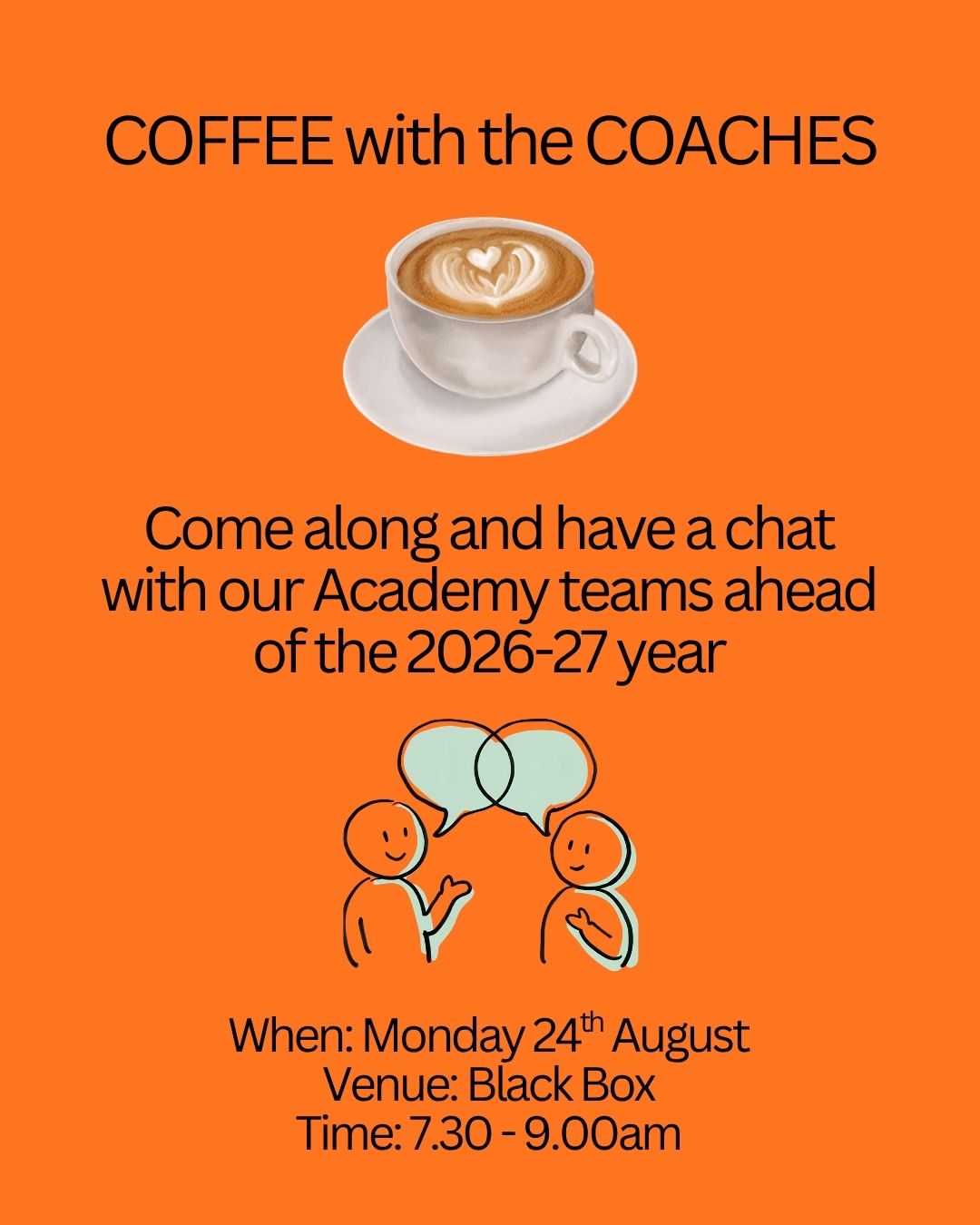
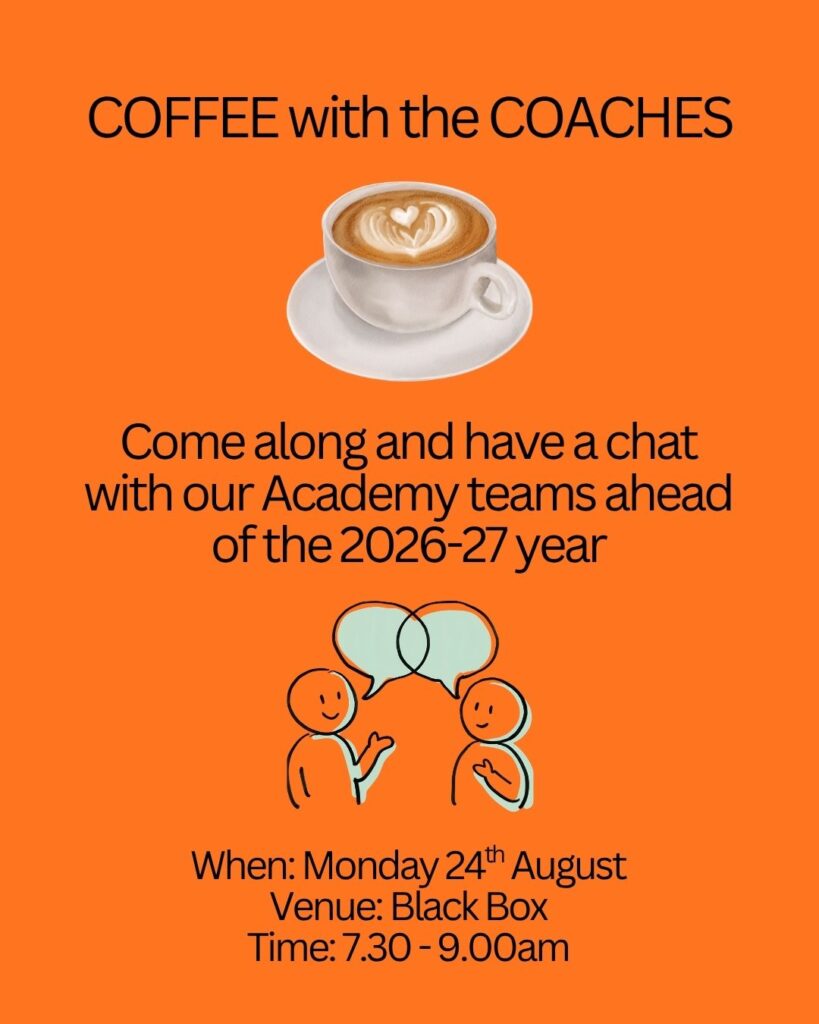
Coffee with Coaches!

Share This Article

In this Issue

ECA Phase 1 sign-up Opens today at 12.00

Reminder ~ ECA Phase 1 sign-up Opens today at 12.00

You can refer to the email from Ms.Alice Curwood sent on 18th August, 2026

Sign-up is via the Parent’s Gateway login and then navigate to the ECA page by clicking on the ‘click here to sign up’ icon at the bottom of the page, via this link

https://patana.fireflycloud.asia/login/login.aspx?prelogin=https%3a%2f%2fpatana.fireflycloud.asia%2…

Please be sure to carefully select your first, second and subsequent choices and be mindful that you may not get every ECA you request.

Login – Bangkok Patana School

Share This Article

In this Issue

School Announcements and Upcoming Events

Share This Article

In this Issue

© 2025 Bangkok Patana School

Issue: 1
Volume: 29
Bangkok Patana School
Privacy Overview

This website uses cookies so that we can provide you with the best user experience possible. Cookie information is stored in your browser and performs functions such as recognising you when you return to our website and helping our team to understand which sections of the website you find most interesting and useful.