
Diversity Digest is a weekly reflection written by staff from different areas of our school
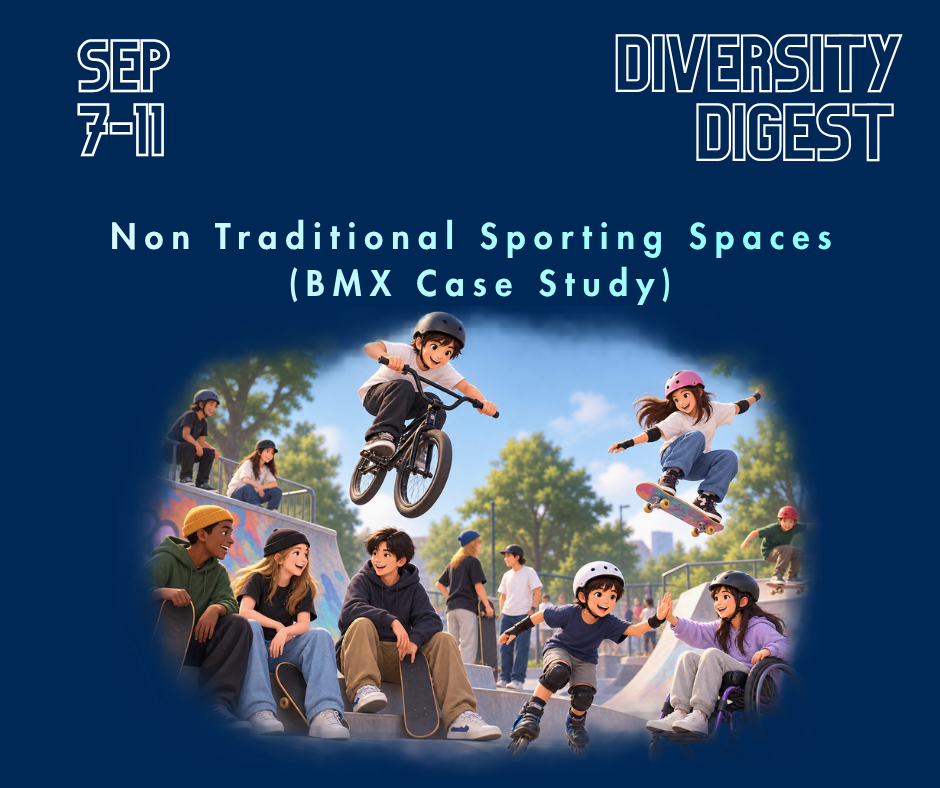
This might seem like an odd topic for the Diversity Digest, but research into BMX and other action sports suggests their value extends beyond physical activity.
The University of Melbourne’s BMX for Life project identifies the potential of BMX to support creativity, well-being and a “deep sense of belonging for people of all ages”, especially amongst those who feel excluded from traditional sports (University of Melbourne, 2026). The characteristics that make this apply to BMX also apply to skateboarding and rollerblading.
Part of this comes from action sports giving a different way to participate. For example, Camilleri and Katz (2025) surveyed 240 BMX riders and described the opportunities for people of different ages, backgrounds and abilities to experience “belonging, self-expression and resilience”. Unlike many organised sports, BMX, skating and rollerblading don’t depend upon selection for a team or everyone working towards the same measure of success. Beginners and experienced riders use the same space, set their own challenges, progress at their own pace, and judgement is famously absent from these spaces, though encouragement isn’t.
There is also something important about the spaces themselves. O’Keeffe (2022) found that riding spaces created opportunities for young people to develop independence, relationships, and ownership, highlighting the “communication, collaboration, and solidarity” that developed around them and which they help to create and maintain. A well-designed shared space can therefore become a social environment as much as a sporting facility.