
Diversity Digest is a weekly reflection written by staff from different areas of our school
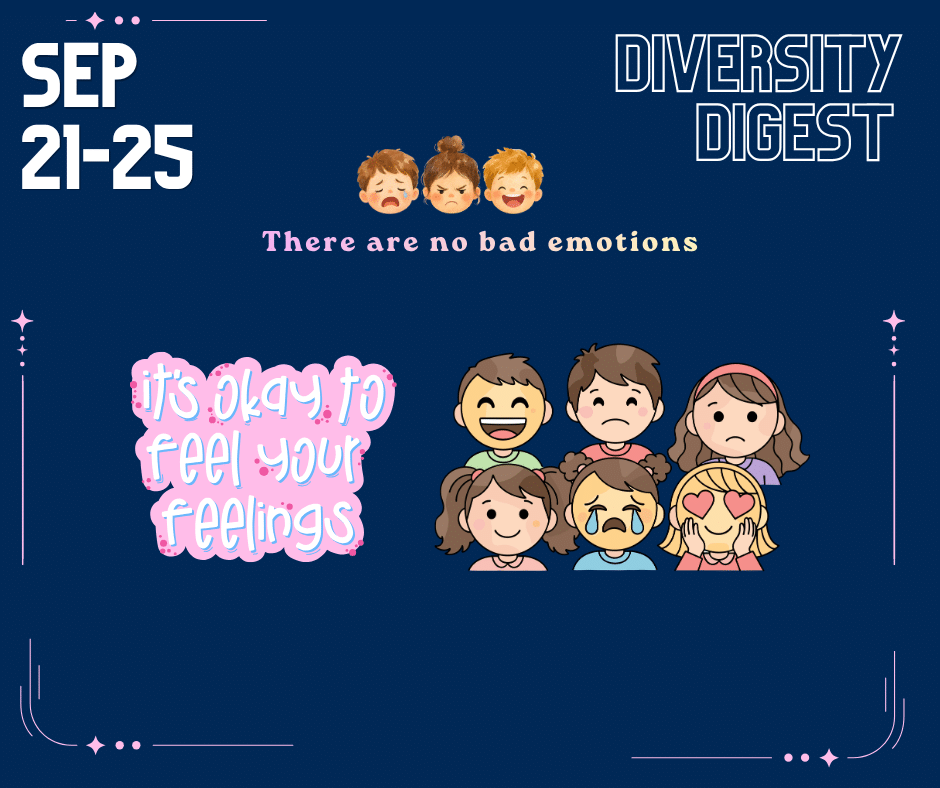
We often encourage young people to deal with difficult emotions when they surface. To calm down, think positively or move on. But what can feel less comfortable is encouraging them to stay with that emotion and feel it for what it is.
Lili Reinhart speaks about living with anxiety and depression and now allowing herself to experience difficult emotions rather than judging or pushing them away. Her message is simple: an emotion can be uncomfortable without being bad. Anger, sadness, anxiety, frustration and disappointment all have something to tell us. Learning to notice, name and accept our emotions can be a powerful form of grounding.
This is applicable to all ages and something we can practise ourselves day to day. Instead of saying to ourselves ‘I shouldn’t feel like this’ of ‘I wish I didn’t feel like this’ we can be kinder to ourselves by thinking ‘It’s understandable that I feel this way.’
When a student is struggling emotionally, our instinct can be to immediately try to fix the feeling. Sometimes, however, the most supportive thing we can offer is the permission to feel it. We can also acknowledge the emotion without necessarily accepting the behaviour that comes with it:
‘All emotions are welcome; all behaviours are not.’
This simple distinction can help us stay calm, validate what they are feeling and create space for them to find a more appropriate way to respond. We can validate the feelings whilst still holding the boundary.
Navigate to timestamp: Start: 28:03 – End: 29:58