Leadership Starts Early

By Carly Peart, Cross Campus Vice Principal, Professional Learning

When we think about leadership, our first thoughts probably jump to adults in suits, sat around boardrooms. Yet the truth is, leadership begins much earlier, long before job titles or formal responsibilities ever come into play. The foundations for leadership are laid in childhood: in the playground, within the classroom and around the dinner table at home.

At Bangkok Patana, we believe leadership is not a role, but a way of being. It’s reflected in the choices we make, the way we treat others, and the courage to live by our values, even when it’s not easy.

Last week, Rick Kirtland (Assistant Principal, Inclusion and Welfare) wrote about how our shared values shape a thriving school culture. Whether you are six or sixty, those values remain at the heart of who we are. Leadership is about influence, inspiring others through curiosity, empathy and integrity.

From Playground to Podium

You can see early leadership developing every day across our school. In the playground, it’s the child who includes someone new in a game. In the classroom, it’s the student who guides their group to work together effectively and complete a task successfully, ensuring everyone’s ideas are heard and valued. On the sports field, it’s the team captain who models perseverance, even when the game isn’t going their way.

These may seem like small moments, but collectively, they shape young people’s understanding of what leadership looks and feels like. They learn that being a leader doesn’t always mean being in charge. It means listening, supporting others, or admitting when you’ve made a mistake.

That philosophy runs through our student leadership pathways, from the Primary Student Council to Secondary House Captains, service-learning projects, the Ror Dor Programme and our Junior and Senior Student Delegates. Every role is an opportunity to practise leadership in context; to explore not only how to lead, but why.

Leadership as a Lifelong Skill

Parents often ask how they can help nurture leadership skills at home, and the good news is you already are. When you encourage your child to make choices, to solve problems, or to reflect on how their actions affect others, you’re cultivating leadership qualities. When you involve them in family decisions, allow them to express their views, or ask them to help plan a family event, you’re reinforcing that their voice matters.

Leadership is ultimately about confidence and character. It is about being able to collaborate, communicate and stay curious, skills that are just as important for family life as they are for the future workplace. As the world grows increasingly complex and interconnected, these attributes will matter even more. Our goal as educators is to help every student leave Patana not only academically prepared but equipped to lead with empathy, resilience and purpose.
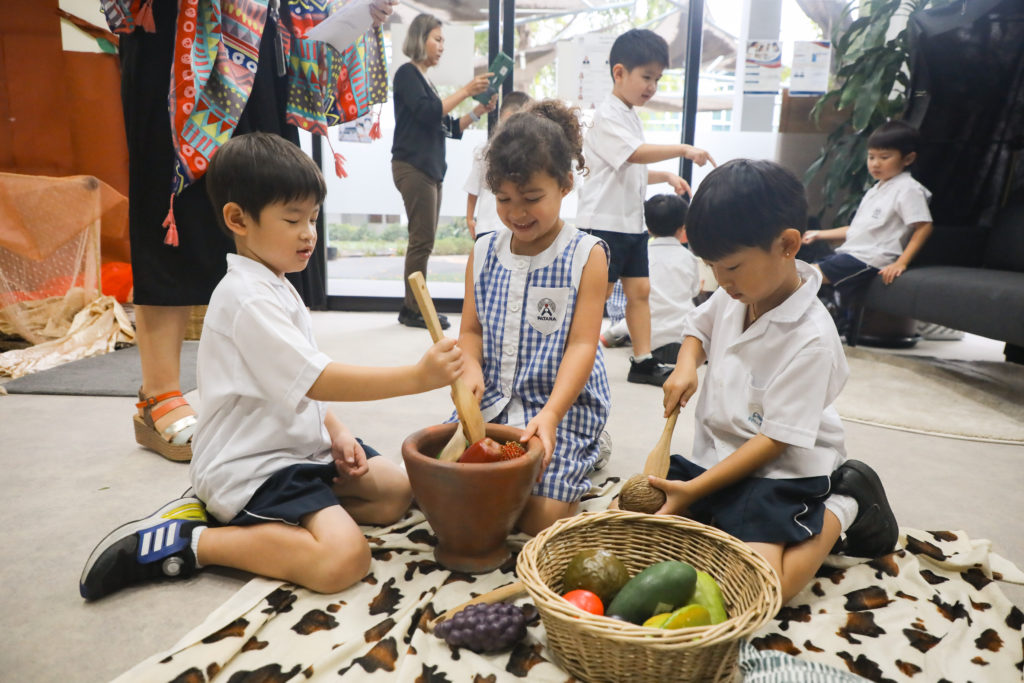
Learning Through Service and Collaboration

One of the most powerful ways we help students develop leadership at Bangkok Patana is through service learning and collaboration. Whether it is our Primary Student Environmental Committee (SEC), a bring-buy and bake sale or a Community Engagement Team, these experiences give students a sense of agency, showing them that their actions can make a tangible difference.

Equally important are the opportunities to collaborate across ages and stages. When older students mentor younger ones, or when departments work together across Primary and Secondary, leadership becomes something shared. It is not about individual achievement but about working together towards a common goal. That is something our Leadership Academy, for staff, strives to model: leadership as a culture, not a course.

Leading by Example

Of course, children learn as much from what they see as from what they are told. The adults around them, parents, teachers, coaches and mentors, play an enormous role in shaping how they perceive leadership. When adults demonstrate patience under pressure, communicate respectfully or take responsibility for their mistakes, they are showing what authentic leadership looks like.

That is one of the many reasons why professional learning is such a priority at Patana. We want our staff to continue developing the same skills we nurture in our students: reflection, adaptability, innovation and collaboration. When children see their teachers and parents learning, growing and leading together, it sends a powerful message: leadership is never finished, it is something we all keep working on.

Leadership for the Future

Ultimately, our aim is not to produce leaders who simply stand out, but leaders who lift others up. Leadership starts early, but it never really ends. It is built in every shared decision, every challenge overcome, every act of kindness that makes someone else’s day better.

In a community as diverse and dynamic as ours, with over sixty nationalities represented, leadership also means understanding difference, valuing inclusion and finding strength in collaboration. These are the qualities that will define the next generation of leaders. Not authority, but authenticity. Not competition, but compassion.

So whether it is your child helping a friend on the playground, presenting an idea in class or taking initiative at home, take a moment to celebrate it. Because in those everyday moments, the seeds of leadership are already growing, and that is something worth nurturing.

Share This Article

In this Issue

Community Engagement at Bangkok Patana: DATA

By Jihyuk (Daniel) Jung, 13G and Krishna Kandlapelli, 13Y

DATA (Dementia Alzheimer’s Treatment and Advocacy) is a student-led club dedicated to spreading awareness about dementia and Alzheimer’s disease, and supporting patients through meaningful contributions to the healthcare system. What began as a small initiative at Bangkok Patana School has grown into a movement of youth-driven advocacy and action.

This year, DATA took a major step forward by donating THB 50,000 to the Dementia Day Center at King Chulalongkorn Memorial Hospital. This donation represents the result of three years of consistent fundraising, collaboration, and commitment. It reflects our belief that even small scale, student led efforts can directly improve the lives of patients suffering from neurodegenerative diseases.

During our hospital visit, we had the privilege of interviewing Associate Professor Sukcharoen Tangwongchai, M.D., the Head of the Dementia Day Center. He shared eye-opening insights into the scale of the issue. According to Dr. Sukcharoen, approximately six out of ten dementia cases in Thailand are caused by Alzheimer’s disease. Today, an estimated 600,000 people in Thailand are living with dementia.

Dr. Sukcharoen emphasised the importance of early awareness. He warned that lifestyle habits developed at a young age could increase the risk of developing dementia later in life. He said that drinking and smoking may cause dementia and advised young people to avoid excessive alcohol consumption early on. His message resonated strongly with our team, reinforcing the importance of combining medical support with public education.

Our fundraising success was driven by creative, student-led events that united the school community. This year, we organized a Clash Royale Tournament, following the popularity of last year’s Brawl Stars competition. These eSports events were not only fun and engaging, but also served as platforms to educate our peers about dementia. Through such activities, we raised awareness in a language young people understand—play, competition, and community.

In addition to these efforts, our outreach continued through DATA’s Instagram platform, where our content reached over 30,000 viewers. From short-form videos to infographics, our aim is to make knowledge more accessible and relatable.

As we prepare to pass on the leadership of DATA to the next generation of student advocates, we reflect with pride on the impact we have made. From bake sales to hospital donations, from memory game stalls to interviews with medical professionals, our journey has been rooted in the values of compassion, education, and real-world change.

We believe that every student has the power to make a difference. DATA’s mission remains clear: to raise awareness about dementia and Alzheimer’s disease, and to support the patients, families, and communities affected by them.

Share This Article

In this Issue

Behind the Bookshelves

What book do you recommend and why?  

I read Peter Frankopan’s, The Earth Transformed: An Untold History over the summer. I would recommend this as it challenges some traditional historical narratives of past societies and emphasises how environmental factors like volcanic eruptions and floods, have influenced civilisations globally.


What podcast do you recommend we listen to and why?

Big Kick Energy. A family friendly podcast presented by two comedians following the growth of the women’s football game. It keeps me up to date with the Women’s Super Leagues in the UK and I am looking forward to seeing how the independent team London City get on this season!

Where do you work/teach? 

I’m Ms Suzi Hobday in Secondary Humanities (Geography)

Share This Article

In this Issue

Diversity Digest: Remembrance in our Global World

Carol Ashworth, Foundation Stage Leader, Curriculum

Diversity Digest is a weekly reflection written by staff from different areas of our school

Remembering and Hoping: Reflections for Remembrance Day 11.11.11

Each November, we pause to honour those who gave so much, the brave souls whose sacrifices echo across generations, reminding us of the cost of conflict and the value of peace.

As I reflect on my own memories of Remembrance Day, I recall standing in silence, wearing a red poppy, and feeling a deep sense of respect and gratitude. It was, and still is a time to remember the past with reverence, but also to look forward with hope. Throughout history, war has touched every corner of the human race. Differences in belief, power, or territory have so often divided us. Yet, as educators, parents, and community members, we hold a shared responsibility: to help the next generation understand that peace is not simply the absence of war, but the presence of understanding, kindness and respect for diversity.

So how can we live more peaceful lives today? We can start small: by listening before judging, by reaching out instead of turning away, by teaching children to celebrate what makes each of us unique while embracing what we share as human beings. In remembering, we honour sacrifice. In teaching peace, we shape a kinder world. May this Remembrance Day renew our commitment to nurturing compassion in our homes, our classrooms and our communities— so that one day, our children may stand together not just in silence for the fallen, but in unity for a peaceful future.

Share This Article

In this Issue

Transport Corner

Primary Residential Trip – Transport Service Reminder

As the Primary Residential Trip is approaching next week, we would like to remind parents of the following transport arrangements:

Morning of the First Day:

The Transport Department will provide the regular morning bus service to pick up students from home to school.

If you prefer to drop your child off at school yourself, please contact the Transport Information Office in advance to cancel the bus for that morning.

Afternoon on the Return Day:

The regular afternoon bus service will be cancelled on the day students return from the trip.

If your child requires the school bus service to go home after returning to school, please inform the Transport Information Office to arrange the bus accordingly.

Contact Transport Information Office:

Line Official: 

Phone:  +66 (0) 2785 2470 (direct line) 

Email: transport@patana.ac.th

Share This Article

In this Issue

Tech Tips #309 – Gaming Marketplace Scams: What Parents Need to Know

Brian Taylor, Vice Principal, Technology for Learning

Image courtesy of: https://trustplay.gg/articles/gaming-marketplace-scams-report-2025/

A recent report highlights a growing risk for young gamers using third-party marketplaces to buy or trade in-game items. These platforms, which operate outside official game stores, have become hotspots for fraud. 

Key findings:

High Scam Rates: One in three marketplace users gets scammed. Losses average $409 per incident.

Youth at Greater Risk: Gamers under 18 face a 41.6% scam rate, nearly triple that of older players.

Common Scam Types: Fake websites that never deliver items (38.5%), service scams (rank boosting), and phishing attacks leading to account theft.

Why It Happens: Scammers use professional-looking sites and fake reviews. Many victims ignore red flags like “too-good-to-be-true” pricing or time-limited deals.Platform Gaps: Even major platforms like Steam lack strong fraud detection and refund policies.

What Parents Should Do

  • Talk to children about scam risks and FOMO tactics
  • Encourage purchases only through official game stores
  • Teach quick checks: search “[site name] + scam,” verify domain age, and avoid gift cards or crypto payments
  • Enable two-factor authentication on gaming and payment accounts
  • Use credit cards for better fraud protection
  • If scammed, dispute charges within 60 days.

Have a safe weekend!

Share This Article

In this Issue

World Mathematics Championship 2025

Chanya Somboonvechakarn, Alisa Thanomsat and Zi Xuan (Eric) Guo

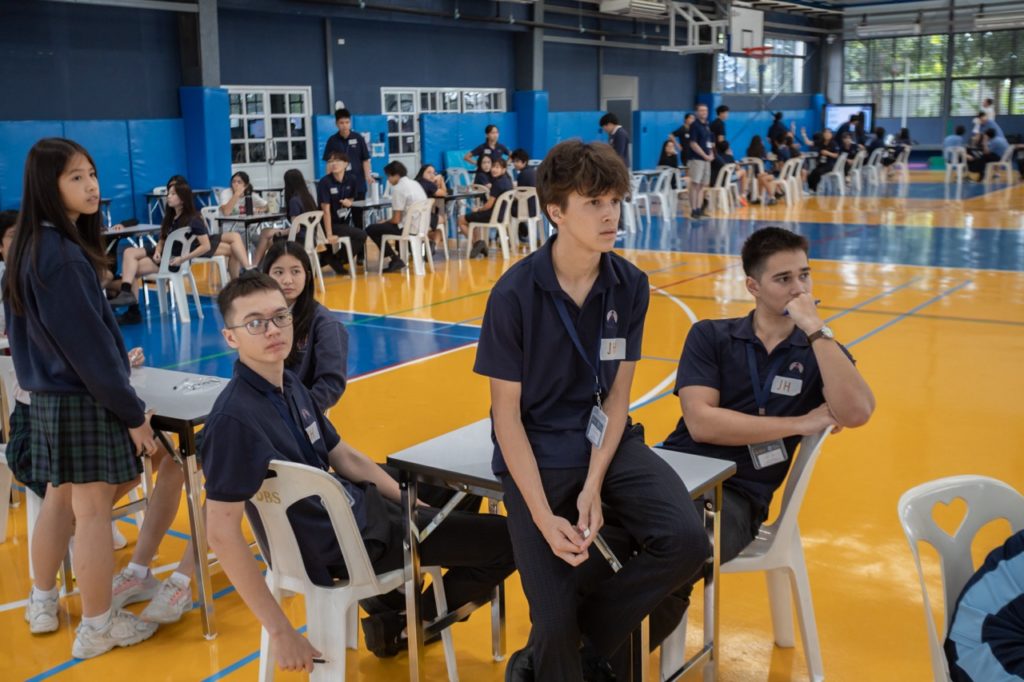
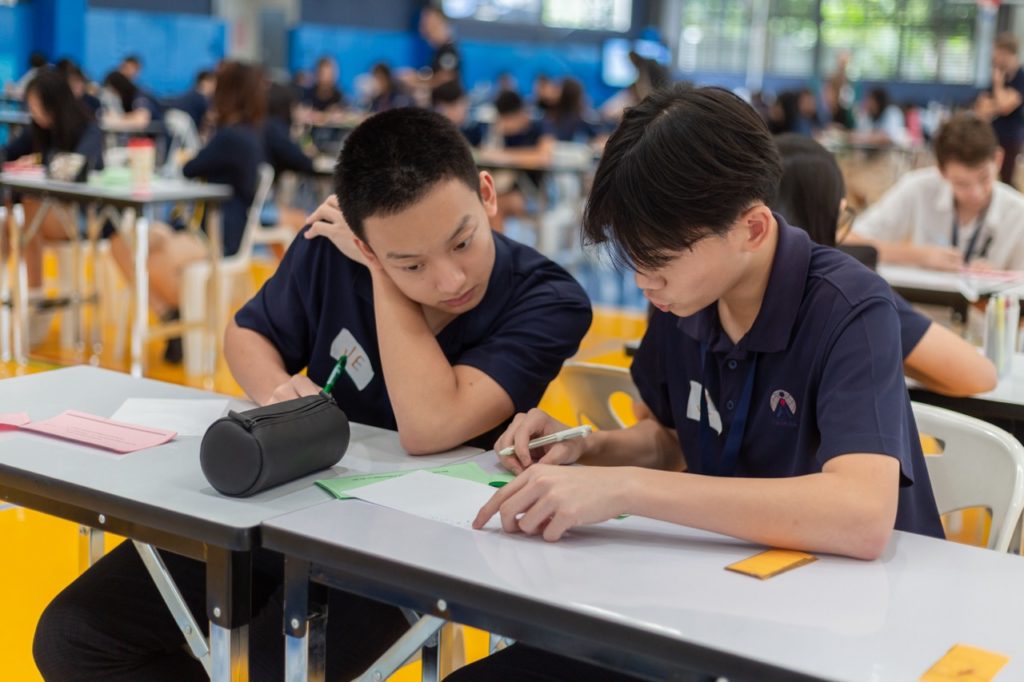
On Wednesday 24th October, two of our Mathematics teachers, Rory Stewart and Jonathan Haworth, took 24 Year 9-11s to compete in the World Mathematics Championships (WMC) Regional Qualifier. Here are the accounts of three students who took part in this rigorous and challenging competition: 

Chanya Bayla (Bayla) Somboonvechakarn, 10H 

“To begin the day, WMC hosted an individual round called Duel. It was a quick and enjoyable 1v1 ‘tournament’ that focused less on traditional math problems and more on creative, out-of-the-box thinking, almost like IQ-style puzzles. The next round was Shuttle, a team-based event. In this challenge, our group sat in a triangular formation where two teammates could collaborate while one worked independently. The questions were passed along from A to B to C, meaning each person’s answer depended on the previous one, adding a strategic layer to the teamwork.” 

Alisa Thanomsat, 10T 

“The third round was the Pursuit round, where teams collaborated to solve a set of eight questions ranging in difficulty. Once a question was completed, a chosen teammate would sprint to the judges’ table to submit the answer, adding a fast-paced element to the competition. The round tested both accuracy and endurance, as teams had to balance speed with extremely careful problem-solving. By the end of the sixty minutes, some teams managed to finish all eight problems, while others focused on completing just a couple well-thought-out answers. 
 
Last but not least was the Lightning round, which required quick thinking and teamwork under immense pressure. Teams received one question at a time and had three chances to get it right before moving on. Each new problem came only after a correct answer, creating an intense atmosphere. The goal was to solve as many problems as possible within the time limit while minimising incorrect attempts.” 

Zi Xuan (Eric) Guo, 11T 

“The online round of the WMC took place during the October half-term, testing mathematical reasoning and problem-solving abilities. Unlike the traditional standard of maths competitions, the WMC aims to present maths in a fun and creative way — giving its online rounds names like ‘Codebreaker’ and ‘Confidence’.   

One round I particularly enjoyed was the ‘Codebreaker’; it was a timed test requiring students to enter the inputs and outputs of a sequence. The twist was that the sequence rules weren’t simply arithmetic or geometric, but selected from a range of mathematical operations, for instance, the sum of the repeating digits in the input. This random and difficult format demanded our quick thinking and problem-solving skills to the max, giving us a challenging but rewarding experience.  

After a week of online rounds and an entire day of competing against not just talented mathematicians from other schools in Bangkok, but also amongst ourselves — as I am sure we all gave our best to push our levels beyond our limits, we earned our well-deserved results including nine bronze, two silver and four gold medals. Congratulations Bayla in 10H, in particular, for not only achieving two gold medals, but also earning a prestigious golden ticket, qualifying her to the next round in Melbourne, Australia. Congratulations to other top performers, including Arnob in 11M and Phin in 11V who also secured gold medals. ”

Kudos and a big well done to all participants for their hard work and impressive achievements! This year’s WMC is an unforgettable memory and experience for our students. 

Share This Article

In this Issue

PTG Updates

Share This Article

In this Issue

Community Events


Share This Article

In this Issue

Patana Participates

ADA Dance Championship 2025 in Sydney, Australia

By Fay Onchuma Durongdej, Parent

Earlier in October 2025, Chloe (Y1) travelled to Sydney, Australia, to participate in the ADA Dance Championship 2025, Chloe’s very first international competition. She impressed the judges, earning a 1st place trophy in Ballet and a 2nd place trophy in Jazz for the Pre-Primary age group.

Congratulations to Chloe for her outstanding performance.


Yutaka Makes His Mark Across Three Martial Arts Disciplines

By Michiko Hidaka, Parent

Yutaka recently competed in three distinct martial events this season: Newaza, Fighting System and NoGi.

In the Newaza category, Yutaka secured 5th place out of 17 competitors, showcasing strong technical groundwork against a highly competitive field.

His performance in the Fighting System event was equally impressive. Out of 12 participants, Yutaka advanced to the finals and earned second place, narrowly missing the top spot after a hard-fought match. Despite the loss, his efforts drew attention beyond the arena, he was featured on Thai news, highlighting his growing recognition in the martial arts community.

Share This Article

In this Issue

Upcoming Events


Share This Article

In this Issue

© 2025 Bangkok Patana School

Issue: 11
Volume: 28
Bangkok Patana School
Privacy Overview

This website uses cookies so that we can provide you with the best user experience possible. Cookie information is stored in your browser and performs functions such as recognising you when you return to our website and helping our team to understand which sections of the website you find most interesting and useful.