
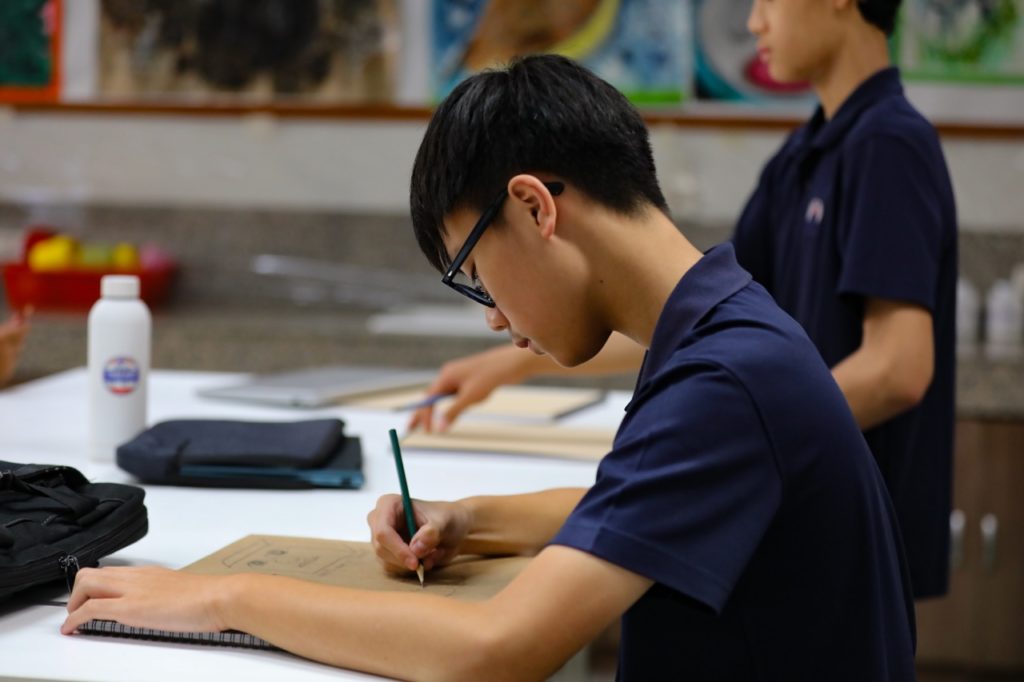

Not long ago, a student asked me a question that stopped me mid-conversation:
“What kinds of skills will really matter when we’re adults; when so much of what people do now might be done by AI?”
It was such a sharp, curious question; and one I’m sure we’ve all been reflecting on for a while now. It reminded me how quickly the world is shifting, and how naturally young people are already thinking about their future selves. As someone fascinated by the crossroads of technology, learning and leadership, I often find myself wondering: what will truly matter for our students; not just in the classroom today, but in the world they’ll shape tomorrow?


In my last article, I wrote about the importance of being adaptive; learning to flex, adjust and grow when the ground beneath us moves. But how might we take that same adaptability and apply it to the way we prepare young people for a future we can’t yet see? With AI and automation racing ahead, what does ‘being prepared’ even mean anymore?
As Steven Bartlett puts it:
“The most convincing sign that someone will achieve new results in the future is new behaviour in the present.”
It’s a thought that feels spot-on for education. How might our current behaviours; the way we teach, lead, and learn together, shape how our young people approach an unpredictable future? Perhaps it’s less about preparing them for a single destination, and more about helping them build the mindset and confidence to navigate whatever comes next.
By 2035, the skills that might truly set people apart could look something like this:
1. Emotional Intelligence – Understanding others, reading the room, and staying calm under pressure; timeless human strengths. A 2023 meta-analysis found consistent links between emotional intelligence, effective leadership and team performance (PMC).
2. Adaptability and Learning Agility – Staying curious, being willing to unlearn and start again and knowing that flexibility is the new security. McKinsey’s global ‘DELTA’ framework identifies adaptability, coping with uncertainty and curiosity as among the 56 skills most closely tied to future employment and wellbeing (McKinsey & Co.).
3. Creativity and Innovation – Machines can calculate, but they can’t imagine. Yet even this may change; AI can now create, but human creativity; the capacity to make meaning, connect ideas, and surprise; remains uniquely powerful. The World Economic Forum continues to rank creativity among the most sought-after skills in its Future of Jobs Report 2025 (WEF).
4. Ethical Judgement and Compassion – As technology advances faster than our policies, kindness and conscience will matter more than ever. Still, what counts as ‘ethical’ will be contested and culturally shaped; meaning our students will need both principle and perspective.
5. Collaboration Across Cultures – The challenges we face are global. Listening, learning and working together across difference will define leadership, though true collaboration requires humility and equity, not just connection.
6. Resilience and Wellbeing – Thriving in a fast-paced world takes balance and self-awareness; knowing when to push forward and when to pause. But resilience isn’t just an individual trait; it also depends on the environments and systems we build to support one another.
Recent studies suggest that, rather than replacing human capability, AI often amplifies the demand for these human-centred skills; especially teamwork, creativity and ethical reasoning (Mäkelä & Stephany, 2024).


As leaders and educators, our role is to keep asking these questions; and to help our students find their own answers in the process. At Bangkok Patana, we continue to ask ourselves these questions and seek the answers through the curriculum we design, the learning we see and the outcomes we seek for our students. By modelling adaptability, compassion and creativity, we help them build the human strengths to thrive in whatever future awaits.