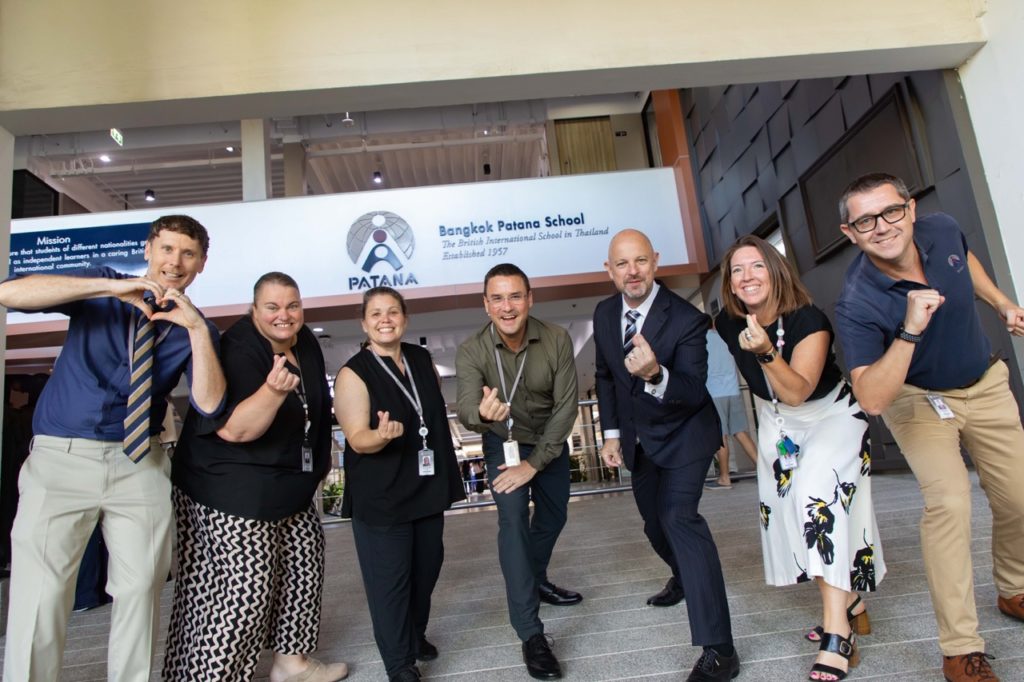
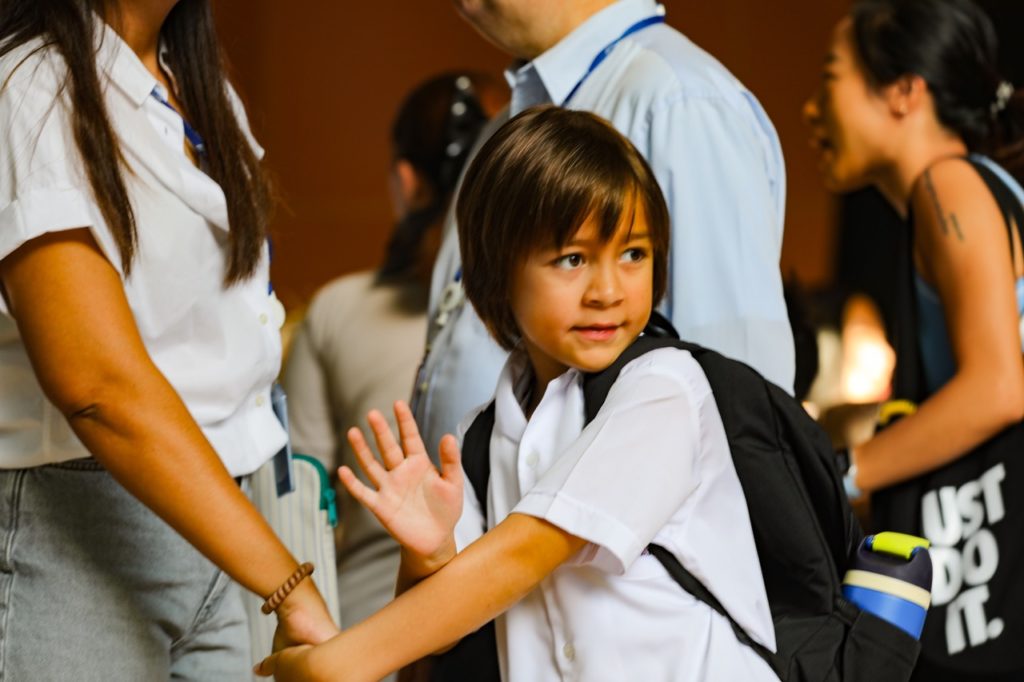
On the very first morning of this term, I stood at the front gate welcoming students and parents back to school. What struck me was that our hugs, goodbyes and well-wishes were all so different. Parents calling out to their children in Thai, Mandarin, Spanish, Hindi, French and English — often switching seamlessly between languages.
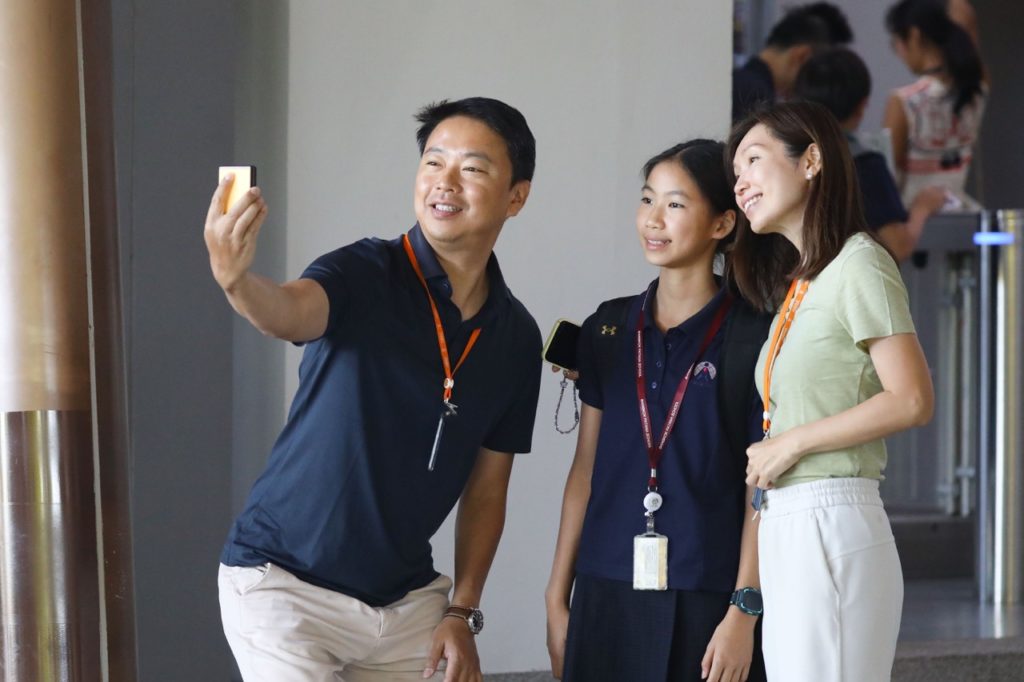
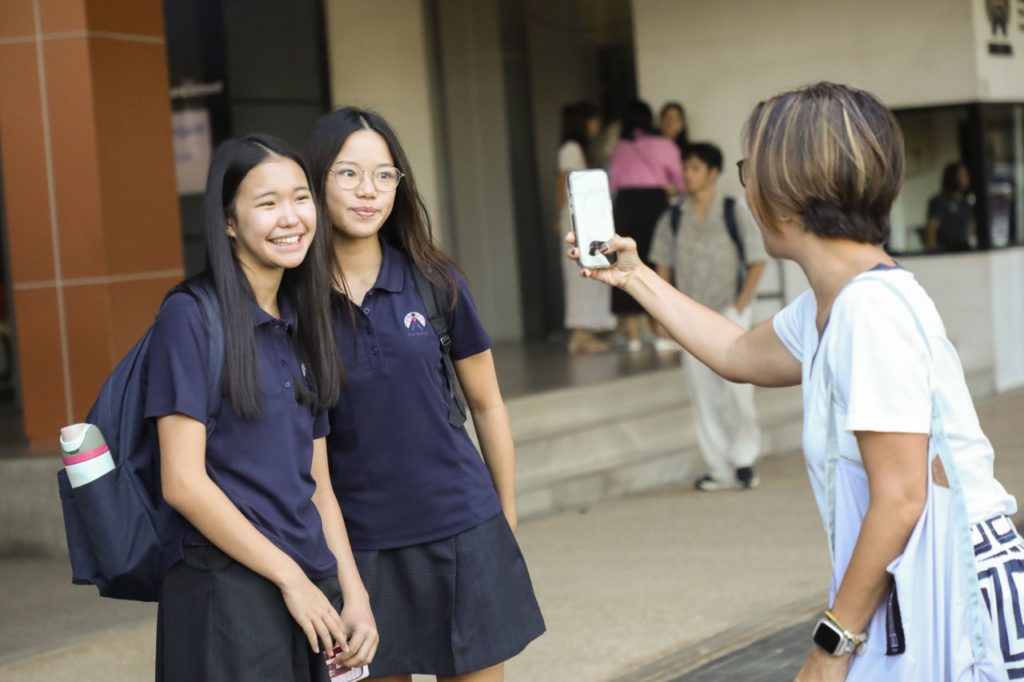
At the same time, I was also delighted that when the Class of 2025 received their IB Diploma results, there were so many students who achieved the Bilingual Diploma. I am in awe of them. Their success highlights the value of language learning and celebrates the determination of students who have mastered more than one language.
It is such a privilege to be part of a community where more than 71 languages are spoken at home, because I believe that language opens doors to opportunity, while also deepening empathy and cultural awareness. For these reasons, Language Matters is the theme for our focus in the Secondary School.
Language as Communication and Culture
For our Secondary students, language learning has taken on a new shape this year. In Year 7, students now focus on one language with greater depth, dedicating five periods per week to building fluency and confidence. This change will allow them to engage more deeply with their chosen language, laying stronger foundations for future learning.
But Language Matters is about more than academic results through vocabulary lists or verb conjugations. To learn another language is to step into someone else’s world, to understand how they see, feel and describe reality. When our students sing in choir, collaborate on cross-curricular projects, or connect with partner schools in Thailand and beyond, they are learning to value different voices and perspectives — skills essential for the 21st century.
Language is also fascinating because even when we share the same language, meaning can shift. Those of us from the UK, the US or Australia know this well: ask for pants in London and you’ll be offered underwear, in New York it means trousers, and in Sydney you might be invited round for tea. In the Australian context, tea often refers to the evening meal — what some in the UK might call dinner or supper. Meanwhile in the US, tea would only ever mean the drink itself. What can seem like a small difference in vocabulary often points to a deeper cultural nuance. By exploring these differences, our students learn to be more thoughtful communicators, recognising that true understanding goes beyond words to intent, empathy and context.
Meaning What We Say.
At Bangkok Patana, we are reflecting on the language we use with one another every day. Words shape culture. As part of our ongoing work on Positive Behaviour and Well-being, we are encouraging staff and students to use language that is respectful, inclusive and constructive. Whether in the classroom, tutor time or around campus, we want our shared language to reflect our core values.
We also know that sometimes the way we use language can create barriers. We are currently trying really hard to reduce jargon and acronyms, that are not always accessible to everyone in our community. For example, what we used to call PCEs will now be referred to simply as Parent Teacher Meetings, aligning with Primary and making it clearer for families. Similarly, we are adopting the term Parent Partnership to many of our meetings, a term which has long been used in Primary, to emphasise that when we meet together, we really want to work together in genuine partnership for the benefit of our students.
Looking Ahead
Our community is alive with the sound of more than seventy languages, each carrying its own stories, humour and perspectives. Yet beyond words, we also speak the languages of music, sport, science, action and creativity. While Language Matters is a Secondary focus, it resonates across every corner of our school. From our youngest learners in Foundation Stage discovering their first words, to our graduating seniors presenting extended essays and artistic portfolios, language is the bridge that connects us all. I look forward to celebrating the many languages of the Patana community with you throughout the year.