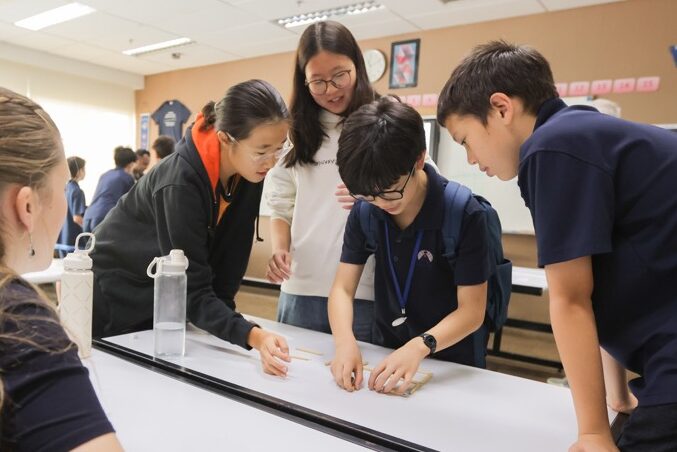
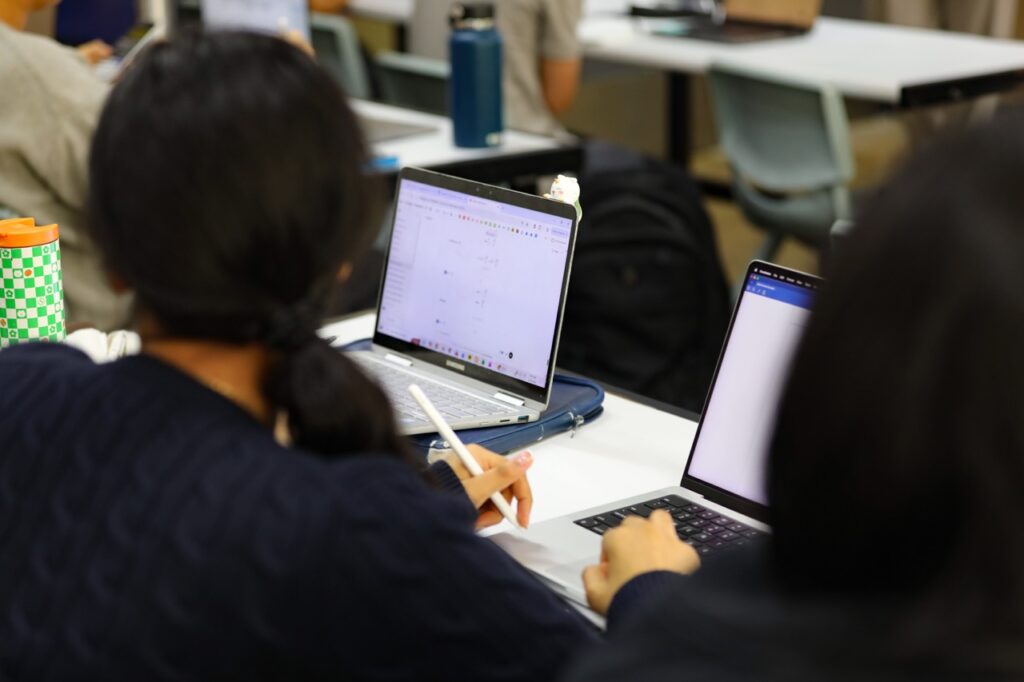
When pocket calculators first appeared in homes in the 1970s, schools almost universally banned them. A professor warned in The New York Times: “What will they do when the battery runs out?” Fears that calculators would destroy children’s ability to think mathematically were widespread and deeply felt. Those fears proved wrong. A meta-analysis of 79 research reports later found that using calculators alongside instruction improved students’ paper-and-pencil skills and problem-solving at most year levels. The key was not banning the tool, but sequencing its introduction: foundational skills first, then technology to extend learning.
This pattern, alarm > adaptation > integration stretches back centuries. Socrates warned that writing would “create forgetfulness in the learners’ souls”. In 1565, Conrad Gessner called the flood of printed books “confusing and harmful” to the mind. In the 1930s, The Gramophone fretted that radio was “disturbing the balance” of children’s “excitable minds”. Television earned the label “boob tube” in the 1950s, blamed for shortened attention spans. And by 2008, Nicholas Carr asked in The Atlantic whether Google was “making us stupid”.
Each time, the worst predictions proved overstated, though not entirely baseless. Heavy television viewing does correlate with reduced concentration. Habitual GPS use demonstrably weakens spatial memory. The consistent finding is that how a technology is integrated matters more than the technology itself.
Today, artificial intelligence is taking its turn. A BBC Future article published in April 2026 warned that reliance on AI chatbots may be eroding critical thinking and memory, describing a “stupidogenic” environment where frictionless AI makes it easy to become intellectually passive. For educators and families, the question is not whether this sounds familiar, but whether AI is genuinely different from what came before.
What Makes AI Different
In important respects, it is. Earlier technologies offloaded specific tasks: calculators handled arithmetic; search engines handled factual recall. Generative AI can draft essays, write code, plan projects and produce analysis across virtually any domain simultaneously. As Sean Barnes observes, previous technologies reproduced human knowledge, but generative AI “can generate its own content, and that is something new”. The speed of adoption is also unprecedented: ChatGPT reached an estimated ten per cent of the world’s adult population by mid-2025, compressing the adaptation window that earlier technologies afforded.
Yet the underlying mechanism, cognitive offloading, is the same one Socrates identified millennia ago. When people expect reasoning to be available externally, they invest less effort in processing it themselves. What changes with AI is the breadth and depth of what can be offloaded.
Rethinking “University Readiness”
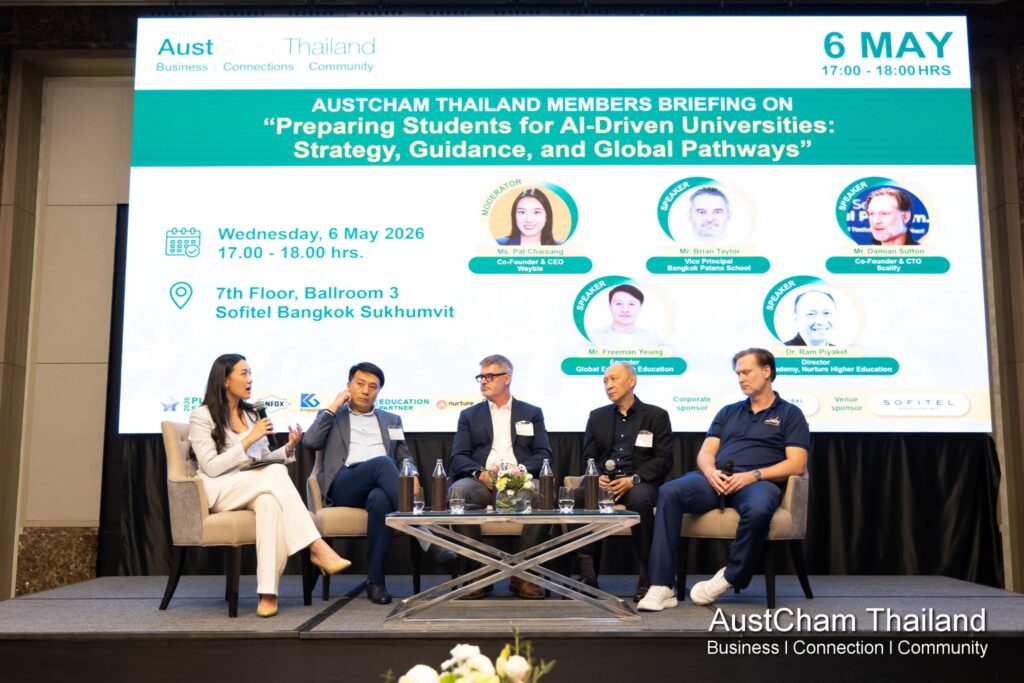
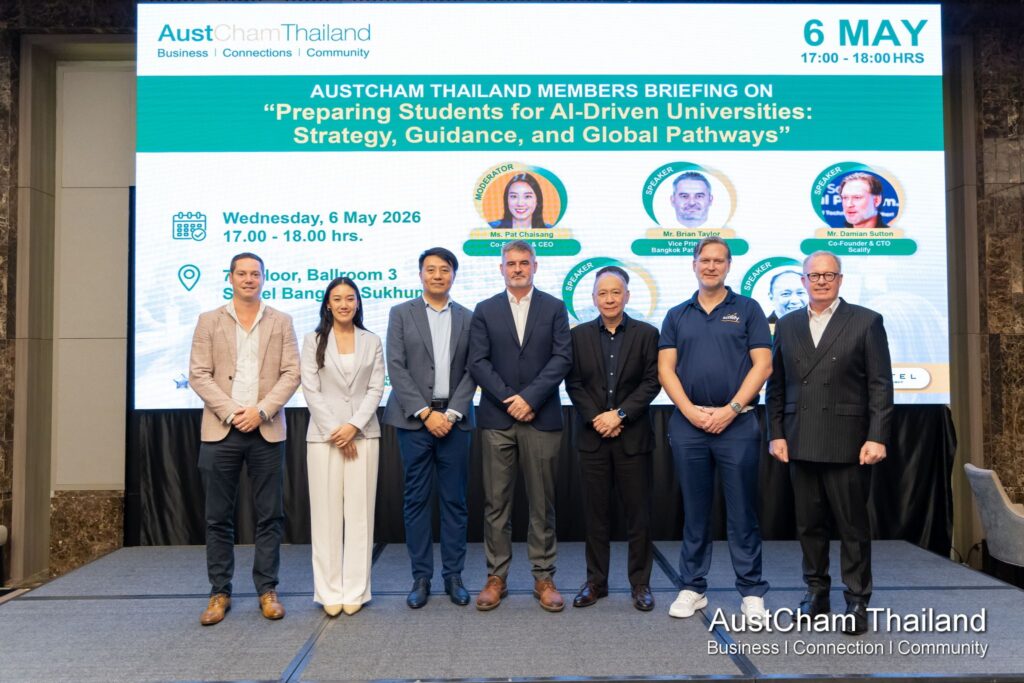
These questions are not only surfacing in research, they are also shaping live conversations across the education sector. I was recently invited to join a panel as a guest speaker at the Australian-Thai Chamber of Commerce event in Bangkok, where we discussed the theme “Preparing Students for AI-Driven Universities: Strategy, Guidance, and Global Pathways.” The discussion reinforced just how quickly AI is reshaping expectations of university readiness for schools, students, and families alike. Because AI can supply factual knowledge on demand, the premium moves to what it cannot replicate: epistemic judgement, learning dispositions such as curiosity and fortitude, and the capacity to reason ethically. At Bangkok Patana, our mission to develop global citizens who shape their world through independence, empathy, creativity and critical thinking speaks directly to this shift. These are not soft add-ons; they are becoming the core of readiness.
Where Parental Concerns Outpace Evidence
Parental anxiety is understandable, but some common assumptions deserve gentle correction.
“AI will eliminate whole careers.” A more global picture comes from the Digital Education Council Global AI Student Survey 2024, which gathered 3,839 responses across 16 countries and found that students are already navigating AI as a normal part of university life, while also expressing concern about over-reliance, unclear institutional guidance, and the need for stronger AI literacy. Rather than pointing to the disappearance of whole professions, this suggests a more nuanced challenge: universities and schools must help young people combine subject expertise with judgement, adaptability and responsible use of AI. History suggests the same pattern we have seen before: new technologies tend to reshape tasks, expectations and ways of working more than they erase entire careers.
“Technical skills matter most.” The same global survey points in a broader direction. Students reported that while AI is becoming embedded in tasks such as writing, research and coding, what they still need most from universities is clearer guidance, ethical framing and the judgement to use these tools well. Strong preparation, then, is not just about technical fluency. It is about combining digital capability with disciplinary understanding, adaptability, communication and the interpersonal skills that AI cannot easily reproduce.
A Thailand Lens
For families in Thailand, AI introduces new questions about local versus international university pathways. A former Google AI executive recently challenged traditional assumptions publicly in Thailand, noting that medical training spans six years before internships begin, a period during which AI can fundamentally reshape professional practice. Rather than abandoning such programmes, the executive advocated strategic pivots toward specialised concentrations that complement AI, emphasising uniquely human competencies including emotional intelligence and relationship-building. When evaluating any university, families should ask whether it develops adaptability, industry partnerships and human competencies alongside subject expertise. In an AI-rich world, the quality of the learning experience may matter more than the institutional brand.
How We Are Supporting Students and Families
Our vision of students growing to their full potential as independent learners in a caring British international community guides our response:
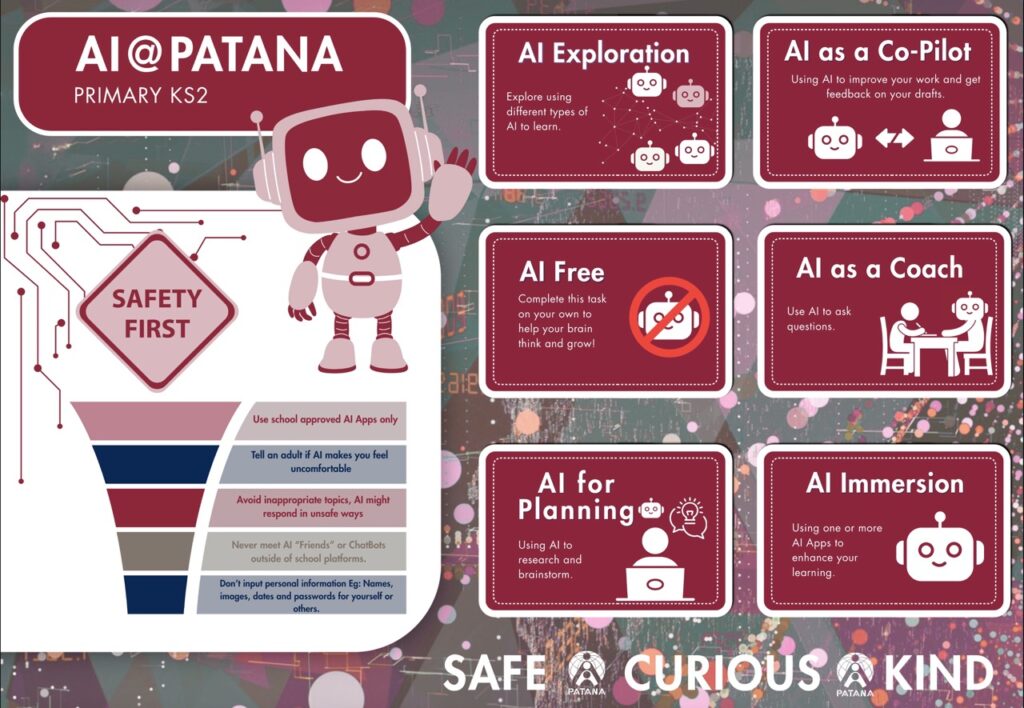
Partnering with parents. We are committed to sharing how AI is used in learning, why certain approaches are chosen, and how families can support balanced engagement with technology at home via our PTG Tech Talks and Primary Workshops.
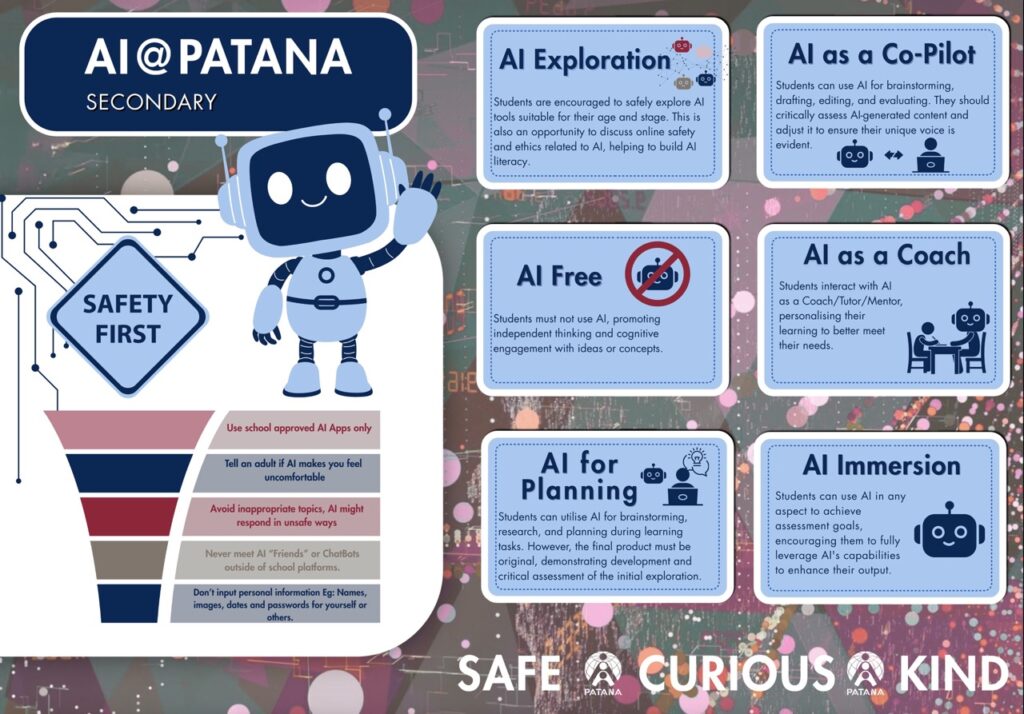
Preserving productive challenge. Some learning tasks are deliberately completed without AI, ensuring students develop resilience and foundational thinking, just as calculators were introduced only after core arithmetic was secured.
Teaching responsible AI use. Students learn to treat AI as a thinking partner to be questioned, not a shortcut to be trusted uncritically, reflecting our values of being critical, reflective thinkers who are ethical and informed.
Guiding iterative exploration. Rather than treating university choice as a single high-stakes decision, our counselling approach encourages ongoing reflection on strengths, interests and emerging fields.
Looking Forward
History’s clearest lesson is that outcomes depend on how educators and communities choose to integrate a technology, not on the technology alone. The calculator became an indispensable learning tool because education found the right balance between foundational practice and tool-assisted exploration. AI requires the same deliberate approach, at greater speed and across a wider range of cognitive skills.
A future-ready student in 2031, the graduation year of my youngest child, is a self-directed, adaptable learner who pairs distinctively human strengths: critical discernment, ethical judgement, creativity and emotional intelligence, with fluent, responsible use of AI, continuously growing in ways that machines cannot. At Bangkok Patana, that is the kind of global citizen we are proud to nurture.