
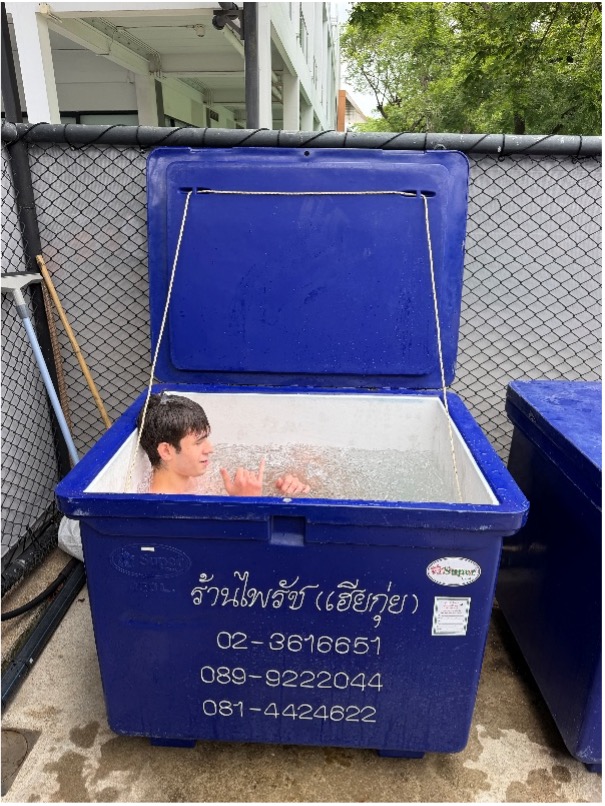
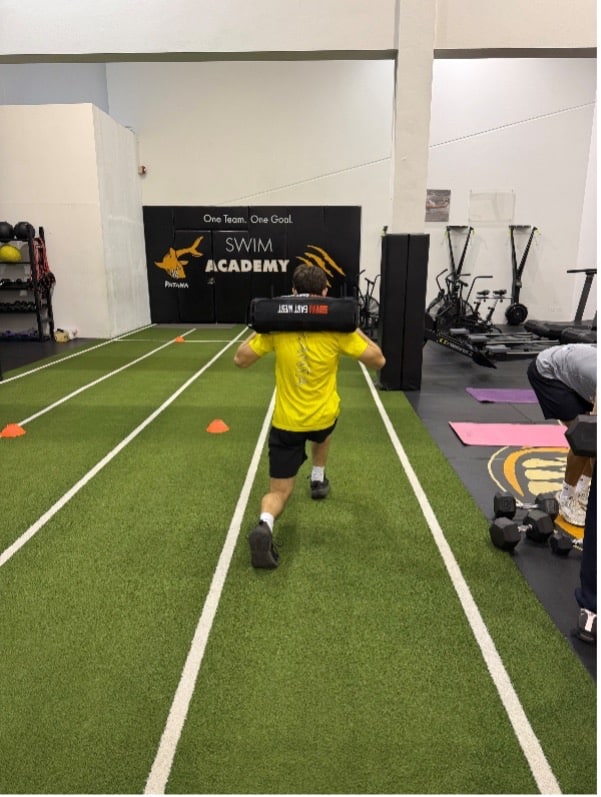
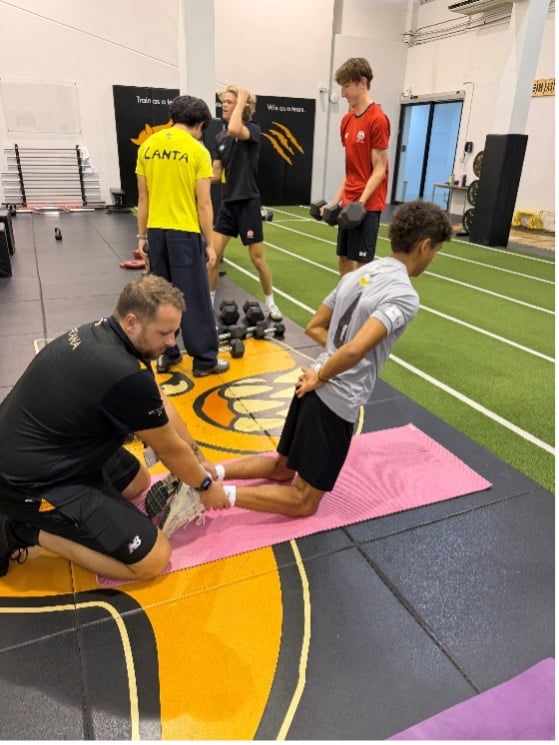
Our Year 13 Higher Level Sports, Exercise and Health Science students took part in a practical investigation exploring one of the most important questions in sport:
How does the body recover from exercise?
As part of our study of fatigue and recovery, students completed an eccentric (lengthening) muscle circuit, designed to place significant load on the muscles through controlled lengthening contractions. After the session, many students volunteered for cold-water immersion, better known as an ice bath, before tracking how their bodies responded over the following days. The practical forms part of our investigation into fatigue and recovery in the IB Sports, Exercise and Health Science course.
What happened next surprised many students.
“The ice baths didn’t work!”
Over the next 24-48 hours, a common message emerged:
“I had an ice bath and I’m still sore.”
For many students, this seemed like obvious evidence that the intervention had failed.
However, one of the key lessons from Sports Science is that the first explanation is not always the correct one. In Science, observations and conclusions are not the same thing.
In reality, recovery is much more complicated. This means that recovery is not simply a yes-or-no state. Instead, recovery depends on what is being measured and what activity the athlete needs to perform next.
More than ice baths: what really helps recovery?
While ice baths tend to attract attention because they are dramatic, recovery is influenced by a much wider range of factors.
Sleep
Research consistently shows that sleep quality affects both recovery and performance. Athletes often require more sleep during periods of heavy training than general population recommendations suggest.
Good sleep hygiene includes:
- Maintaining a regular sleep schedule
- Reducing screen use before bed
- Creating a cool, dark sleeping environment
- Allowing adequate recovery time during busy school weeks
For many students, improving sleep habits will likely have a bigger impact than any recovery gadget or trend.
Nutrition
Recovery begins with providing the body with the resources it needs to repair and adapt.
Carbohydrates support the restoration of energy stores, while protein helps support repair and remodelling following exercise. Water and electrolytes also play important roles depending on the training conditions and the amount of fluid lost during exercise.
Training load
Recovery is heavily influenced by the amount of stress placed on the body.
One of the most important principles of training is balancing overload with recovery. Insufficient recovery can contribute to non-functional overreaching and overtraining.
In other words:
Recovery is not something that happens after training.
Recovery is part of training.
Perhaps the most valuable learning outcome from the practical was not whether ice baths reduced soreness. Instead, students learned how scientists think.
They learned to question assumptions. They learned that correlation does not necessarily mean causation. They learned that human performance is influenced by many interacting variables.