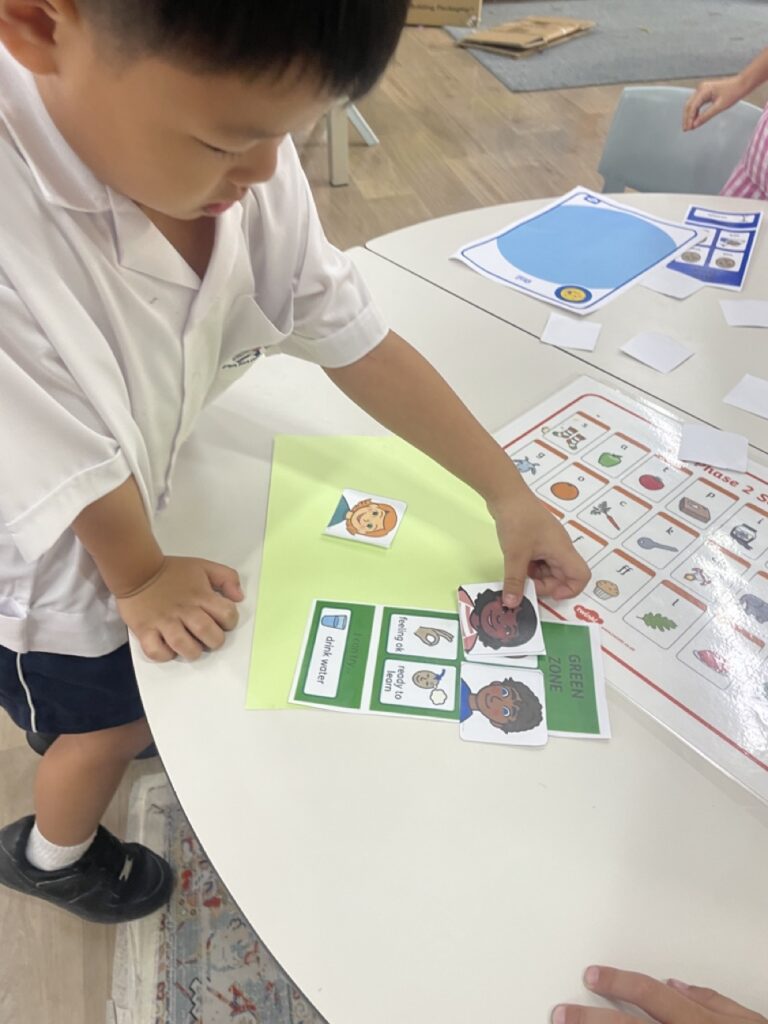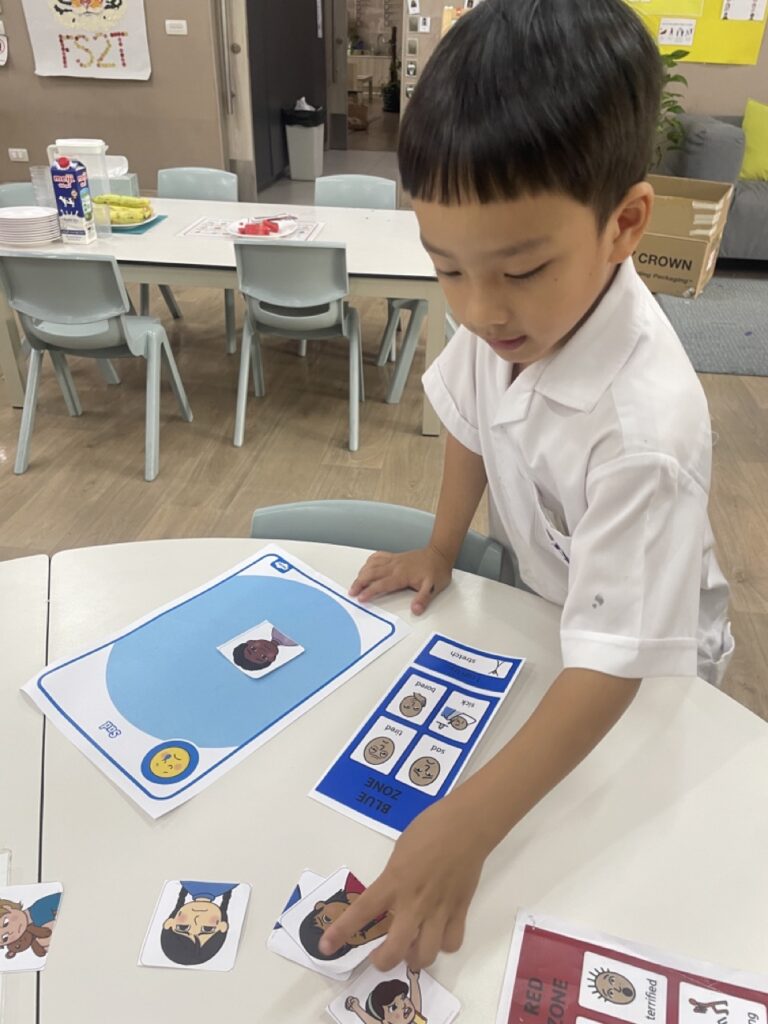
As part of our PSHE learning about managing emotions, Foundation Stage 2T students have been exploring The Zones of Regulation.
The four coloured zones represent different feelings. Through stories such as Barbara Throws a Wobbler, Ruby’s Worry, and role play, the children have explored how emotions can change throughout the day. We discussed how we often move between zones, and that all emotions are valid. The important learning is recognising their feelings and knowing strategies that help them return to a calm and ready state.
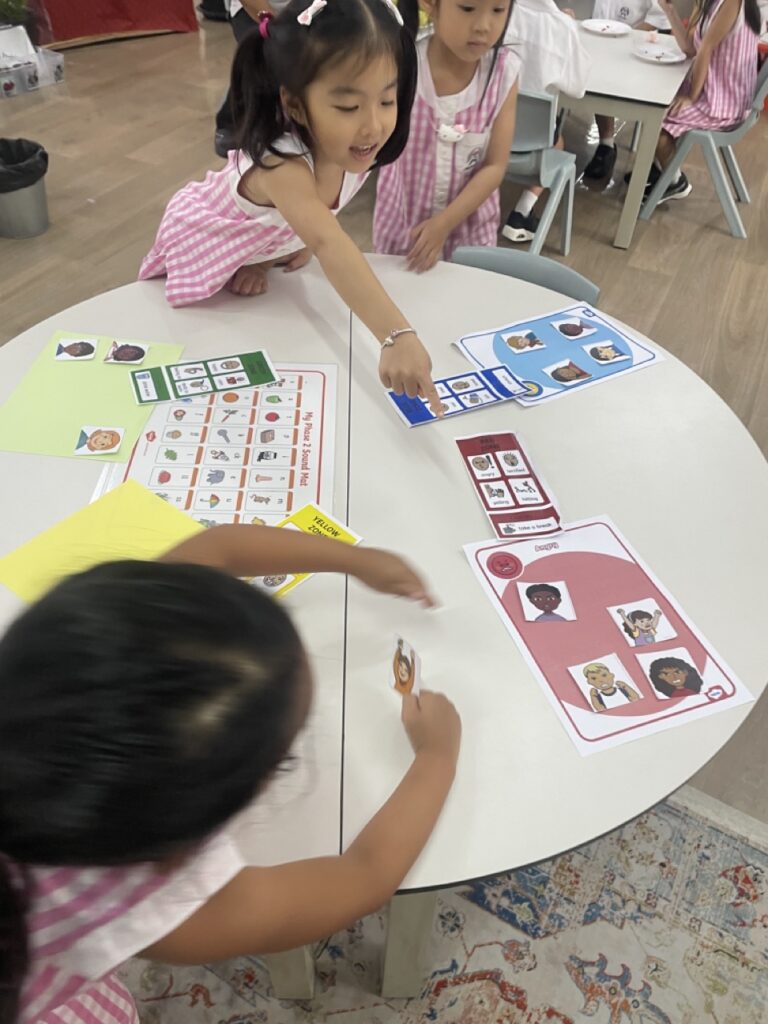
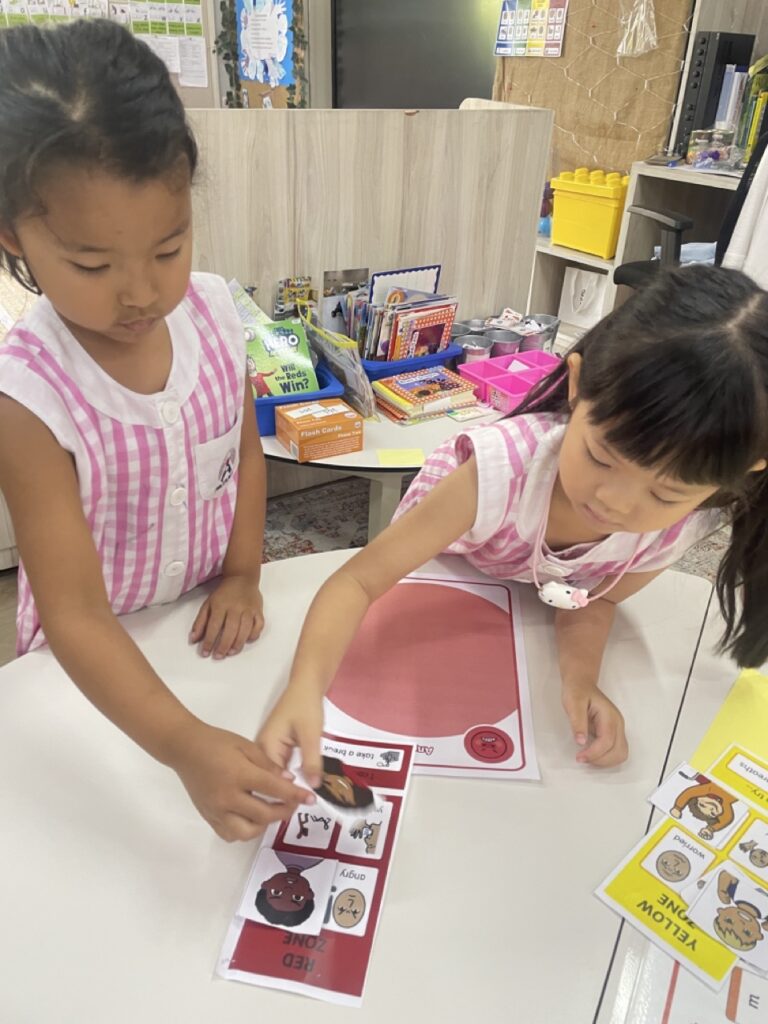
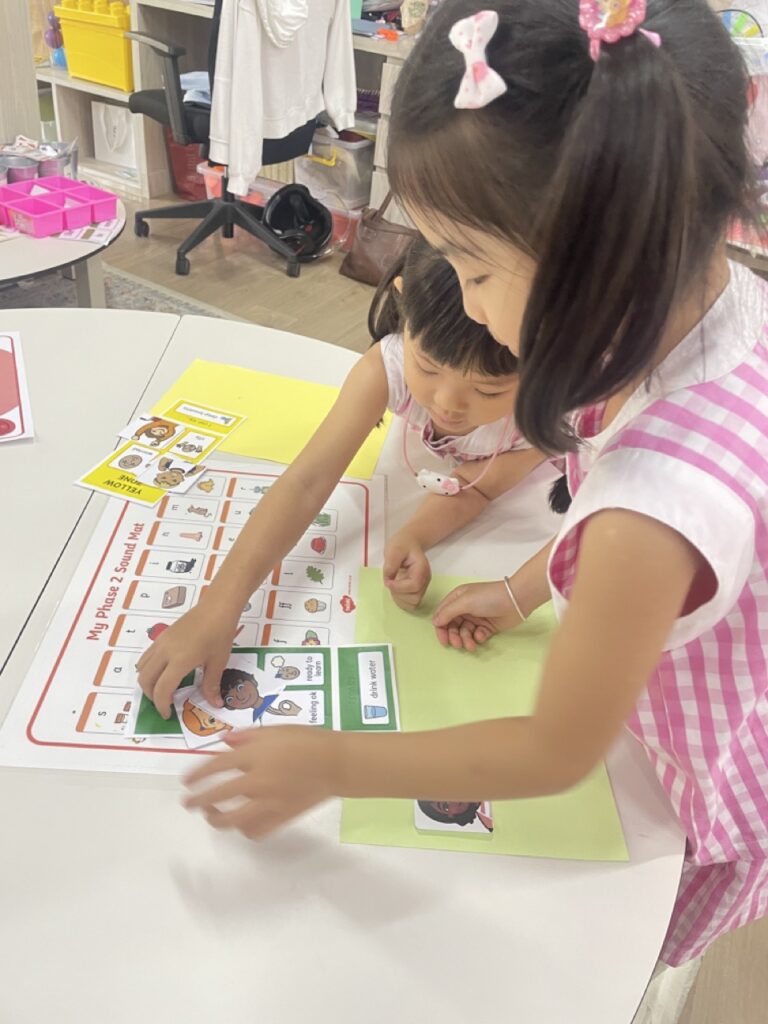
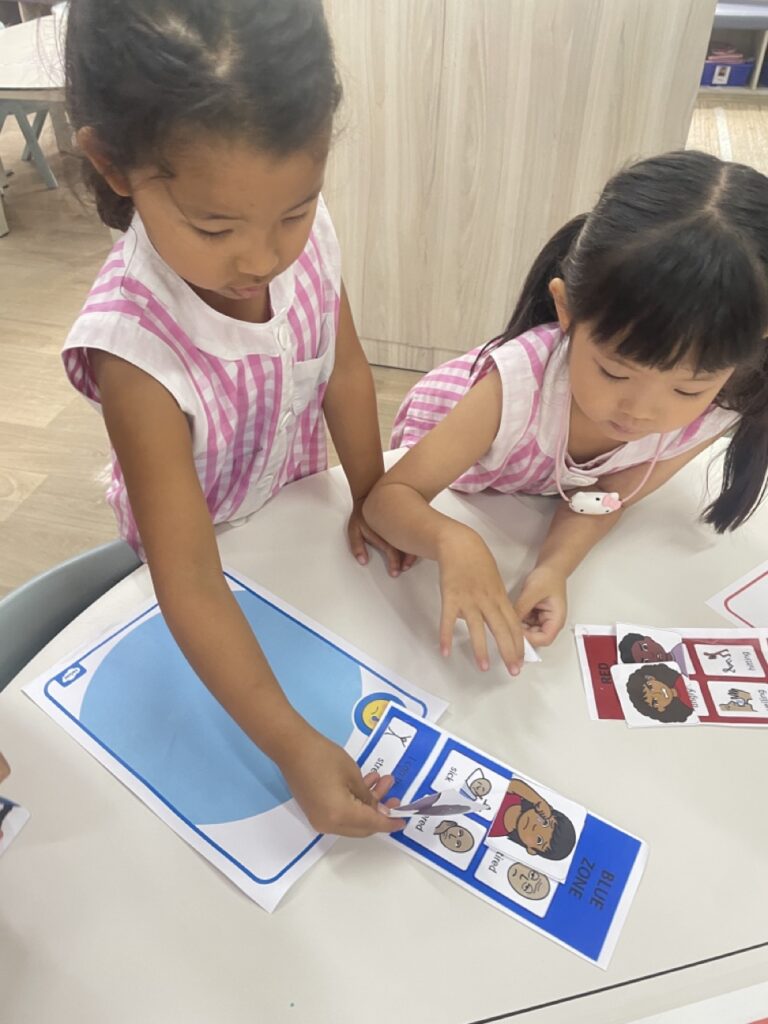
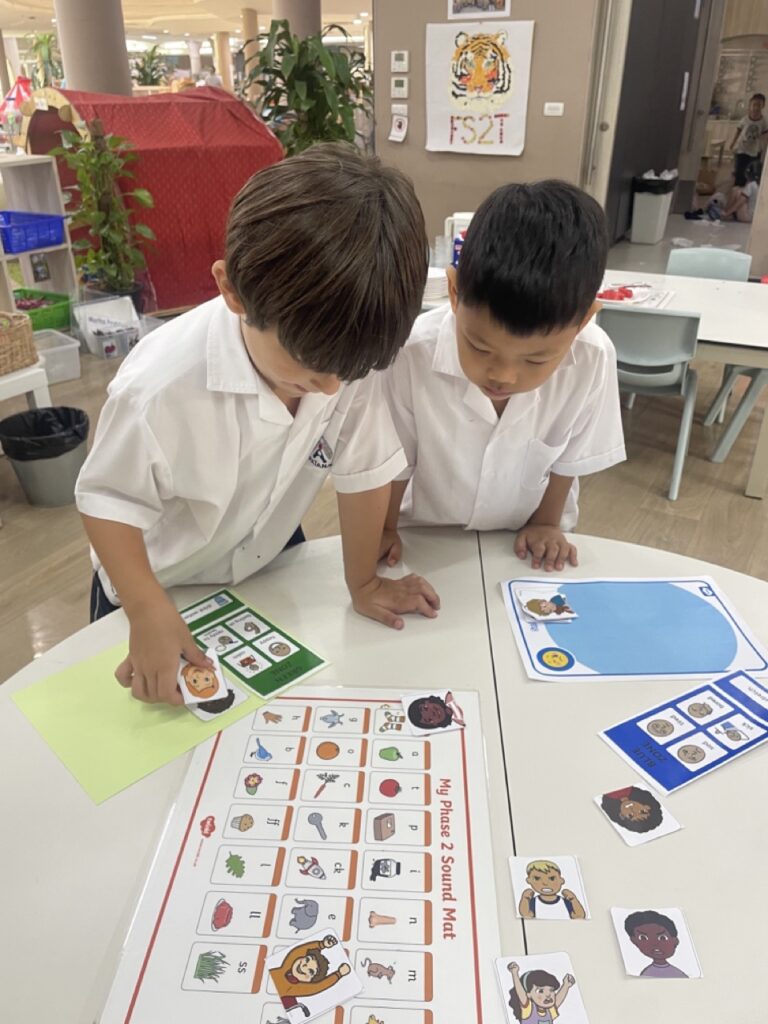
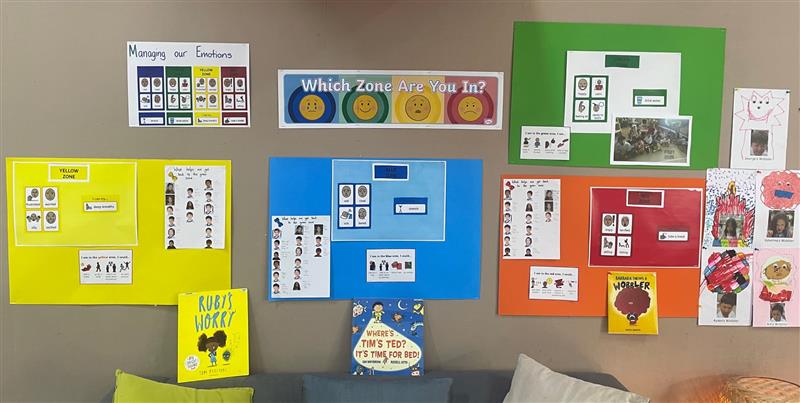
For learning, the ideal zone is the Green Zone, when our bodies feel calm, focused and happy. This helps children listen, concentrate and engage with learning.
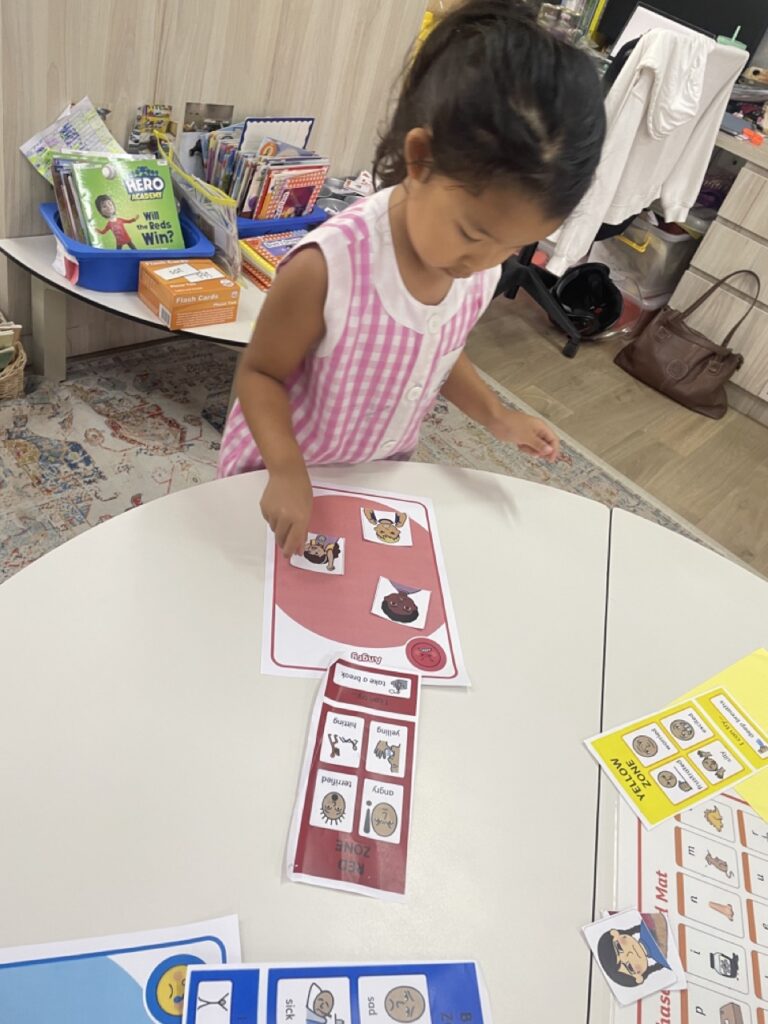
The Red Zone includes strong feelings such as anger or fear. The Yellow Zone includes feeling silly, nervous, excited or worried. The Blue Zone includes feeling sad, tired, sick or bored.
The children have been learning that emotions can be managed using helpful strategies. For example, sharing worries with a trusted adult, taking quiet time, breathing slowly, or looking at calming books.
There’s no ‘bad’ or wrong zone, regulation is being in the appropriate zone for the situation. It’s okay to be in the red zone if a snake is in the garden – or to be in the yellow zone on the playground, but not when you’re listening to the teacher in the classroom
Through stories and discussion, the children practised naming emotions and thinking about what helps them feel calm again. Our classroom display shows each child’s preferred way to return to the Green Zone, including cuddling a teddy, talking to a trusted adult or choosing a comforting activity.
This learning supports the Early Learning Goals for Personal, Social and Emotional Development, particularly Self-Regulation and Managing Self, as children begin to recognise and manage their emotions and seek support when they need it, ready for Key Stage 1.