
One of the most common questions I hear from students is “What should I be doing to get into a good university?”
After 20 years of working as careers and university counsellor at international schools, I understand why. University admissions can feel uncertain, particularly when students are applying to highly selective universities where there is no simple formula for success. When the answer is unclear, it is very tempting to create a checklist. Should I do research? An internship? Community service? A summer programme? A competition? Start a business? Become a club president? Start a new club? Perhaps I should do all of them. The problem is that when students follow the same checklist, they sometimes lose their authentic selves.
When University Becomes A Checklist
This summer, I attended a session at a university counselling conference in Pittsburgh called Breaking the Checklist Mentality: Reclaiming Authenticity, Purpose, and Impact in a Pay to Play World. The panel included admissions professionals from Barnard College and the University of Pennsylvania, as well as experienced university counsellors from international schools in China, India, Singapore and Canada. Their message resonated with many of the conversations I have with students here at Bangkok Patana.
When students ask what they need to do to stand out in the university application process they might start doing things because they believe universities expect them, rather than because they are genuinely interested. And when everyone follows the same formula, applications can start to look remarkably similar. At Bangkok Patana, our students have access to a wide range of opportunities, both academically and through the CAS programme. The challenge is not necessarily finding more things to do, but rather choosing what is right for you.
Try The “Would I still do it?” Test
One of the simplest questions students can ask themselves is: Would I still do this if no university would ever find out about it? If the answer is yes, then you are probably onto something authentic. Perhaps you genuinely enjoy helping younger students with maths. Maybe you love playing in a band even though you have no intention of studying music. Perhaps you spend your weekends helping a community organisation because you care about the people there. These experiences usually have much more meaning than something selected simply because someone said it “looks good” on an application. Another useful test is: Can you talk about this activity for ten minutes without mentioning the certificate, award or university? If a student can talk enthusiastically about what they did, what they discovered, what went wrong and what they learned, there is probably something worth exploring.


A Compass, Not A Map
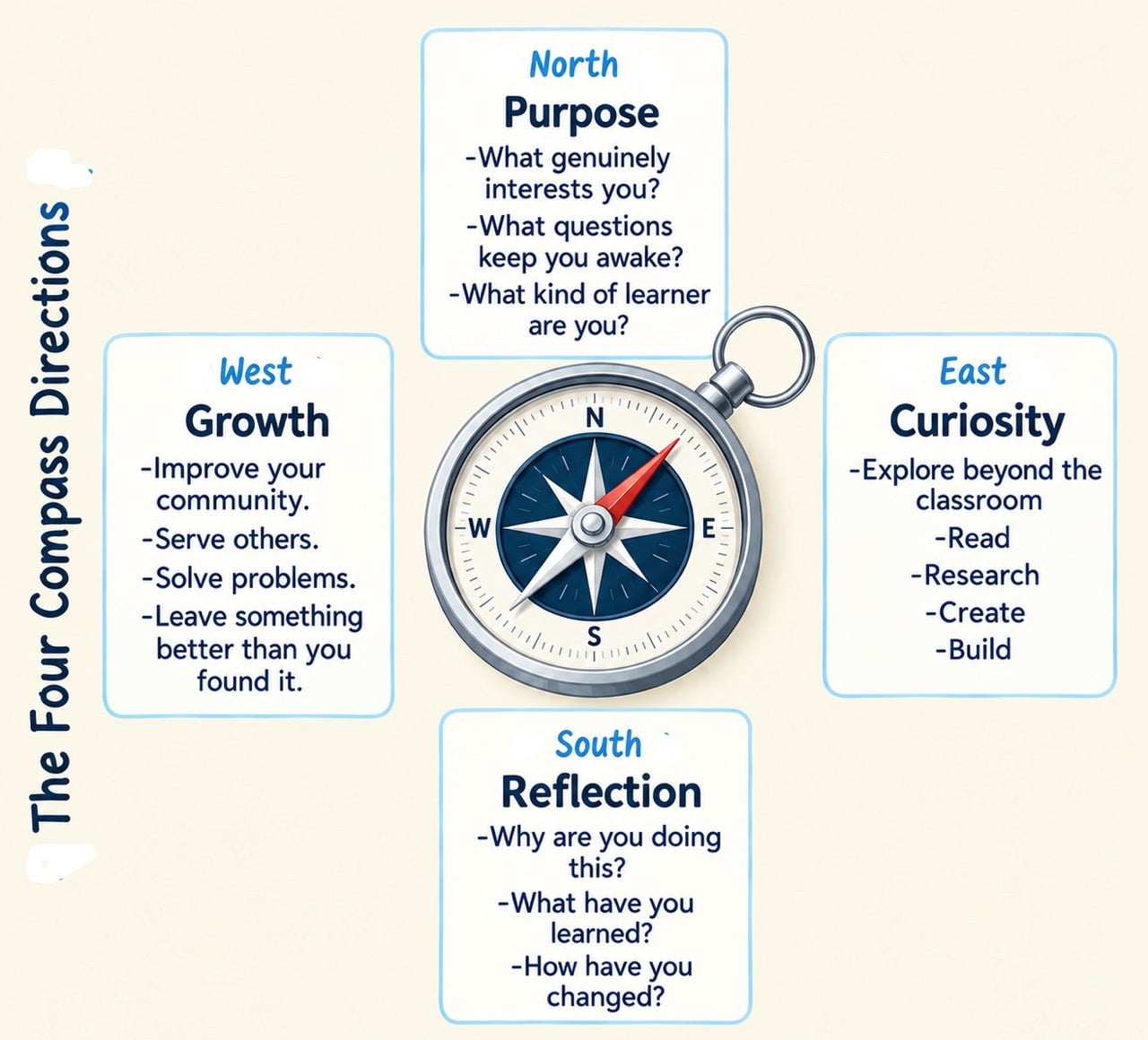
There is another metaphor from the conference that I particularly liked. Students often want a map. They want someone to tell them exactly where to go and what to do. But perhaps what they really need is a compass. A map provides a fixed route. A compass gives you the tools to navigate when the route is uncertain. As counsellors, our job is not to hand students a list of activities that will supposedly guarantee admission. It is to help them develop the confidence and self-awareness to make good decisions for themselves. So, when a student asks me questions like, Which activity looks best? What should I do this summer? Will colleges like this? Is this enough? How do I stand out? I increasingly find myself asking questions instead: Why does this matter to you? What do you want to learn? How will you grow from it? What story can only you tell? These questions can initially be frustrating for students who would really prefer a straightforward answer! But there is a reason for this approach. By the time students leave Patana, they will have to make many decisions without someone telling them exactly what to do. University is full of uncertainty. So is life.
There Needs To Be Room For Failure
One of the ideas from the conference that particularly resonated with me was the importance of allowing students to fail. That can be difficult as students sometimes feel that every experience needs to produce an impressive outcome. But some of the most interesting student stories begin with something that did not work. A student starts a tutoring project and discovers that their original idea is not sustainable. Another student organises an event that attracts far fewer people than expected. Someone tries to create something, fails, learns from it and starts again. This is closer to real life experiences where we don’t always succeed. The value is seen in what you did next. Did you change your approach? Ask for help? Learn something? Try again? Decide that the original idea was not right and move in another direction? Those experiences often develop qualities that aren’t seen in your CV such as resilience, reflection, and genuine growth.
Your Story Doesn’t Have To Be Perfectly Connected
I also sometimes see students worrying that every activity needs to connect directly to their intended university program. This is indeed more important for applications to UK universities, but it doesn’t apply to university admissions in other countries. A future doctor does not need to spend every waking hour doing medical activities. A future engineer does not need to build robots from Year 9 onwards. A student who eventually applies for business does not need to become an entrepreneur at the age of 15. Real people are more complicated than that. Our interests develop. We try things. We change our minds. Sometimes an experience that seems unrelated at first becomes important later. Sometimes we discover that we don’t actually enjoy something we thought we would. That is not wasted time. That is part of growing up. Universities are not necessarily looking for students who have already become fully formed professionals. They want students who have demonstrated curiosity, engagement, initiative and the capacity to contribute and grow.
A Message For Parents
Parents understandably want to help. When the university process feels uncertain, it is natural to look for something concrete that can be controlled. But sometimes the best thing we can do is resist the temptation to turn every experience into an admissions strategy. Instead of asking, Will this look good for university? try asking: Did you enjoy it? What did you learn? Would you like to do more of it?” And perhaps most importantly: What do you think? Students need space to develop their own interests and make some of their own decisions. They also need permission to try things that might not work.
Build A Life, Not A CV
Ultimately, I think this is what we should want for our students. Not the longest list of activities. Not the most impressive collection of certificates. Not a perfectly engineered university application. Instead, we should want students who can look back at their Secondary School years and say: These are the things I cared about. These are the things I tried. This is what I learned. This is how I changed. That is much harder to manufacture than a checklist, and much more meaningful. So, to our students: don’t spend your Secondary School years trying to become the applicant you think a university wants. Explore. Be curious. Get involved. Take some risks. Let yourself fail occasionally. Pay attention to what gives you energy. Notice what makes you want to learn more. And to parents: encourage your children to build a life that is genuinely theirs. When the time comes to apply to university, hopefully the application will not look like a checklist. It will look like your authentic self.