
Those of us who grew up in the 1970s, 80s and 90s had to put in a quite unreasonable amount of effort just to get through a normal day.
We memorised dozens of phone numbers. We phoned people’s houses via landlines, dealt with whoever picked up (including sinister siblings and suspicious parents), and were trained in telephone etiquette before we were teenagers. For example, I was instructed to answer the home phone by saying: “Hello, Cambridge 363XX2, how may I help you?”, which I’m sure made me sound like a cross between the speaking clock and a squeaky Victorian butler. We consulted TV guides on paper, watched an extremely slim selection of shows and had to be physically present for them or missed them forever. We made arrangements to meet friends and had absolutely no way of contacting them if plans changed or anything went wrong. (Although later we did have pagers, a device whose entire function was to tell you to go and find a different device… but the less said about that the better.)
Next came dial-up internet, with a screeching phone socket and a cable destined to trip up the entire family. Then, almost overnight it seemed, smartphones appeared and suddenly the majority of people on earth had a second brain in their pocket with the apparent answer to everything. And then, finally, AI arrived. AI does not just find the answer. It thinks, writes, decides and concludes for you and does it with complete confidence, regardless of whether it is right or not.
We now live in a world where everyone with a phone has a PhD in everything, but no-one had to sit the exam.
This is NOT an anti-technology article
We teach children to swim not because we want them to avoid water, but because we want them to be safe and confident in it. Our children will live and work in a world shaped by AI, and we want them to use it fluently, wisely and well. The question is not whether our children will use AI. It is whether they will have a strong enough mind underneath it to know when to trust it, when to question it and when and how to think for themselves.
Teaching HOW to think, not just WHAT to think
The cultural anthropologist Margaret Mead said it plainly, decades before the internet existed, let alone AI: “Children must be taught how to think, not what to think.” If it mattered then, in a world of libraries, encyclopaedias, and TV evening news, it is hard to overstate how much more it matters now.
In a recent Pew Charitable Trusts article, a survey of over 130,000 young people found that 70% rated their ability to cope with challenges as medium to very low. The conclusion is both sobering and hopeful: resilience is not something children either have or don’t have. It is a skill, and it can be taught. True, the figures come from the United States; however, the pressures shaping childhood today (screens, social media, AI, the vanishing of unstructured thinking time) recognise no borders.
Deep thinking is slowly dissolving. To borrow from Shakespeare, young people are inhaling instant answers ‘as a cat laps milk’. A child who has never had to sit with not knowing, who has never worked through a problem with no obvious solution without an instant answer at hand, is a child whose sense of their own capability is quietly, invisibly eroding – and with it, their sense of well-being. Deep thinking is not a luxury or an academic nicety; it is the very mechanism through which children build the confidence to cope.
Yes, our Primary-aged children are still young. That is precisely the point. Children who develop these skills early are more resilient, more confident and better equipped to handle the ordinary difficulties of growing up. Our commitment to Well-Being, Learning and Global Citizenship – and our value of being Curious – depends on it.
What can we do together?
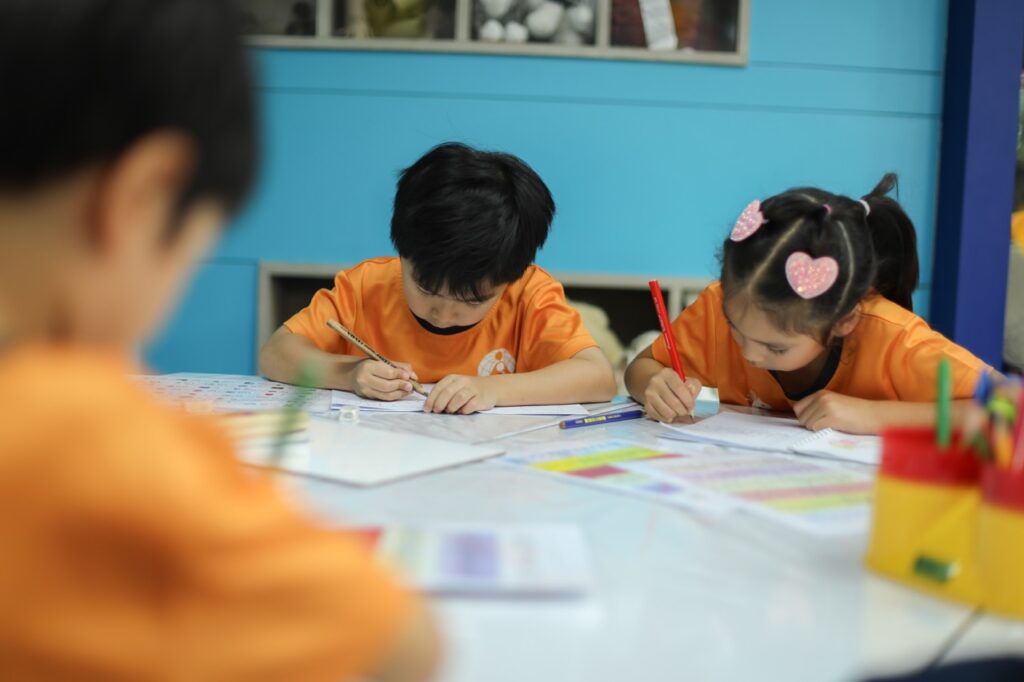
We will keep doing our part in school. But the most powerful thinking happens in the pause before the answer, and that pause is something parents can help protect at home. Three simple habits make a real difference:
1. Resist the urge to rescue. When your child asks “what should I do?”, try “what do you think?” first.
2. Model uncertainty. Say “I’m not sure, let’s think it through together” rather than just giving them the solution or reaching for your phone.
3. Ask one more question. When your child shares something from an AI tool, ask: “How do we know that’s true?” or “what do you think about that?”
Yes, they are simple. No, they are not solutions in themselves. But when home and school pull in the same direction, these habits of mind become something quietly and powerfully transformative.
To Close
John Lennon, lead singer of The Beatles, once said that when his teacher asked what he wanted to be when he grew up, he wrote down “happy.” His teacher told him he didn’t understand the assignment. He told her she didn’t understand life. He also, of course, famously said “I am the Walrus”, which is a solid example of why we teach children to think for themselves.